
China–Taiwan Tensions Spill Into South Korea’s Art World as Gwangju Biennale Faces Boycott Threat

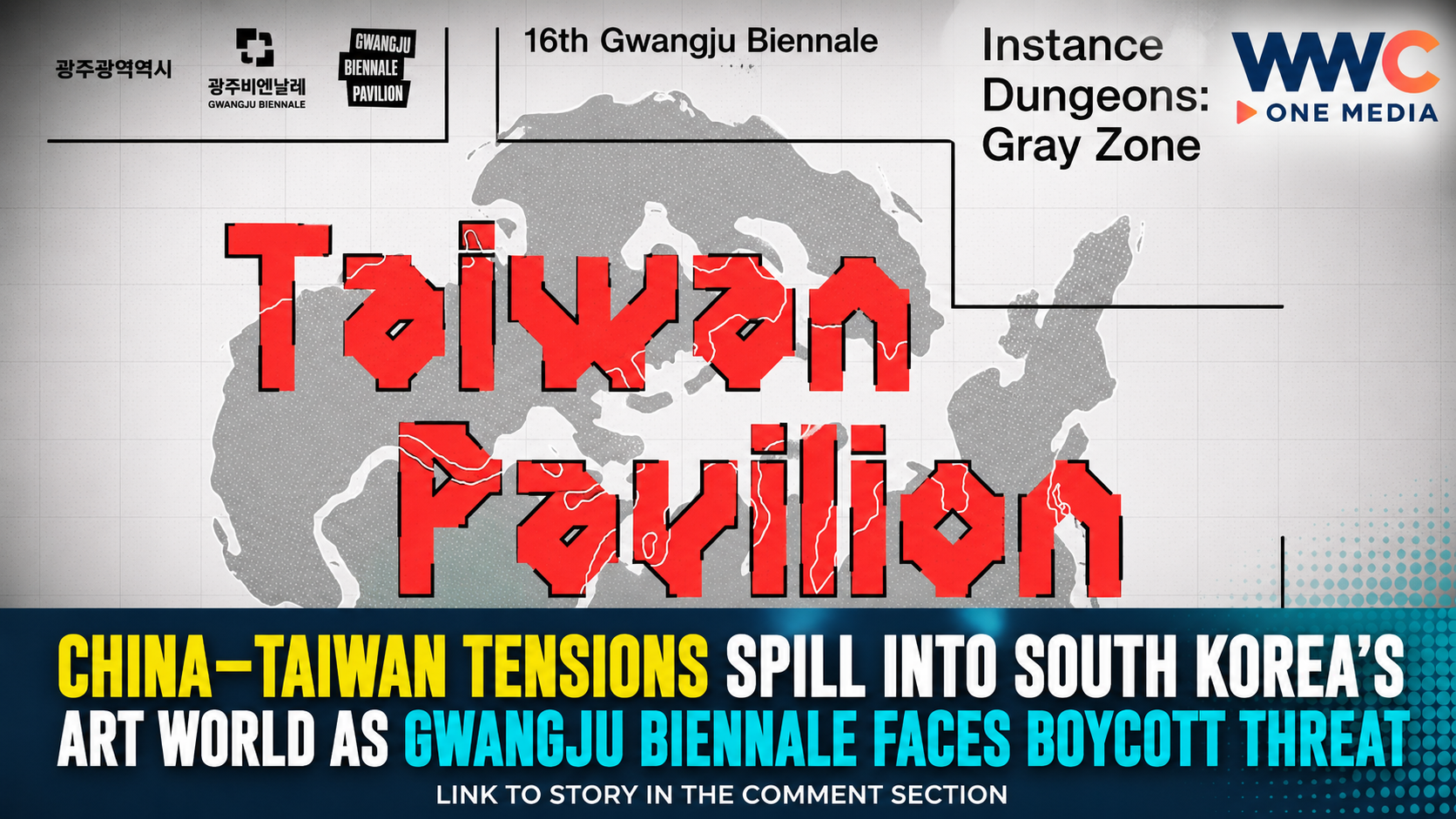
A diplomatic dispute over a two-word name — “Taiwan Pavilion” — has erupted into a major controversy at South Korea’s Gwangju Biennale, with China’s participation now hanging in the balance just days before the prestigious exhibition opens.
The dispute began after organizers initially changed the name of Taiwan’s exhibition from “Taiwan Pavilion” to “NTMoFA Pavilion,” referring to Taiwan’s National Taiwan Museum of Fine Arts. Taiwan’s Culture Ministry and participating artists objected, saying the exhibition had previously been agreed to under the Taiwan Pavilion name. The Gwangju Biennale Foundation, however, maintained that the issue was an administrative and contractual matter because NTMoFA had been participating as an institution rather than a national pavilion.
After mounting criticism from Taiwanese and South Korean artists, the foundation reversed course on Aug. 25 and approved the “Taiwan Pavilion” designation. The name was subsequently authorized for use in the exhibition venue, official documents and promotional materials.
That decision quickly triggered a backlash from Beijing.
Chinese Ambassador to South Korea Dai Bing met Gwangju Mayor Min Hyung-bae on Aug. 27 and expressed China’s regret and concern over the decision to allow the “Taiwan Pavilion” designation. According to Korean and Taiwanese reports, the following day Chinese artists and exhibition staff stopped installing the China Pavilion at the Ha Jung-woong Museum of Art and left the venue.
The situation has since escalated beyond a simple naming dispute. South Korean media reported that the Chinese side’s withdrawal was linked to Beijing’s objection to the Taiwan Pavilion designation, while the Gwangju Biennale Foundation confirmed that installation of the China Pavilion had been halted. As of Sept. 2, the foundation had not announced that China had permanently withdrawn, but it publicly apologized for the controversy and said it hoped China’s participation could resume.
The Gwangju city government has also moved to contain the diplomatic fallout. On Aug. 31, it apologized over the controversy while reaffirming South Korea’s adherence to the “One China” policy, stressing that the use of “Taiwan Pavilion” was an artistic designation and did not mean Gwangju or the biennale recognized Taiwan as a separate country.
The episode highlights just how far the Taiwan issue can reach beyond conventional diplomacy. A pavilion name at an art exhibition has become a test of cultural autonomy, political pressure and Beijing’s sensitivity over Taiwan’s international representation.
The 16th Gwangju Biennale is scheduled to open on Sept. 5 and run through Nov. 15, featuring 16 national pavilions and 11 participating institutions.
WWC ONE MEDIA G.A