
Hong Kong Designer Kinyan Lam Is Turning Ancient Craft Into the Future of Fashion — And the Reason Is More Powerful Than You Think

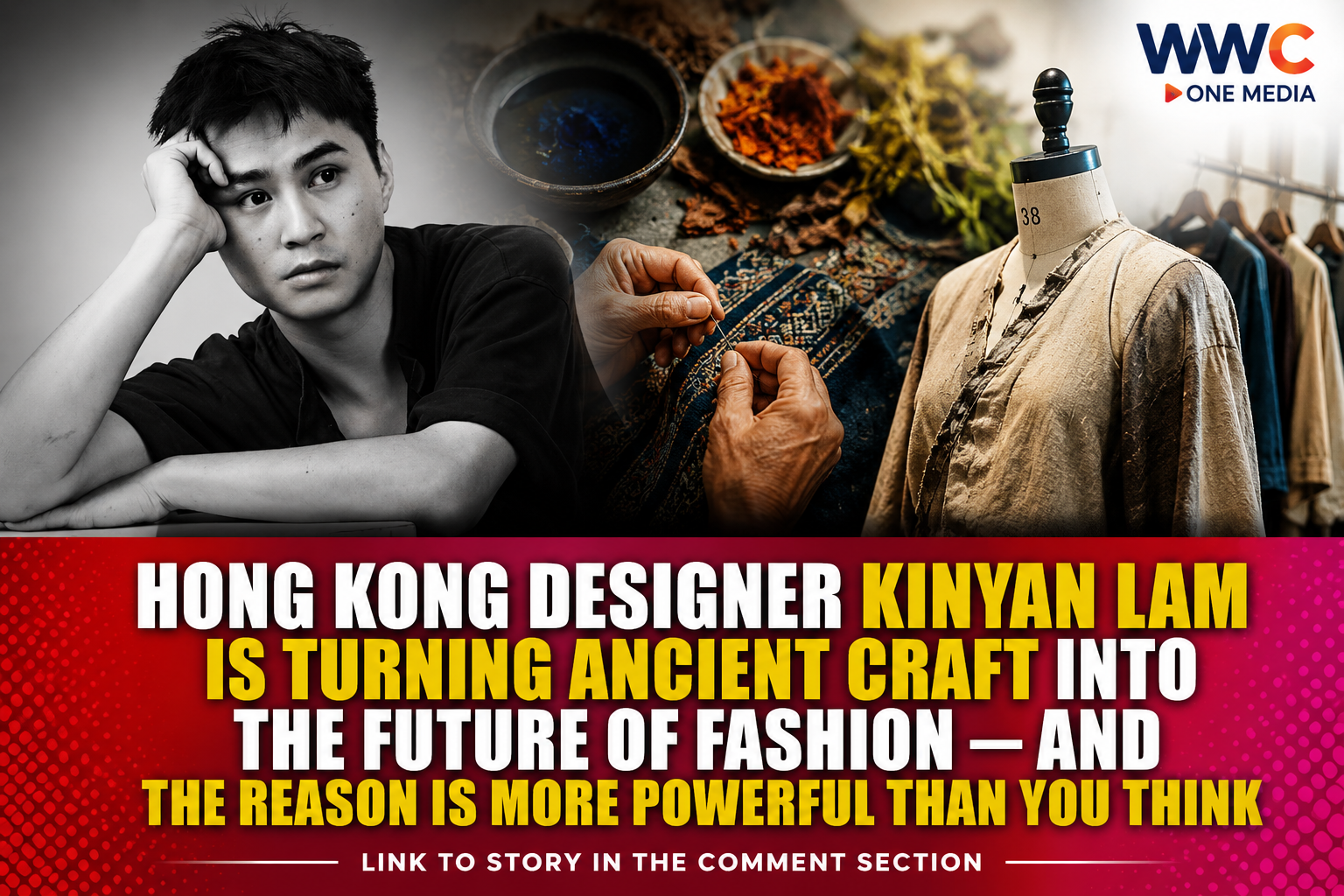
Hong Kong designer Kinyan Lam is proving that fashion does not always have to move faster to move forward.
At just 31, the Guangzhou-born, Hong Kong-based designer has built a growing international reputation around something increasingly rare in the fashion industry: slowing down.
Lam was named one of 20 semi-finalists for the 2026 LVMH Prize for Young Fashion Designers, selected from more than 2,400 applicants worldwide. His inclusion placed him among a new generation of designers being watched for their approach to craftsmanship, cultural heritage and contemporary fashion.
Although Lam did not advance to the final eight, his selection marked a significant milestone. His label became only the third Hong Kong fashion brand to reach the LVMH Prize semi-final stage, following Anaïs Jourden in 2015 and Ponder.er in 2024, according to Tatler Asia.
And what makes his story particularly compelling is that Lam is not trying to win the fashion race by producing more.
He is building his identity around producing more deliberately.
FROM A LOVE OF NATURE TO A FASHION LABEL
Fashion was not always Lam's intended career.
As a child, he dreamed of becoming a painter or artist. His interest eventually shifted toward textiles and the possibilities of creating with fabric, leading him to study at the Hong Kong Design Institute, Nottingham Trent University and the London College of Fashion.
During his studies, Lam became fascinated by natural dyeing — a centuries-old process that uses materials such as plants, insects and minerals to create colour.
The technique became more than an academic interest.
Lam apprenticed under French natural-dye expert Michel Garcia, deepening his knowledge of traditional dyeing methods before returning to Hong Kong.
In 2022, he established Genau Studio, a laboratory focused on researching natural dyes, traditional techniques and textile education. A year later, he launched his eponymous fashion label, Kinyan Lam.
WHY HIS CLOTHES DON'T LOOK "PERFECT"
The first thing that stands out about Lam's clothing is its deliberately imperfect appearance.
Colours can be uneven. Textures can feel raw. Finishes reveal evidence of the human hand.
That is not a flaw.
It is the point.
Lam works with natural materials including persimmon, sophora, indigo and sappanwood, with each dye behaving differently depending on the fibre, temperature and preparation process. Garments can require repeated dye applications and extended periods of drying under the sun.
The result is clothing in which no two pieces necessarily feel exactly the same.
Even more strikingly, the colour can continue to change after the garment has been purchased.
Lam describes natural dyes as "living colours", with wear, sunlight and care influencing how garments develop over time.
Instead of treating those changes as imperfections, he sees them as part of the garment's identity.
The wearer, in effect, becomes part of the design's continuing story.
THE ANCIENT CRAFTSMEN BEHIND THE CLOTHES
Lam's work is not only about natural dyeing.
A major part of his practice involves working with artisans from the Dong ethnic community in Guizhou, China, whose traditional textile knowledge includes embroidery, weaving and the production of Dong cloth.
The collaboration has become one of the defining elements of his collections.
Lam first encountered Dong textiles while researching textile traditions during his studies. He later travelled to Guizhou and began developing a long-term relationship with artisans there.
The goal is not simply to borrow an old technique for a modern collection.
Lam has spoken about wanting to help keep traditional textile practices alive by bringing them into contemporary fashion and encouraging younger generations to continue the craft.
That philosophy has also attracted attention beyond Hong Kong.
Vogue Hong Kong highlighted Lam as one of the designers in the 2026 LVMH Prize semi-final group, while Dazed described his label as centred on handmade processes and collaborations with Guizhou artisans.
Cathay Pacific's recent profile similarly described Lam's work as combining traditional craftsmanship with contemporary design and slow-fashion principles.
HE DOESN'T WANT TO BECOME A MASS-MARKET BRAND
Perhaps the most unusual part of Lam's story is what he doesn't want.
While many emerging fashion labels see growing demand as a reason to scale up production, Lam appears to view limited production as part of the value of his work.
His garments are produced in small quantities because the hand-intensive processes involved make mass production difficult — and because he does not see rapid expansion as the ultimate goal.
Lam has also pushed back against the idea that sustainability was the original reason behind his work.
For him, craftsmanship and the human stories embedded in clothing came first.
Sustainability became a consequence of that philosophy rather than its starting point.
That distinction matters.
Rather than simply marketing clothing as "sustainable," Lam's approach asks consumers to consider who made the garment, how it was made, where the materials came from and what happens to the piece as it ages.
WHY THE LVMH RECOGNITION MATTERS
The LVMH Prize is one of the fashion industry's most closely watched competitions for emerging designers.
For 2026, more than 2,400 applicants were considered before 20 designers from 17 countries were selected for the semi-final stage. The competition included designers working across womenswear, menswear and genderless fashion, with craftsmanship, material research and distinctive creative identities among the recurring themes.
The LVMH Prize's main award carries a €400,000 endowment, alongside mentorship and industry support.
Lam ultimately did not make the final eight, but the semi-final recognition nevertheless places his young label in an increasingly international conversation about the future of fashion.
And that conversation may be especially relevant at a time when consumers are asking more questions about how clothing is produced and what makes a garment worth keeping.
THE BIGGER IDEA BEHIND KINYAN LAM
Lam's appeal goes beyond natural dyes or beautifully embroidered clothing.
His work challenges one of fashion's most deeply rooted assumptions: that progress means more.
More collections.
More production.
More speed.
More consumption.
Lam is proposing something different.
A garment can be slower to make. Its colour can change. Its imperfections can remain visible. Its production can stay limited. And its value can come not from how quickly it reaches the market, but from the knowledge, labour and cultural history contained within it.
That may be why his rise is worth watching.
Because while Kinyan Lam may not have reached the final eight of the 2026 LVMH Prize, the question his work raises is bigger than a competition:
What if the future of fashion isn't about making more clothes — but making people care about the clothes they already have?