
Iran Warns US Gulf Energy Assets Are Vulnerable as Strait of Hormuz Tensions Escalate

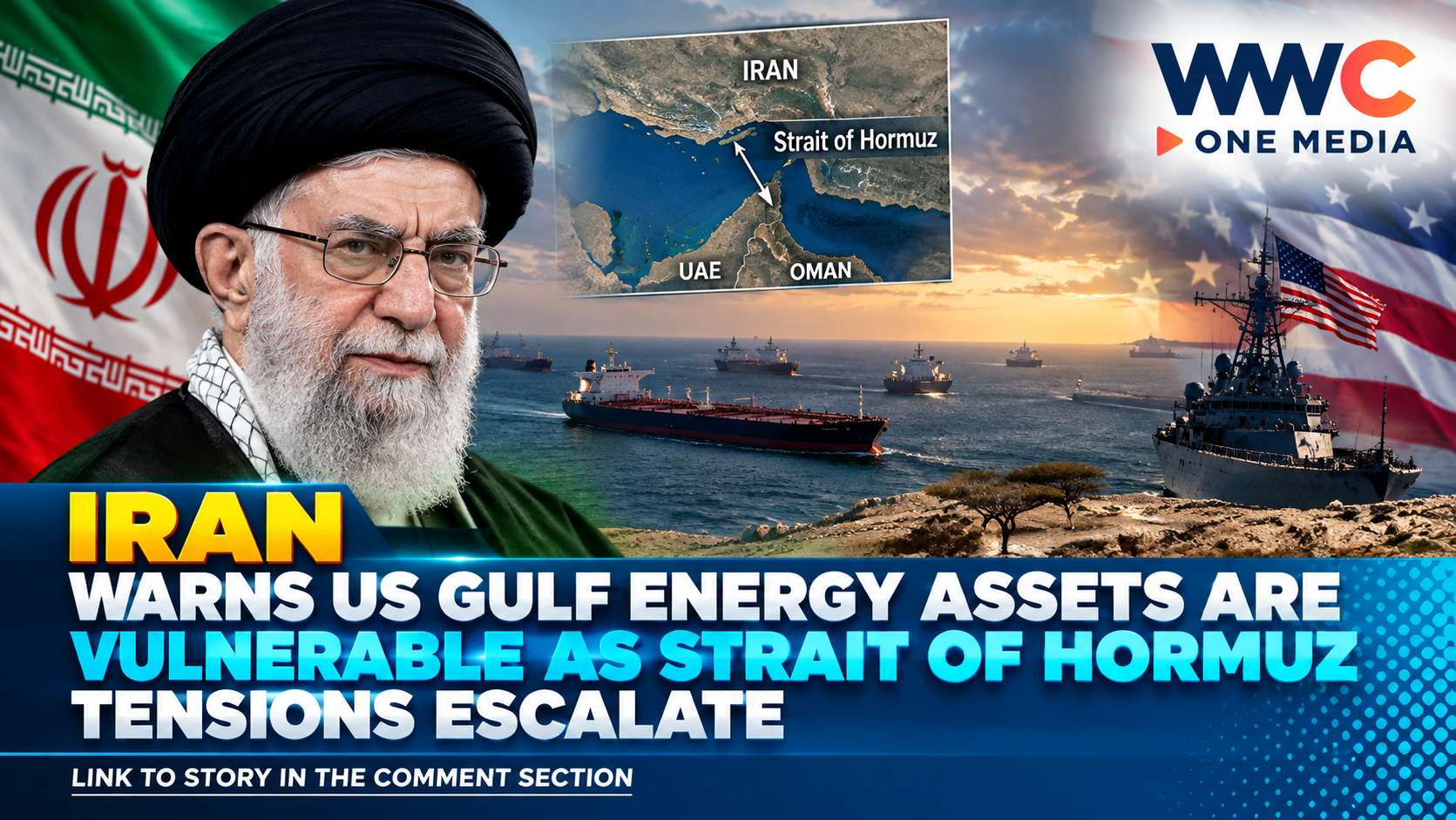
DUBAI — Iran has warned the United States that American energy interests across the Gulf could be targeted in retaliation for further U.S. attacks, raising fears that the widening conflict could threaten one of the world's most important oil and gas corridors.
Iranian Parliament Speaker Mohammad Baqer Qalibaf issued the warning after U.S. and Iranian forces exchanged attacks involving commercial shipping over the weekend.
“Strike our assets and you get struck,” Qalibaf said, according to Reuters.
The warning comes as oil prices climb toward six-week highs and shipping activity through the Strait of Hormuz falls to its lowest level since May, increasing concerns that the conflict could trigger another major shock to global energy markets.
Iran signals a wider economic war
Iran's latest warning suggests Tehran could broaden its response beyond direct military targets if the United States carries out additional strikes.
Iranian officials have indicated that energy infrastructure across the Gulf — including facilities connected to U.S. oil and gas interests — remains vulnerable.
The threat is particularly significant because the Gulf contains some of the world's largest oil and gas production facilities and export terminals.
Any sustained attack on energy infrastructure could reduce supplies, disrupt shipping and push already elevated oil prices even higher.
Strait of Hormuz becomes the critical pressure point
At the center of the crisis is the Strait of Hormuz, the narrow waterway connecting the Persian Gulf with the Gulf of Oman.
Iran has tightened restrictions on shipping through the strait since the conflict began, while senior Iranian security official Mohsen Rezaei said Tehran would soon announce a new restricted zone and shipping corridor.
Iran has said the waterway could remain open under certain conditions, including an end to U.S. attacks on Iranian assets.
For global energy markets, even a partial disruption is significant.
Reuters reported that Middle Eastern oil shipments have fallen from roughly 18 million barrels per day to about 11 million barrels per day, although several million barrels are still moving through Hormuz.
Oil prices react to the growing risk
Crude prices have responded quickly to the escalating threats.
Oil climbed to a roughly six-week high on Monday after Iran threatened retaliation against energy infrastructure across the region.
The market is particularly sensitive to developments around Hormuz because continued disruptions could reduce the amount of crude reaching international buyers.
However, Brent crude has remained below US$100 a barrel for now.
Several factors have helped prevent an even sharper spike, including continued shipments through Hormuz, alternative export routes used by Gulf producers and increased production from countries outside OPEC.
Gulf energy facilities increasingly exposed
Iran's warning has put major Gulf energy facilities under renewed scrutiny.
Saudi Arabia, the United Arab Emirates, Qatar, Kuwait, Bahrain and Iraq all have important oil, gas or refining infrastructure in the broader region.
The threat is not limited to facilities physically located inside Iran.
Iran has previously demonstrated its willingness to target or threaten infrastructure beyond its borders, while the current conflict has already affected commercial shipping and energy flows.
Reuters also reported that Gulf stock markets reacted unevenly to the latest escalation, reflecting investor concerns about the possibility of further disruption.
Washington faces a difficult calculation
For the United States, the Iranian warning creates a potentially dangerous strategic dilemma.
Further strikes could increase pressure on Tehran but also increase the possibility of retaliation against U.S. military positions, commercial vessels or American-linked energy facilities.
A broader attack on Gulf energy infrastructure could also produce consequences far beyond the battlefield.
Higher oil prices would increase fuel costs for consumers and businesses, while expensive diesel and other petroleum products could feed into transportation and food prices.
That could complicate efforts by governments and central banks to contain inflation.
Shipping companies caught in the middle
Commercial shipping operators are already facing a more difficult operating environment.
The latest attacks have reduced traffic through Hormuz, forcing vessels and their operators to weigh the risks of continuing to use the waterway against the costs of rerouting or waiting outside the region.
Insurance costs can also rise sharply when ships operate in areas considered at heightened risk of military attack.
The result is a chain reaction: fewer ships can mean fewer energy cargoes moving through the region, which can then translate into higher prices for buyers elsewhere.
The global energy market still has some protection
Despite the growing risks, the market is not completely dependent on uninterrupted Iranian exports.
Saudi Arabia and Iraq have been using alternative routes to move some crude toward markets outside the Gulf.
Meanwhile, Reuters estimates that non-OPEC producers including the United States, Canada and Guyana could add about 1.4 million barrels per day of production, providing some cushion against Middle Eastern supply losses.
But those alternatives cannot fully eliminate the strategic importance of Hormuz.
The waterway remains a crucial route for large volumes of oil and gas, meaning prolonged disruption would still have global consequences.
No diplomatic breakthrough in sight
The latest threats also underscore how difficult it could be to quickly restore normal energy flows.
The conflict has already lasted more than six months, and recent exchanges between Iran and the United States have shown that military escalation remains possible.
Iran is demanding an end to U.S. attacks and has threatened further retaliation, while Washington continues to apply military and economic pressure on Tehran.
With neither side showing clear signs of backing down, energy markets are increasingly pricing in the possibility that disruptions could persist.
A warning with global consequences
For now, Iran's warning remains a threat rather than confirmation that Gulf energy facilities will be attacked.
But markets do not need an actual strike to react.
The possibility of an attack can be enough to send oil prices higher, increase shipping insurance costs and encourage traders to build risk premiums into energy contracts.
And with traffic through the Strait of Hormuz already sharply reduced, another major escalation could quickly transform today's geopolitical crisis into an even larger global energy shock.
Iran's message is clear: another strike could bring retaliation against the Gulf's energy infrastructure. The question now is whether that warning remains a deterrent — or becomes the next trigger for a much broader crisis.
WWC ONE MEDIA J.M.D