
Iranian Footballers Reveal Anthem Silence Was Protest Against Tehran After Seeking Asylum in Australia

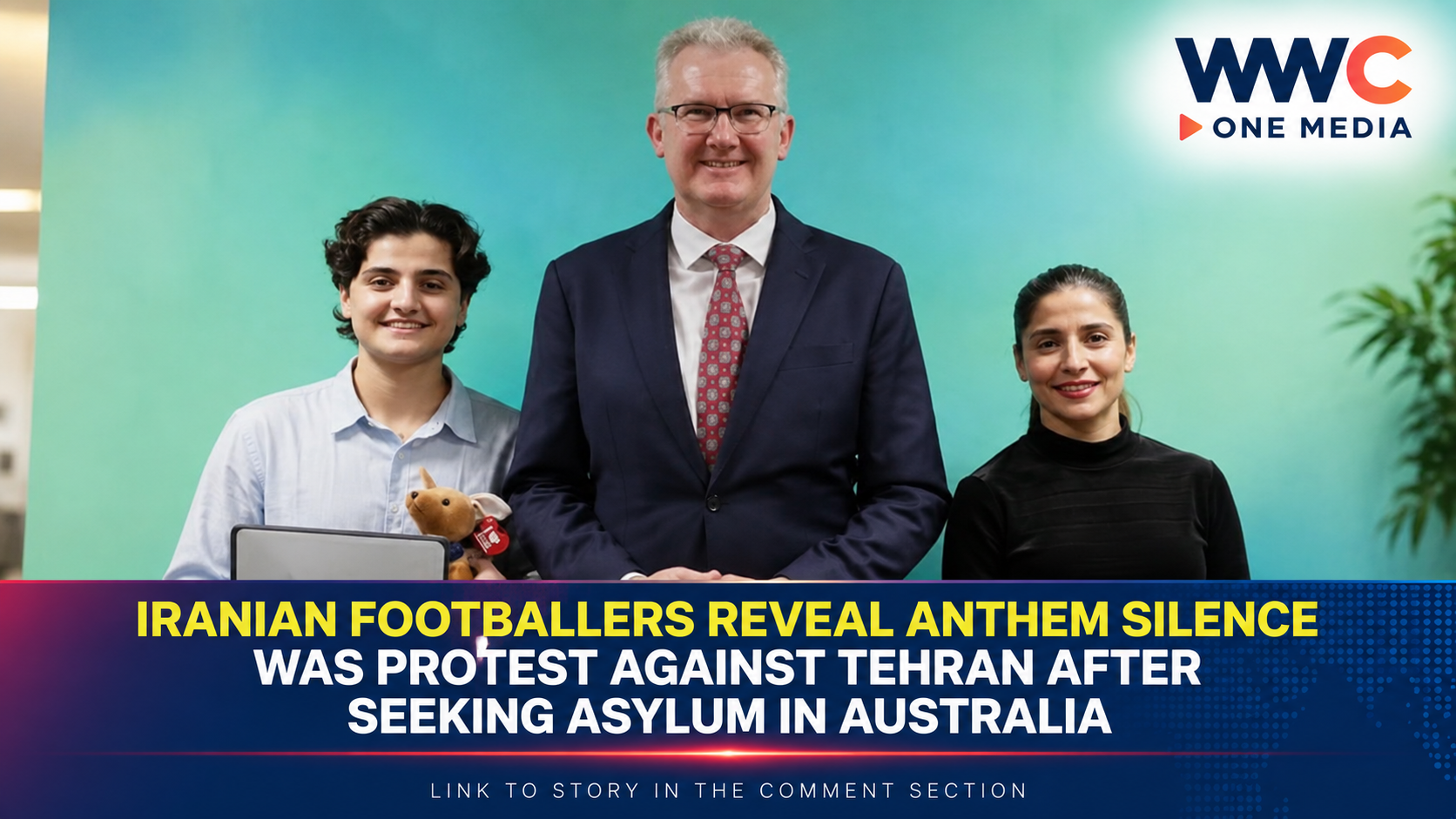
MELBOURNE, Australia — Two Iranian women footballers who sought refuge in Australia have revealed that their decision to remain silent during Iran’s national anthem at the Women’s Asian Cup was a deliberate protest against Tehran’s crackdown on demonstrators.
Atefeh Ramezanisadeh, 34, and Fatemeh Pasandideh, 22, spoke publicly about their decision for the first time in an interview broadcast by Australia’s 60 Minutes, months after their silent gesture became an international controversy and ultimately led them to seek protection in Australia.
The players refused to sing the Iranian anthem before their opening match against South Korea on March 2, a moment that immediately attracted attention because of the political tensions surrounding Iran at the time.
‘We just wanted to stand with our people’
Ramezanisadeh said the silence was intended to show solidarity with Iranians protesting against the country's government.
“We just wanted to stand with our people,” she said through an interpreter.
She said she understood that refusing to sing the anthem could expose her to serious consequences if she returned to Iran.
Ramezanisadeh described the decision as frightening but said she felt unable to sing while young people in Iran were being killed during protests.
Pasandideh similarly said her silence was the least she could do for people who had risked their lives in opposition to the government.
The players were branded ‘traitors’
The silent protest triggered a backlash in Iran.
Iranian state-linked media condemned members of the team as “traitors”, with one television commentator calling for them to be dealt with more harshly.
The reaction increased fears among players about what could happen if they returned home.
The significance of the protest was complicated by the wider regional conflict. At the time of the Asian Cup, Iran had also come under US and Israeli attack, leading some observers to interpret the players' silence as an expression of mourning rather than solely a political protest.
The players had not publicly explained their actions at the time. Their latest interviews provide the clearest account yet of what motivated the gesture.
From football protest to asylum
The controversy intensified after the Iranian team continued its tournament in Australia.
Several players eventually sought protection in Australia after concerns grew about their safety if they returned to Iran.
Australian authorities initially offered humanitarian visas to several members of the delegation. Seven players eventually accepted offers at one point, but most later changed their decisions and returned to Iran.
Ramezanisadeh and Pasandideh were the two who ultimately remained in Australia.
Australian Home Affairs Minister Tony Burke said the government had not initially offered the players asylum before their protest became a major public issue.
He later described their silence during the anthem as a significant moment that changed the situation.
The controversy also drew international political attention after then-US President Donald Trump publicly urged Australia to offer the Iranian players asylum and discussed the issue with Australian Prime Minister Anthony Albanese.
A painful choice between safety and family
Remaining in Australia came at a major personal cost.
Ramezanisadeh said her parents had encouraged her to return to Iran, reassuring her that she would be safe.
She ultimately decided not to go back.
The footballer said one of the hardest parts of her decision was accepting that she might not see her family again.
Both women said they have not been in contact with their families in recent months because of concerns about their relatives' safety.
Pasandideh said she deliberately avoids discussing what happened with former teammates because she does not want to put them at greater risk.
Building new lives in Australia
The two footballers have since begun rebuilding their lives in Brisbane.
They now play for Wynnum Wolves, a semi-professional football club, while adapting to life in Australia.
In August, both women became Australian citizens.
For Pasandideh, however, the decision remains emotionally complicated.
She said she hopes that one day she will be able to return to Iran — but only when circumstances have changed and she can see her family and country under better conditions.
Ramezanisadeh expressed a similar hope, saying she wants to return when Iran is a place where its people can live freely and happily.
A silent protest that changed two lives
What lasted only a few moments before an international football match ultimately changed the course of both women's lives.
At the time, their silence offered no explanation.
Months later, they have made clear that it was a conscious decision to stand with protesters in Iran, despite the risks they believed it could create.
Their story has since moved beyond football, becoming a broader account of political expression, exile, family separation and the personal cost of challenging a government from abroad.
For Ramezanisadeh and Pasandideh, the decision not to sing was brief.
The consequences have lasted far longer.
WWC ONE MEDIA J.M.D