
Iran’s New Gulf ‘Restricted Zone’ Could Change Everything — But What Happens to Ships That Enter?

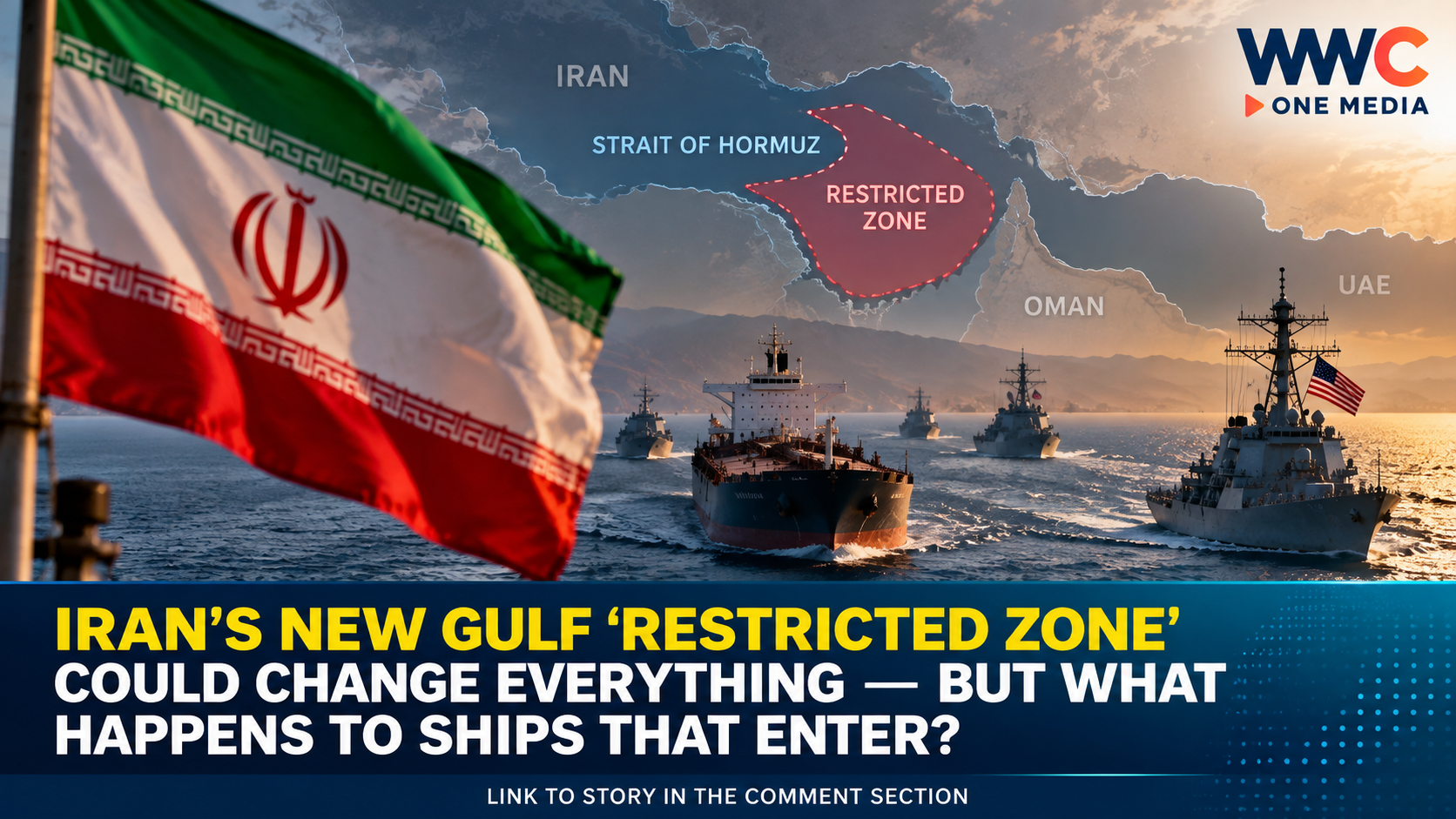
DUBAI — Iran says it will announce a new restricted maritime zone in the Gulf in the coming days, raising fresh concerns over shipping and energy supplies around the Strait of Hormuz as tensions with the United States continue to escalate.
Iranian official Mohsen Rezaei, secretary of the country's Supreme National Security Council, said the planned zone would extend from areas affected by what Tehran describes as a U.S. blockade into parts of the Gulf.
According to Iranian state media, any vessel entering the new zone could be placed on Iran's sanctions list. However, Tehran has not yet released detailed maps, precise coordinates or a clear timetable for when the restrictions will take effect.
The announcement comes as shipping traffic through the Strait of Hormuz has dropped sharply amid renewed military tensions between Iran and the United States.
Iran Says New Shipping Corridor Is Also Being Planned
Rezaei said maps for a proposed new international shipping corridor through Iranian and Omani waters had been agreed upon and could be signed in the coming days.
Iran says it would have a management role in the proposed route.
Tehran has also linked the future reopening of normal shipping through the Strait of Hormuz to an end to what it describes as U.S. threats, attacks and interference.
"We will only commit to the Strait of Hormuz being open when they stop the sabotage, threats and attacks on Iran," Rezaei said, according to reports carried by Reuters and Channel News Asia.
The exact legal and operational status of Iran's proposed restricted zone remains unclear. No detailed international navigation framework has yet been publicly released.
Shipping Through Hormuz Already Under Pressure
The latest announcement comes at a critical moment for one of the world's most important maritime chokepoints.
Reuters reported that commercial shipping traffic through the Strait of Hormuz has fallen significantly in recent days. Data cited by the news agency showed vessel movements running well below recent averages as tanker operators and shipping companies reassess the risks of travelling through the area.
Before the current crisis, the Strait of Hormuz handled a major share of global oil and liquefied natural gas shipments.
The decline in traffic has already raised fears of further disruption to global energy supplies.
Oil prices moved higher on Monday as traders reacted to the latest exchange of attacks and continuing uncertainty surrounding shipping routes in the Gulf.
U.S.-Iran Tensions Escalate After Attacks on Shipping
The planned restricted zone follows a dangerous weekend of military escalation.
According to Reuters and the Associated Press, U.S. forces struck three Iranian oil tankers after Washington said Iran had launched attacks against U.S. warships. Iran and the United States have offered sharply different accounts of some recent incidents.
The U.S. military also rejected an Iranian claim that Tehran had successfully struck an uncrewed American military vessel in the Strait of Hormuz, calling the allegation false.
The conflicting claims highlight the difficulty of independently verifying events in one of the world's most militarized waterways.
More Ships Could Face Iranian Sanctions
Iran has already been expanding restrictions against vessels it says have violated its navigation rules.
Reuters reported days earlier that Iran had added more ships to its blacklist, bringing the number of targeted vessels to dozens. The restrictions have affected oil tankers, LNG carriers and other commercial vessels.
The latest proposed restricted zone could expand Tehran's pressure beyond individual blacklisted ships and create a broader area where commercial vessels face new risks or restrictions.
For global shipping companies, the biggest unanswered questions are now:
- Where exactly will the new restricted zone begin and end?
- Which ships will be allowed to enter?
- Will vessels need Iranian approval before transit?
- How will other Gulf states respond?
- Will the United States challenge the restrictions militarily or diplomatically?
Iran has yet to provide full answers.
Why the Strait of Hormuz Matters to the World
The Strait of Hormuz is a narrow but strategically vital waterway connecting the Persian Gulf with the Gulf of Oman and the Arabian Sea.
It is one of the world's most important energy transit routes, making any prolonged disruption a global concern.
Analysts and energy markets are watching closely because a further reduction in tanker traffic could affect:
- Global oil prices
- LNG supplies
- Shipping insurance costs
- Fuel prices
- Energy-importing countries in Asia
- International supply chains
The current disruption has already helped push oil prices higher as markets price in the possibility of reduced energy supplies.
Iran Faces Mounting Economic Pressure
The announcement also comes as Iran faces growing economic pressure.
Reuters has reported that U.S. actions targeting Iranian oil exports have significantly reduced Tehran's ability to move crude through the region. Iran's economy is under pressure from sanctions, declining oil exports, inflation and limited access to foreign currency.
At the same time, Tehran continues to use its geographic position near the Strait of Hormuz as one of its strongest sources of strategic leverage.
The question now is whether the proposed restricted zone will strengthen Iran's negotiating position — or trigger an even more dangerous confrontation with Washington and its allies.
Reuters reported that some officials and analysts believe the economic pressure has weakened Iran's leverage, while Tehran continues to insist it will not surrender control over its strategic interests without meaningful concessions.
What Happens Next?
Iran says details of the new restricted zone and proposed shipping corridor will be released in the coming days.
Until Tehran publishes official maps and navigation rules, major questions remain unanswered.
International shipping companies, Gulf governments, energy traders and military forces will all be watching the announcement closely.
With shipping already reduced, oil prices rising and military tensions intensifying, the next move around the Strait of Hormuz could have consequences far beyond the Middle East.
And the biggest question remains: Will Iran's new restricted zone become a negotiating tool — or the next flashpoint in an already volatile Gulf crisis?
WWC ONE MEDIA J.M.S