Liloan Mayor Explains New P12 Garbage Bag System After Residents Raise Concerns

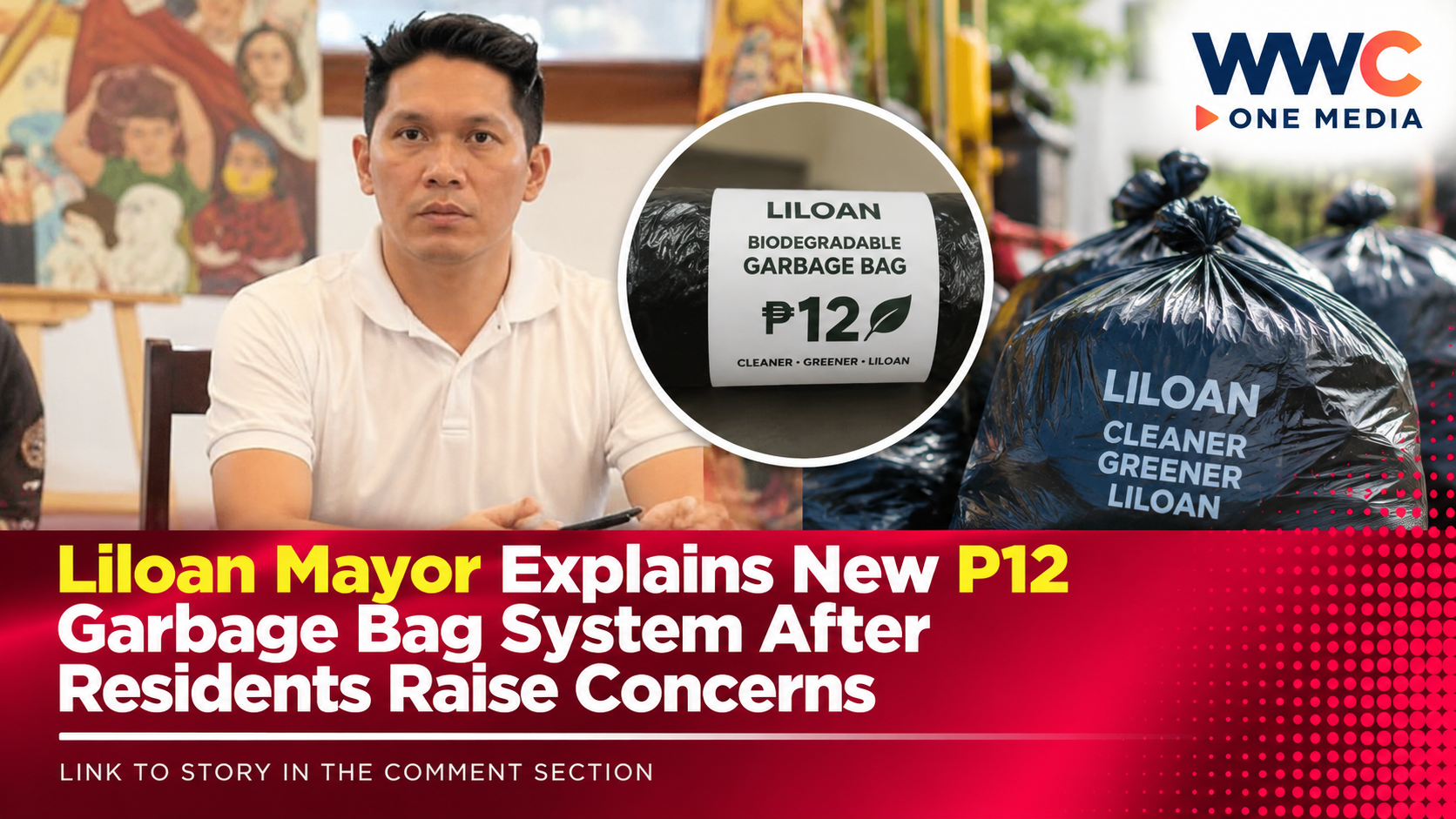
LILOAN, Cebu, Philippines — Liloan Mayor Aljew Jordan Frasco has defended and clarified the municipality's proposed new garbage collection system after residents raised concerns over a plan requiring households to buy official trash bags costing P12 each.
The new policy, called the “Pay As You Throw, Garbage Bag System,” is covered by Municipal Ordinance No. 42-2026 and is intended to address Liloan's growing waste-management costs while encouraging residents to segregate their garbage properly.
But Frasco stressed that the proposed October 2026 rollout is not yet final, as the local government continues consultations with residents, purok leaders, businesses and schools.
What Is Liloan's New Garbage System?
Under the proposed system, households would no longer pay a traditional garbage collection fee.
Instead, residents would purchase designated transparent, color-coded garbage bags for P12 each through their local purok. Garbage collectors would only collect waste placed in the official bags.
The idea behind the system is simple:
The more garbage a household produces, the more it pays.
Households producing less waste — and properly segregating recyclable and organic materials — could potentially use fewer official bags and spend less.
Frasco said residents would not necessarily have to spend P12 every day because the number of bags needed would depend on how much waste a household actually generates.
Why Is Liloan Changing Its Garbage Collection System?
According to Frasco, the municipality's waste-management expenses have become increasingly difficult to sustain.
Liloan reportedly collects around 35 to 40 tons of garbage every day, creating major expenses for collection, fuel, truck maintenance, workers and landfill disposal.
In 2024, the municipality collected approximately:
- P8.93 million in garbage fees
But it spent around:
- P9.26 million for worker salaries, fuel and truck maintenance
- P10.79 million in tipping fees at the Consolacion sanitary landfill
That brought total waste-management expenses to roughly P19.9 million — more than twice the amount collected through garbage fees.
In short, Liloan faced a waste-management deficit of nearly P11 million.
Frasco said costs have continued rising because of higher fuel prices, more expensive vehicle parts and increasing landfill charges.
Liloan's Garbage Costs Continue to Rise
The municipality has also expanded its garbage collection fleet dramatically.
Frasco said Liloan had:
- 7 garbage trucks in 2022
- 23 garbage trucks in 2026
The larger operation has increased the government's ability to collect waste but has also increased operating costs.
In August 2026 alone, Liloan reportedly spent more than P2.34 million on solid-waste management, including approximately:
- P1.18 million for landfill fees
- P600,000 for fuel
- P566,032 for labor
The figures highlight why the municipality is searching for a new way to finance garbage collection and reduce the volume of waste sent to landfills.
Why P12 Per Garbage Bag?
One of the biggest complaints from residents was the planned P12 price per official garbage bag.
Frasco said the municipality canvassed suppliers and found that suitable transparent bags ranged from P8 to P22.
Cheaper bags priced below P12 were reportedly considered too thin or too small and could easily tear during collection.
The mayor also argued that the new system could be fairer than a fixed garbage fee because households would pay according to the amount of waste they produce.
Still, the proposal has triggered public debate, particularly among residents concerned that buying official garbage bags could create another regular household expense.
Residents Will Be Required to Segregate Their Waste
A major part of the proposed system is mandatory waste segregation.
Households would need to separate organic or biodegradable waste from non-biodegradable materials such as:
- Diapers
- Plastic wrappers
- Other residual waste
Recyclable materials, including:
- Scrap metal
- Glass
- Cardboard
- Other recyclables
could still be stored separately and sold to junk shops or recycling buyers.
The municipality believes proper segregation could significantly reduce the amount of garbage being transported to the landfill.
That could mean lower tipping fees and lower overall waste-management costs.
The October Rollout Is Still Not Final
Frasco emphasized that despite public discussion about an October implementation, no final rollout date has been confirmed.
The municipality is still conducting consultations with:
- Purok leaders
- Barangay officials
- Residents
- Business establishments
- Schools
- Other stakeholders
Officials are also continuing an information campaign to explain how the proposed system would work before setting a final implementation date.
What About Bulky Garbage?
Separate reports on the ordinance indicate that bulky waste — including items such as damaged furniture, televisions and refrigerators — may require a P200 sticker before collection under the proposed system.
This provision could mean residents will face different disposal requirements depending on the type and size of waste they need collected.
As consultations continue, residents are likely to seek further clarification on how these rules will be implemented and whether exemptions or adjustments will be introduced.
Cebu's Garbage Crisis Shows a Bigger Regional Problem
Liloan's proposed system comes as other parts of Metro Cebu are also struggling with rising garbage disposal costs and limited landfill capacity.
Cebu City, for example, has faced its own waste-management crisis following disruptions caused by landfill closures and changes in disposal arrangements. The city has been spending millions of pesos daily to haul garbage to disposal sites outside the city, with officials warning that current funding could eventually be exhausted if the situation continues.
That wider situation shows that Liloan's problem is not unique.
Across Cebu, local governments are facing increasing pressure from:
Rising landfill fees.
Higher fuel costs.
Limited disposal facilities.
Growing garbage volumes.
Increasing transportation expenses.
Can 'Pay As You Throw' Actually Work?
The success of Liloan's proposed system will likely depend on one key factor: whether residents change how they manage their waste.
The municipality hopes the system will encourage households to:
- Produce less garbage
- Separate biodegradable waste
- Recycle more materials
- Sell recyclables
- Reduce landfill-bound waste
If those goals are achieved, Liloan could reduce its disposal expenses while giving residents greater control over how much they spend.
But the policy could also face challenges.
Residents may question:
- Whether P12 per bag is affordable
- How often bags will need to be purchased
- Whether the official bags will always be available
- How the system will affect large families
- Whether garbage collection will remain reliable
- How violations will be handled
Those questions are likely to shape the municipality's ongoing consultations.
A New System, But a Difficult Adjustment
For Frasco, the proposed garbage bag system is ultimately about addressing a financial problem that the municipality says can no longer be ignored.
Liloan's traditional garbage-fee system was abolished earlier in 2026, and officials are now looking for a replacement model that links waste costs more directly to the amount of garbage produced.
The mayor has acknowledged that the transition will not be easy.
And the public reaction has made one thing clear:
Residents want answers before the new garbage system begins.
For now, Liloan's proposed P12 garbage bag policy remains under consultation, with the October target still subject to change.
The municipality says the goal is to reduce garbage and cut costs. But whether residents will embrace paying for every bag they throw away could determine whether Liloan's new waste-management experiment succeeds.
WWC ONE MEDIA J.M.D