
Metro Cebu Air Quality Still Unstable as Indonesian Haze Keeps PM2.5 Levels Fluctuating

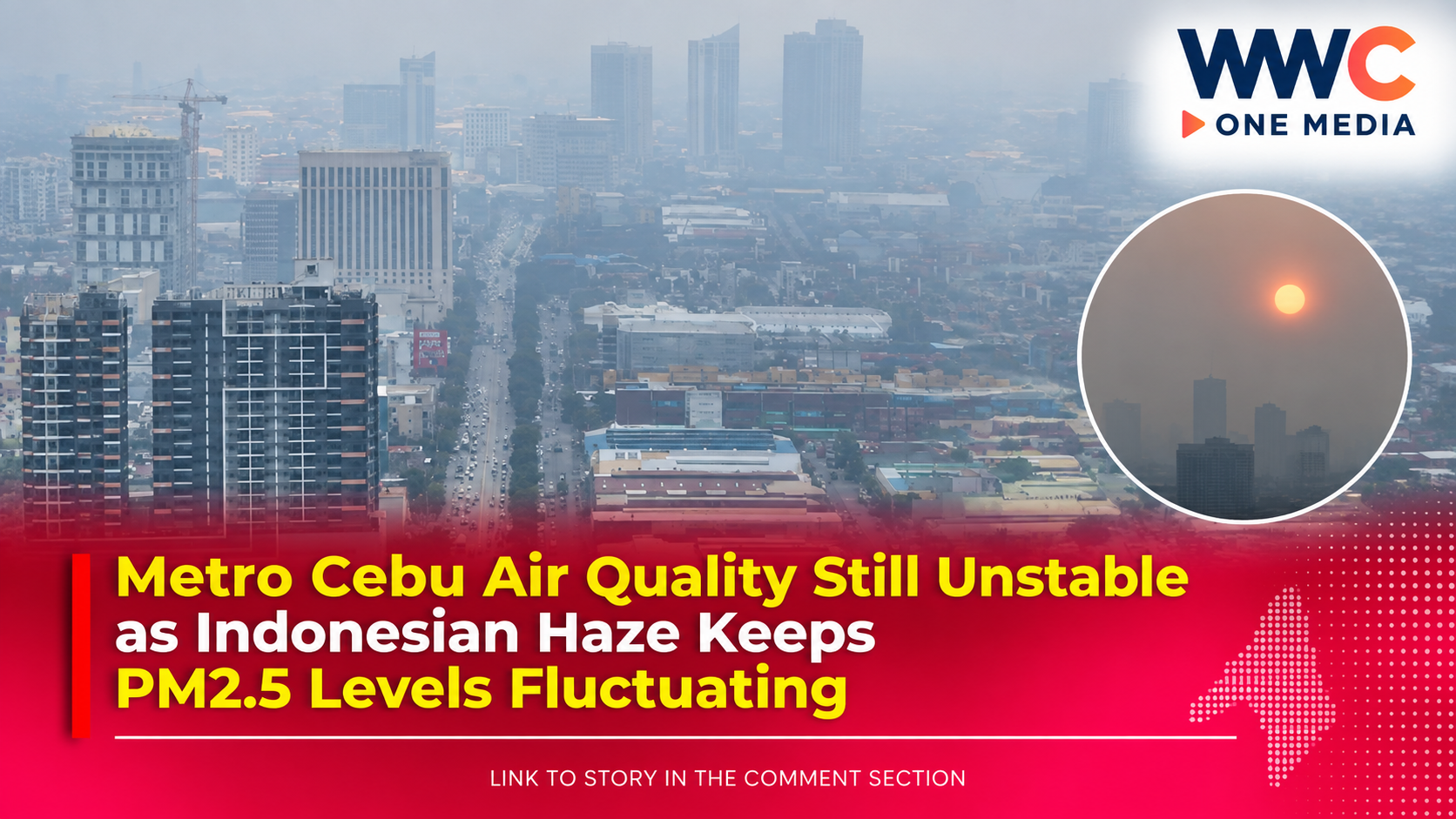
CEBU, PHILIPPINES — Metro Cebu's air quality remains unpredictable as haze continues to blanket parts of the region, with pollution levels rising and falling depending on changing winds, rainfall and other atmospheric conditions.
Even when the haze appears to ease, authorities are warning residents not to let their guard down.
The latest monitoring by the Environmental Management Bureau in Central Visayas (EMB-7) shows that Metro Cebu's PM2.5-based Air Quality Index continues to fluctuate, driven largely by smoke from forest fires in Indonesia being carried toward the Philippines by prevailing winds.
Metro Cebu air quality keeps going up and down
On Monday, Sept. 7, EMB-7 recorded a PM2.5 Air Quality Index of 143 at 4 p.m., placing Metro Cebu in the “Unhealthy for Sensitive Groups” category.
But earlier in the day, the situation was worse.
The AQI reached 158 at 7 a.m. and remained at 157 at 11 a.m., both classified as “Very Unhealthy.”
The sharp changes show why authorities say the situation remains unstable.
Metro Cebu's air quality can improve temporarily — only for pollution levels to climb again hours later.
Why is the air quality so unstable?
According to EMB-7 air quality specialist Arthur Niño Calupig, several factors influence how much particulate pollution reaches Metro Cebu.
These include:
- Wind direction
- Wind speed
- Rainfall
- Temperature
- Other atmospheric conditions
Current wind trajectories and atmospheric models point to parts of Indonesia, including West Kalimantan, where forest-fire activity has been identified as a possible source of the particulate pollution affecting Central Visayas.
However, not all smoke from Indonesia reaches Cebu.
Changes in wind direction and strength can determine whether pollutants are transported toward the region, dispersed elsewhere or temporarily reduced.
Rain may help — but only temporarily
Rainfall can provide Metro Cebu with temporary relief.
When it rains, suspended particles in the atmosphere can be brought down, helping reduce PM2.5 concentrations.
But the improvement may not last.
Authorities say pollution levels can rise again when weather conditions change and winds begin transporting more smoke into the region.
That means a lower AQI reading does not necessarily mean the haze problem is over.
As long as the forest fires continue and wind conditions remain favourable for transporting smoke, Metro Cebu could continue experiencing fluctuating air quality.
Dangerous haze hit Metro Cebu last week
Metro Cebu has already experienced some alarming pollution levels during the first week of September.
On Sept. 3, the PM2.5 Air Quality Index reached 252, placing the area in the “Acutely Unhealthy” category.
That was among the worst readings recorded during the current haze episode.
Air quality later improved, dropping to 136 on Sept. 6, but conditions remained unhealthy for sensitive groups. The following day, readings climbed again, highlighting just how quickly the situation can change.
Pollution follows a daily pattern
Monitoring data from Sept. 1 to Sept. 7 also showed a recurring pattern in Metro Cebu's PM2.5 levels.
Fine particulate pollution generally:
- Rises from midnight through the early morning
- Remains elevated until around 8 a.m.
- Drops from late morning to the afternoon
- Begins rising again from around 5 p.m.
This pattern is influenced by atmospheric movement.
During cooler nighttime and early-morning conditions, fine particles can remain suspended and concentrated closer to the ground.
As the atmosphere becomes more active later in the day, pollutants may disperse more effectively.
But authorities stress that this is only a pattern — not a guarantee.
Actual air quality readings can still change significantly depending on weather and wind conditions.
What exactly is PM2.5?
PM2.5 refers to extremely fine particulate matter measuring 2.5 micrometres or smaller.
Because the particles are so tiny, they can bypass some of the body's natural defences and travel deep into the respiratory system.
Prolonged exposure can pose greater risks to people with:
- Asthma
- Respiratory conditions
- Heart or cardiovascular problems
Children and older adults are also considered more vulnerable to poor air quality.
Haze is not the same as smog
Authorities have also clarified the difference between haze and smog.
Haze is largely caused by fine particles suspended in the atmosphere, reducing visibility and affecting air quality.
Smog, meanwhile, generally involves a mixture of smoke and other pollutants.
The current Metro Cebu episode has been linked to elevated fine particulate matter and transboundary haze transported by atmospheric conditions.
Cebu authorities step up response
The worsening haze has already prompted government agencies and local authorities to take precautionary measures.
Cebu City previously suspended face-to-face classes during the most severe period of the haze, while hospitals and health facilities were placed on heightened alert.
Authorities have also advised residents to limit prolonged outdoor exposure and use properly fitted N95 or KN95 masks when going outside during poor air quality conditions.
Don't rely on what the sky looks like
One of the biggest warnings from air quality experts is that residents should not judge conditions based only on how clear or hazy the sky appears.
Actual readings from air-quality monitoring stations are more important than satellite images or visual observations.
The haze may appear lighter at certain times of the day, but fine particulate pollution can still remain at unhealthy levels.
That is why residents are being urged to monitor official air-quality advisories and take precautions based on current readings.
Who should be extra careful?
Authorities say the following groups should take extra precautions when air quality worsens:
- Children
- Senior citizens
- People with asthma
- People with respiratory illnesses
- People with cardiovascular conditions
During periods of very unhealthy or acutely unhealthy air quality, even people without pre-existing health conditions may experience adverse effects from prolonged exposure.
The bottom line
Metro Cebu's air quality is improving at times — but it is far from stable.
PM2.5 levels continue to rise and fall as changing winds transport and disperse haze linked to forest fires in Indonesia.
Recent readings have ranged from “Unhealthy for Sensitive Groups” to “Very Unhealthy,” while Metro Cebu reached an “Acutely Unhealthy” AQI of 252 during the peak of the haze episode last week.
Authorities are urging the public not to become complacent simply because the sky appears clearer or pollution levels temporarily drop.
The haze can return.
The PM2.5 levels can rise again.
And Metro Cebu's air quality can change within hours.
For now, the safest approach is simple: check official AQI updates, limit unnecessary outdoor exposure during poor conditions, and take extra precautions if you are part of a vulnerable group.
WWC ONE MEDIA J.M.D