
Poverty Sentiment Surges in the Philippines: 1.1 Million More Families Say They’re Poor—What’s Driving the Change?

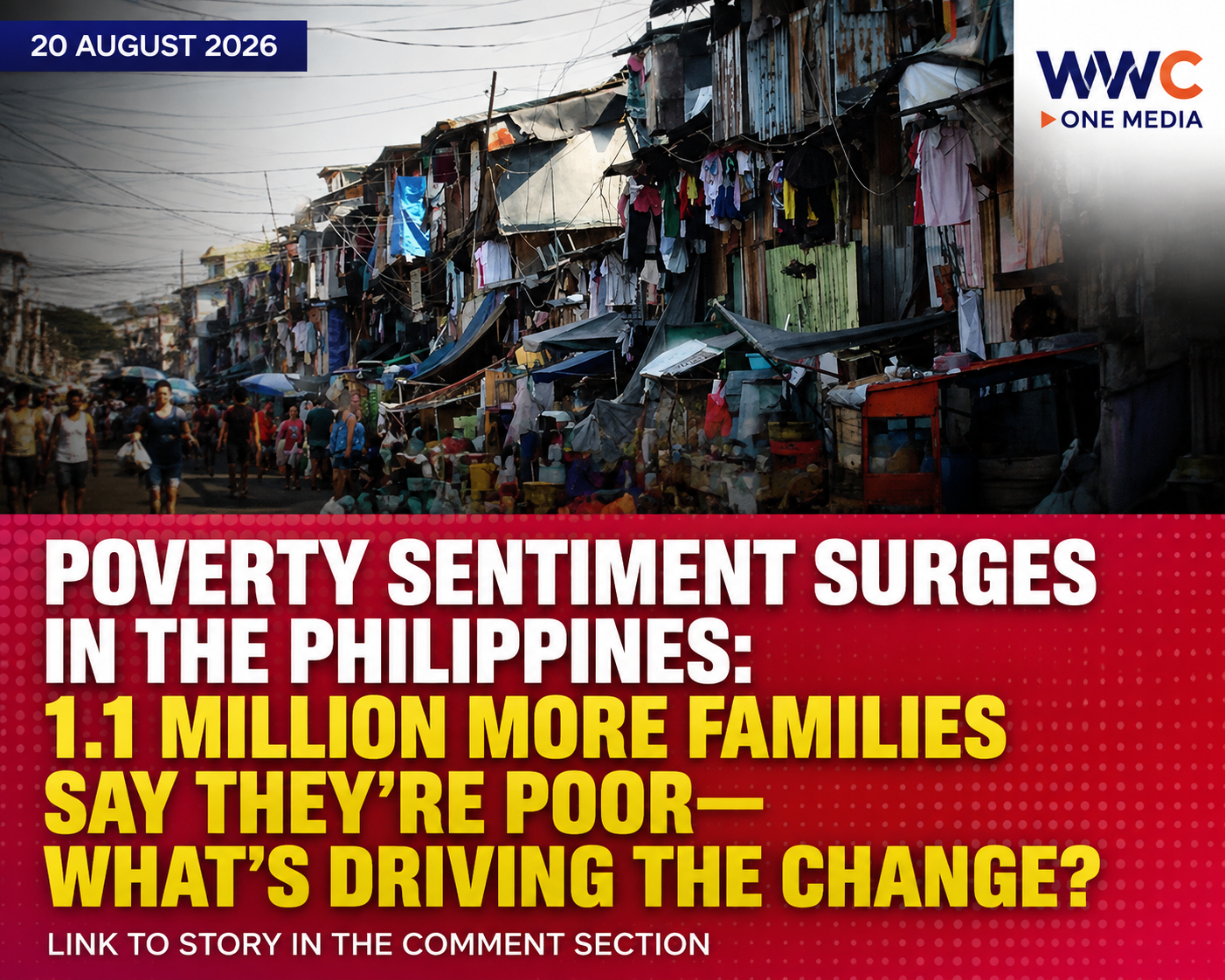
MANILA, Philippines — More Filipino families are saying they are struggling to make ends meet, with both self-rated poverty and hunger rising sharply in the second quarter of 2026, according to the latest Tugon ng Masa survey by OCTA Research.
The survey found that 39% of Filipino families considered themselves poor in July, up from 35% in March. That four-percentage-point increase translates to roughly 1.1 million additional families identifying themselves as poor.
OCTA estimates that about 10.3 million families considered themselves poor in July, compared with approximately 9.2 million in March.
But the warning sign does not stop at poverty perceptions.
Hunger also climbs
Self-rated hunger increased to 21% in July from 17% in March, representing roughly 5.6 million families, compared with about 4.5 million four months earlier.
OCTA said, however, that most families reporting hunger experienced it only occasionally. Around 87% said they experienced hunger once or a few times, rather than frequently or continuously.
The results point to continued pressure on household budgets as families contend with the cost of food, housing, transportation and other basic expenses.
Mindanao remains the hardest-hit area for poverty
OCTA said Mindanao continued to record the highest levels of self-rated poverty and food poverty among the country's major geographic areas.
At the same time, Balance Luzon recorded the highest incidence of hunger among the major areas in the latest survey.
The research firm also reported that the burden was substantially heavier among Class E households, underscoring how vulnerable lower-income families remain to increases in the cost of basic necessities.
The numbers come as economic growth slows
The OCTA findings arrive against a difficult economic backdrop.
The Philippine Statistics Authority reported that the economy expanded by only 2.3% in the second quarter of 2026, its weakest annual growth rate in several years. Household consumption still increased, but growth slowed to 2.8% during the quarter. Gross capital formation, meanwhile, contracted by 9.2%.
Reuters likewise reported that softer domestic demand and a sharp contraction in construction weighed on the economy during the quarter. Household spending growth slowed as elevated prices continued to affect consumers' purchasing power.
Prices remain another major concern.
According to the PSA, headline inflation eased slightly to 6.2% in July from 6.4% in June, but food and non-alcoholic beverages remained the largest contributor to overall inflation, followed by housing, water, electricity, gas and other fuels, and transport. Food inflation stood at 5.3% in July.
OCTA's figures should not be confused with official poverty statistics
The latest survey measures how families perceive their own economic situation. It is therefore different from the Philippine government's official poverty statistics, which are based on established income and expenditure thresholds.
That distinction matters: a rise in self-rated poverty does not automatically mean that the country's official poverty incidence has increased by the same percentage.
Still, the OCTA results provide an important snapshot of how Filipino households are experiencing economic conditions in their daily lives.
Earlier OCTA findings released in April showed self-rated poverty at 35% in March, equivalent to about 9.2 million families. At that time, Mindanao also recorded the highest regional self-rated poverty rate.
A growing affordability problem?
The latest figures suggest that economic growth alone may not be translating into a stronger sense of financial security for many households.
Even as the economy continues to expand, slower household-consumption growth, elevated inflation and rising self-reported hunger indicate that many families remain vulnerable to price shocks.
The challenge for policymakers is therefore not simply to raise headline economic growth, but to ensure that growth translates into better purchasing power, stable employment, affordable food and improved household living standards.
For millions of Filipino families, the most important economic indicator may ultimately be much simpler: whether there is enough money left at the end of the month to put food on the table.