Seoul Schools Are Changing Fast—And More Than 22,000 Students Are Driving a Major Education Shift

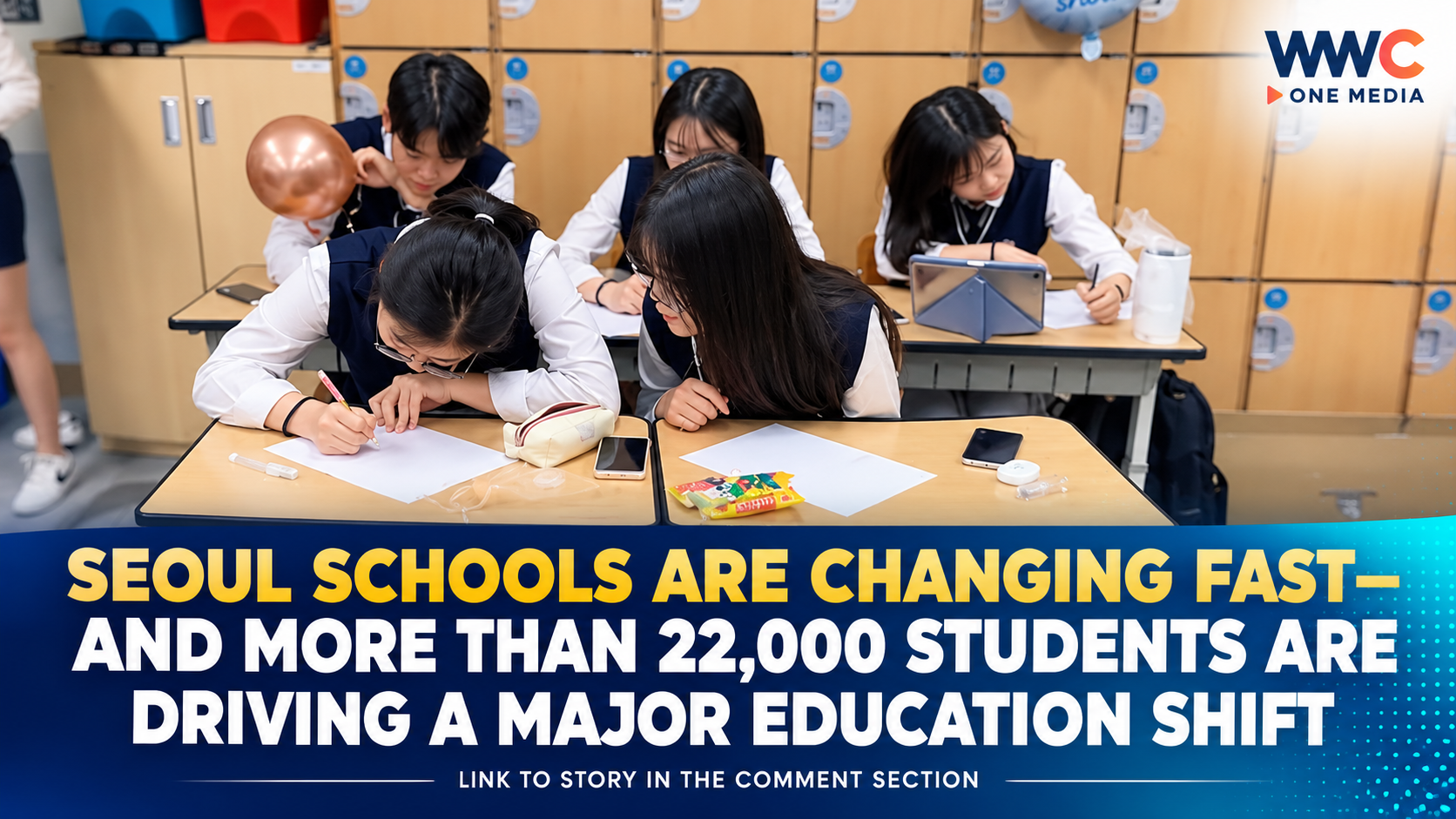
SEOUL, South Korea — Seoul is preparing to reshape how its public schools support migrant-background students as their numbers continue to rise across the capital.
The Seoul Metropolitan Office of Education plans to establish a second multicultural education support center, expand Korean-language preparatory schools and introduce AI-powered real-time interpretation and translation services under a policy road map for Education Superintendent Jung Geun-sik’s second term.
The move comes as the number of migrant-background students in Seoul has climbed past 22,000, according to education-office data. Their number increased 13.6 percent over the five years through April 2025.
But officials are not treating the change simply as a language issue.
The proposed measures cover Korean-language instruction, school adjustment, teacher training, counseling, career guidance and communication between schools and families.
A second multicultural education center is coming
One of the centerpiece proposals is a second Seoul Multicultural Education Support Center.
The facility is planned for the third and fourth floors of a kindergarten building at Seoul Changsin Elementary School in Jongno-gu.
It is expected to provide counseling, teacher training, educational programs and hands-on activities. The center is also planned to include AI- and education-technology facilities as well as multilingual support infrastructure.
The education office aims to complete design and construction during the second half of 2026, with a formal opening targeted for February 2027.
A regional support system connected to the center is expected to begin operating the following month.
However, the proposal is not yet a final guarantee. The Seoul education office said it will still examine feasibility and funding requirements before implementation is finalized.
Korean-language schools are also set to expand
Another major part of the plan involves students who have recently arrived in South Korea and foreign-national students who need additional Korean-language support.
Seoul's Korean-language preparatory schools provide intensive language education and help students adjust to the country's public-school system.
The program is expected to grow from three schools in 2026 to four in 2028 and five in 2029.
The education office also plans to study the existing system in the second half of 2026 before beginning improvements to its operating model in 2027.
Future programs could be operated directly inside schools, commissioned to universities or organized with local governments.
The expansion builds on a program Seoul began developing earlier.
In 2025, Dongyang Mirae University and Sookmyung Women's University were selected as the first Seoul-type Korean-language preparatory schools. The program was designed to provide intensive Korean instruction in smaller classes, alongside activities such as arts, physical education and career mentoring.
More help for schools with large migrant populations
The changes will not be limited to specialized facilities.
Schools with higher concentrations of migrant-background students are also expected to receive additional assistance, including more Korean-language classes, smaller class sizes, multilingual instructors and multicultural coordinators.
Importantly, the eligibility threshold is being lowered.
Beginning in 2027, schools would qualify for the additional support when migrant-background students account for at least 20 percent of enrollment, compared with the 30-percent threshold in 2026.
The education office also plans to develop Korean-language textbooks and teaching materials tailored to local needs.
Seoul is turning to AI to break the language barrier
Perhaps one of the most notable elements of the plan is the proposed use of artificial intelligence.
The education office plans to pilot an AI-based real-time interpretation and translation service during the second half of 2026.
The system is intended to help schools communicate with students and parents who face language barriers, with the technology designed to recognize terminology and expressions specific to education and schools.
This is not Seoul's first attempt to use AI in supporting migrant-background students.
In June, the education office announced customized career and college-admissions counseling for migrant-background students, including school visits and AI-assisted interpretation. At the time, officials said Seoul had approximately 22,000 migrant-background students, representing nearly 3 percent of the city's student population.
Support will go beyond the classroom
The education road map also calls for expanded school-adjustment programs and bilingual psychological counseling for students experiencing difficulties linked to language and cultural differences.
That broader approach reflects a growing reality in Seoul schools: students arriving from different cultural and linguistic backgrounds need more than language lessons to successfully navigate the education system.
Career and university guidance is also becoming part of that support.
The Seoul education office has previously outlined assistance covering career exploration, course selection, student-record management and individual counseling, while also providing parents with guidance on Korea's education and university-admissions systems.
Why the shift matters
The numbers help explain why Seoul is expanding its approach.
According to the education office, the number of migrant-background students increased 13.6 percent over five years through April 2025.
For Seoul's schools, that means classrooms are becoming increasingly diverse at a time when educators are also being asked to ensure students can access the same academic and social opportunities regardless of their linguistic background.
The planned combination of language programs, specialized centers, multilingual staff, counseling and AI-assisted translation suggests Seoul is moving toward a more comprehensive support system.
But the next question is whether the ambitious road map can be fully funded and implemented on schedule.
For now, the education office is still reviewing the feasibility and financing of the proposals.
If approved, however, the changes scheduled through 2029 could significantly alter how Seoul's public schools respond to the city's rapidly diversifying student population.
WWC ONE MEDIA M.J.E