
Singapore Landlord Sued for S$84K Over Unpaid Rent — Tenant Blamed Flooding and Defects. Here’s What the Court Decided

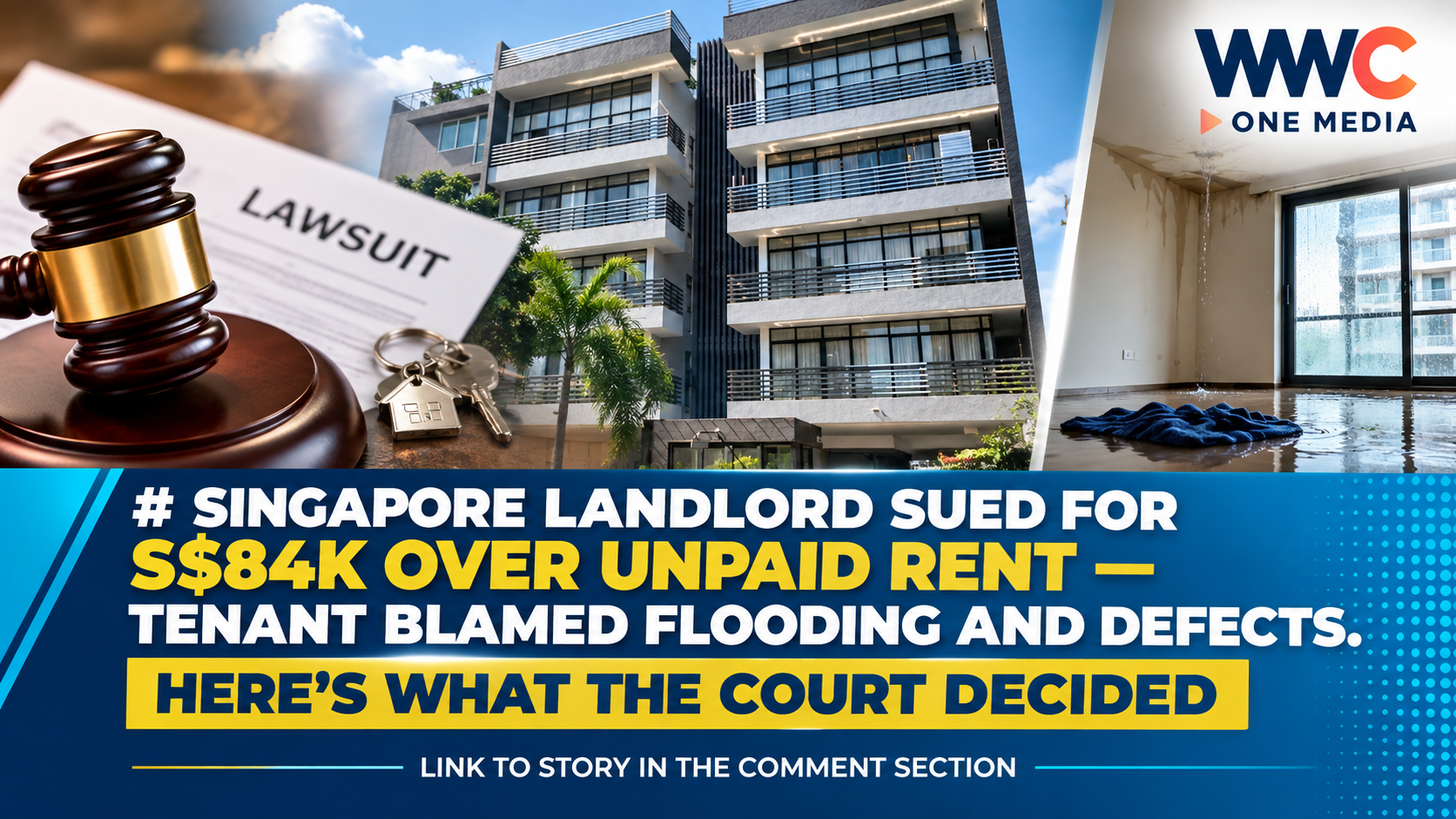
SINGAPORE — A bitter dispute over unpaid rent at a luxury Singapore penthouse ended with a court ruling that gave both the landlord and tenant something to celebrate — and something to pay for.
The landlord initially sought more than S$84,000 from its corporate tenant over unpaid rent and alleged property damage.
But the tenant fought back, claiming the property suffered from serious water seepage, flooding, electrical problems and other defects that made parts of the home difficult — and at times impossible — to live in.
The tenant and occupant also counterclaimed for more than S$122,000, including alleged damage to luxury watches, a Hermès handbag and other belongings.
In the end, the Singapore District Court found that the tenant owed substantial unpaid rent, but also ruled that the landlord had breached its obligations to maintain parts of the property and ensure it was fit for human habitation.
The dispute involved a luxury duplex penthouse
The case centred on a duplex penthouse at Cubik, 81 Lorong K Telok Kurau.
Property owner EG Development Pte Ltd rented the premises to Our Cocomo Pte Ltd under an initial 12-month tenancy beginning in May 2023 at a monthly rent of S$8,888.
The lease was later renewed for another year at a lower monthly rent of S$7,800.
Won Shi Lin Yura, the company's sole shareholder and director, was listed as an occupier of the property.
But the tenancy eventually descended into a major legal battle.
Landlord demanded more than S$84,000
EG Development claimed the tenant had failed to pay rent from July 31, 2024.
The landlord sought damages totalling S$84,584.18, including:
- S$46,296.78 in unpaid rent
- S$33,855.40 in post-tenancy rectification costs
- Additional repair costs related to water seepage
- Swimming pool pump and lighting replacement costs
The landlord also alleged that the tenant had failed to properly maintain the property and had not always allowed contractors access for swimming pool maintenance.
But the tenant had a very different story.
Tenant said the home suffered repeated flooding
The defendants claimed the property had been plagued by serious defects.
These included repeated water seepage and flooding incidents, as well as electrical problems.
According to the court judgment, the tenant alleged water seepage occurred:
- In the master bedroom toilet
- Across multiple parts of the home
- In the living room
- In the bedrooms
- On both floors of the property
One flooding incident allegedly affected the entire first floor.
The tenant also claimed that damp conditions and water damage made a bedroom unusable and forced the occupier's daughter to stay elsewhere.
Luxury watches and Hermès bag were also caught in the dispute
The tenant and occupier claimed the water and mould had damaged packaging, certificates and other materials linked to valuable luxury goods.
The disputed items included:
- A Richard Mille watch
- An F.P. Journe watch
- A Cartier Love bracelet
- A Ulysse Nardin watch
- A Hermès Kelly handbag
The defendants initially claimed that damage to packaging and authenticity documents could significantly reduce the resale value of the luxury goods.
They claimed a total of more than S$122,000 in damages, including claims related to the alleged reduction in value of these items.
But the court was not convinced by most of those claims.
Court: Landlord was responsible for major water problems
The court found that several water-related problems were not caused by the tenant.
The judge found that certain water seepage issues fell under the landlord's obligation to maintain the property's pipes, structure and other areas covered by the tenancy agreement.
The court also accepted that there was an implied term that the furnished premises were fit for human habitation.
The judge found that the landlord had breached its obligations in relation to water seepage and related maintenance issues.
At one point, the court found the property was effectively uninhabitable for four days because of water dripping and flooding, creating a potential slip-and-fall hazard.
The court also found that damp flooring, high humidity and a mouldy smell continued to affect the occupier after the most serious flooding episode.
Tenant awarded nearly S$11,000 for loss of amenity
The court awarded the corporate tenant S$10,992.29 in damages.
The amount included compensation for:
- Four days when the premises were found to be uninhabitable
- Ongoing damp flooring
- High humidity
- A mouldy smell
- Loss of use of part of the property due to electrical problems
The court assessed compensation for the continuing loss of amenity at 20 per cent of the rent over the relevant period.
The ruling is significant because it shows that a tenant's obligation to pay rent does not automatically erase a landlord's separate obligation to maintain the property.
But unpaid rent was still unpaid
The tenant admitted that rent had not been paid from July 31, 2024.
The tenant argued that its claims against the landlord should be set off against the unpaid rent.
However, the court found that the landlord was still entitled to substantial unpaid rent.
The judge calculated the unpaid rent and double rent at S$31,703.22.
The original landlord claim for more than S$46,000 in rent was reduced because the court determined that double rent should only begin when the legal proceedings were served, rather than from the earlier date claimed by the landlord.
Landlord claimed S$33,855 in repair costs — court awarded just S$340
Perhaps one of the biggest surprises came from the landlord's property damage claim.
EG Development had sought S$33,855.40 in rectification costs after recovering the premises.
But after examining the evidence, including expert opinions, the court found that many of the alleged defects were linked to water ingress and other issues that were not the tenant's responsibility.
The tenant was ultimately held liable for only limited damage.
The court assessed the tenant's liability for property damage at just S$340.
That is a dramatic reduction from the tens of thousands of dollars originally claimed.
What happened to the luxury goods claim?
The court did find that the landlord owed the occupier a duty of care and had breached that duty by failing to act promptly on a drainage issue it knew could lead to flooding.
However, the court rejected most of the massive luxury goods claim.
The occupier's expert had estimated that the alleged loss in value of several luxury items could total between S$152,000 and S$178,000.
But the judge found the evidence insufficient to support most of those estimates.
The court noted problems with proving:
- That all the claimed boxes and certificates existed
- Where the luxury items had been stored
- Whether those areas were affected by flooding
- Whether the items had been properly protected after earlier water problems
- The basis used to estimate the alleged reduction in value
Ultimately, the occupier was awarded S$1,000 for damage to the packaging of two watches.
A major lesson for both landlords and tenants
The case offers several important lessons for Singapore's rental market.
For tenants: Property defects do not automatically mean rent can stop
The tenant in this case successfully proved that the landlord had breached certain maintenance obligations.
But the tenant still remained liable for unpaid rent.
The court separately assessed the landlord's rent claim and the tenant's counterclaim.
In other words, a property dispute does not automatically give a tenant the right to simply stop paying rent.
The legal consequences depend on the tenancy agreement, the nature of the defects and the evidence presented.
For landlords: Document repairs and prove responsibility
The landlord's massive rectification claim was largely unsuccessful because the court found insufficient evidence linking many defects to the tenant.
The judgment shows the importance of:
- Detailed inspection records
- Clear photographs
- Expert evidence
- Itemised repair quotations
- Documentation showing who caused the damage
The court specifically noted that the burden was on the landlord to prove its damages.
For both sides: Evidence can make or break a case
This case also highlights the importance of documenting property problems as they happen.
The dispute involved:
- WhatsApp messages
- Expert reports
- Contractor records
- Repair invoices
- Photographs
- Inspection evidence
- Tenancy agreement clauses
For both landlords and tenants, records can become critical when a disagreement ends up in court.
So who really won?
The answer is complicated.
The landlord won:
- S$31,703.22 in unpaid and double rent
- S$340 for limited property damage
The tenant won:
- S$10,992.29 for loss of amenity and property-related disruptions
The occupier won:
- S$1,000 for damage to luxury watch packaging
The final financial outcome would also depend on the court's full orders regarding the parties' claims, set-offs and costs.
But the central message of the judgment is clear:
Neither side got everything it wanted.
The landlord did not recover the full S$84,000-plus initially claimed.
The tenant did not escape the unpaid rent.
And the massive luxury goods claim was reduced to just S$1,000.
The bottom line
A Singapore landlord sued for more than S$84,000 over unpaid rent and alleged property damage — but the tenant fought back with claims of flooding, water seepage and serious defects.
The Singapore District Court ultimately ruled that the tenant still owed S$31,703.22 in unpaid and double rent, while the landlord was found to have breached obligations relating to water seepage and the property's habitability.
The tenant was awarded S$10,992.29, while the occupier received S$1,000 for damage to luxury watch packaging.
Meanwhile, the landlord's claim for more than S$33,000 in post-tenancy rectification costs was reduced to just S$340 after the court found that many of the alleged defects were not the tenant's responsibility.
The case is a reminder for anyone renting or leasing property in Singapore:
Don't ignore defects.
Don't stop documenting problems.
Don't assume unpaid rent can simply be cancelled because a property has defects.
And for landlords:
A repair bill is not automatically proof that the tenant caused the damage.
WWC ONE MEDIA J.M.D