
Singaporeans Have Used S$30.4 Million in Culture Pass Credits — But the Bigger Challenge Is Just Beginning

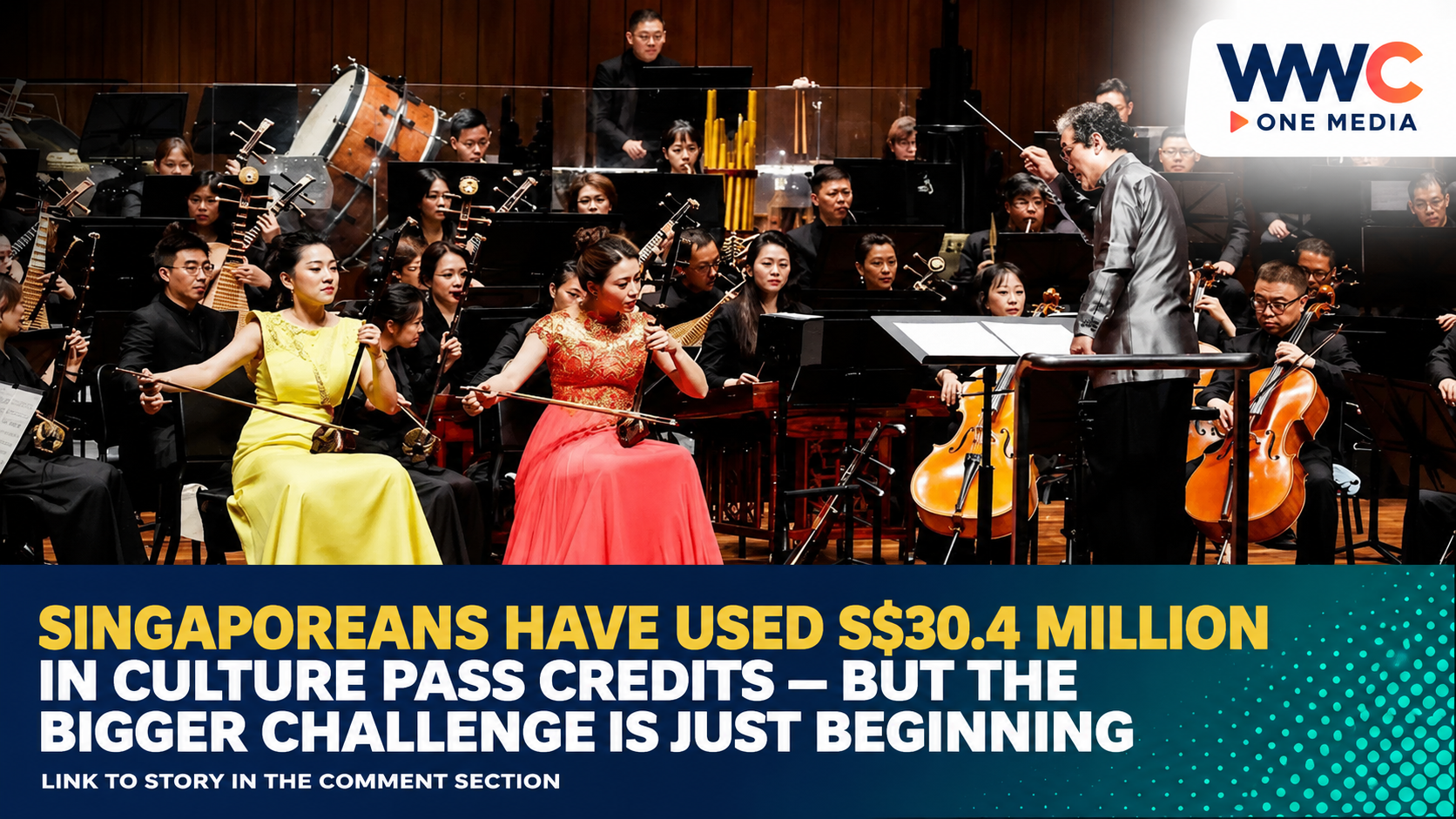
SINGAPORE — Singapore’s SG Culture Pass has delivered a significant boost to the country’s arts and heritage scene during its first year, with about 411,000 Singaporeans using more than S$30.4 million in credits.
But as the programme enters its second year, arts organisations and museums face a bigger challenge: turning the initial incentive into a lasting habit of attending performances, visiting museums and engaging with Singapore’s cultural scene.
The SG Culture Pass was launched in September 2025 as part of efforts to encourage Singapore citizens to experience local arts, heritage and culture. Eligible Singapore citizens aged 18 and above in 2025 received S$100 in credits, which can be used for qualifying cultural experiences.
The credits remain valid until Dec. 31, 2028.
According to the Ministry of Culture, Community and Youth, around 1.4 million Singaporeans have registered for the scheme, while 411,000 have partially or fully used their credits as of Aug. 31, 2026. That represents about 14 per cent of eligible citizens.
The amount spent — S$30.4 million — is roughly 10 per cent of the S$300 million allocated to the programme.
The surprising part: many users were new to the arts
One of the strongest signals from the first year is that the Culture Pass appears to have attracted people who were not already regular arts audiences.
MCCY said 68 per cent of registered users had not attended a local arts and culture event in the previous five years.
Nine in 10 users surveyed after participating in programmes also said they were willing to attend another local cultural offering beyond the Culture Pass.
That suggests the programme may be doing more than simply subsidising existing arts fans — it may be introducing new audiences to Singapore’s cultural scene.
Young adults have been particularly active. Those aged 18 to 35 accounted for 43 per cent of credit usage, followed by people aged 36 to 54 at 38 per cent and those aged 55 and above at 19 per cent.
Live performances have attracted the largest share of spending across age groups.
Arts organisations are already seeing the difference
Singapore’s arts organisations have reported noticeable increases in participation.
The Singapore Repertory Theatre said more than 60 per cent of the audience for its recent production of Legally Blonde used Culture Pass credits, with about half of those users attending the theatre for the first time.
The theatre now plans to target people who are less familiar with the arts, including older Singaporeans, and is considering special Culture Pass packages for selected productions.
Meanwhile, private Peranakan museum The Intan reported that visitor numbers increased by as much as 25 per cent following the introduction of the scheme.
The museum has also experimented with programmes aimed at different groups, including children's cultural activities, digital experiences and Peranakan cooking programmes.
These developments point to a broader effect of the Culture Pass: cultural organisations are not simply receiving subsidised visitors, but are experimenting with new ways to reach audiences.
But seniors remain a major challenge
While younger Singaporeans have made the biggest use of the credits, older residents have been harder to reach.
Arts organisations say one problem is not necessarily a lack of interest, but the practical difficulty of navigating digital booking systems.
At the Visual Arts Centre, seniors and retirees make up a large share of Culture Pass users, particularly for landscape and Chinese ink painting programmes.
However, the centre said some older participants struggle with the requirement to book through ticketing platforms before redeeming their credits.
To address this, staff have been helping seniors navigate the booking process in person.
The government is also preparing another solution.
New portal aims to bring seniors into Singapore’s cultural scene
MCCY plans to introduce the Group-Assist Portal from mid-October 2026 to make it easier for community organisations to organise group cultural outings.
The portal will allow organisations such as Active Ageing Centres, community groups and nursing homes to arrange visits and simplify the process of redeeming Culture Pass credits.
A pilot programme is scheduled for November and December, with organisations including Lions Befrienders and Care Corner Seniors Services involved.
The move recognises that some seniors may be more likely to participate when cultural activities are organised as social outings rather than individual experiences.
It also addresses two major barriers identified by the government and arts groups: digital literacy and mobility.
Culture Pass is expanding beyond performances
The scheme has also grown beyond traditional arts events.
Singapore literature, or SingLit, was added as an eligible category in March 2026, allowing eligible citizens to use their credits to purchase qualifying physical books from participating bookstores.
Local films were added earlier, in November 2025.
By the end of the first year, the programme supported more than 1,400 cultural programmes, 3,100 books and 23 films, involving more than 900 arts and heritage partners, 76 publishers and 17 bookstores.
Around S$2.9 million of the credits had been spent on Singapore literature books, while another S$1.6 million had gone towards local films.
Industry participants say the book component has helped expose more readers to Singaporean writers and local literature.
The real test comes after the S$100 runs out
Despite the encouraging signs, the first-year numbers also raise an important question.
Only about 10 per cent of the S$300 million allocated to the programme has been used after one year.
The Culture Pass is scheduled to run until the end of 2028, meaning there is still considerable time for more Singaporeans to use their credits.
Arts policy researchers have cautioned against judging the programme solely by its first-year redemption rate.
The more important measure may be whether people who tried a performance, exhibition, workshop, book or film through the scheme continue participating after their credits are exhausted.
That distinction could ultimately determine whether the Culture Pass becomes a temporary subsidy or a lasting cultural habit.
For arts groups, the task now is therefore bigger than simply filling seats.
They need to persuade first-time visitors to come back.
For museums, theatres, filmmakers, publishers and artists, the first year has provided a valuable opportunity to reach audiences who may otherwise never have walked through their doors.
The next phase will determine whether that first experience becomes something more permanent.
Singapore’s Culture Pass may have succeeded in getting people to take the first step into the arts.
Now comes the harder question: will they keep coming back when the incentive is no longer the main reason to go?
WWC ONE MEDIA MJE