
Supreme Court Eyes Major Reforms to Cut Court Delays, Expand Access to Justice

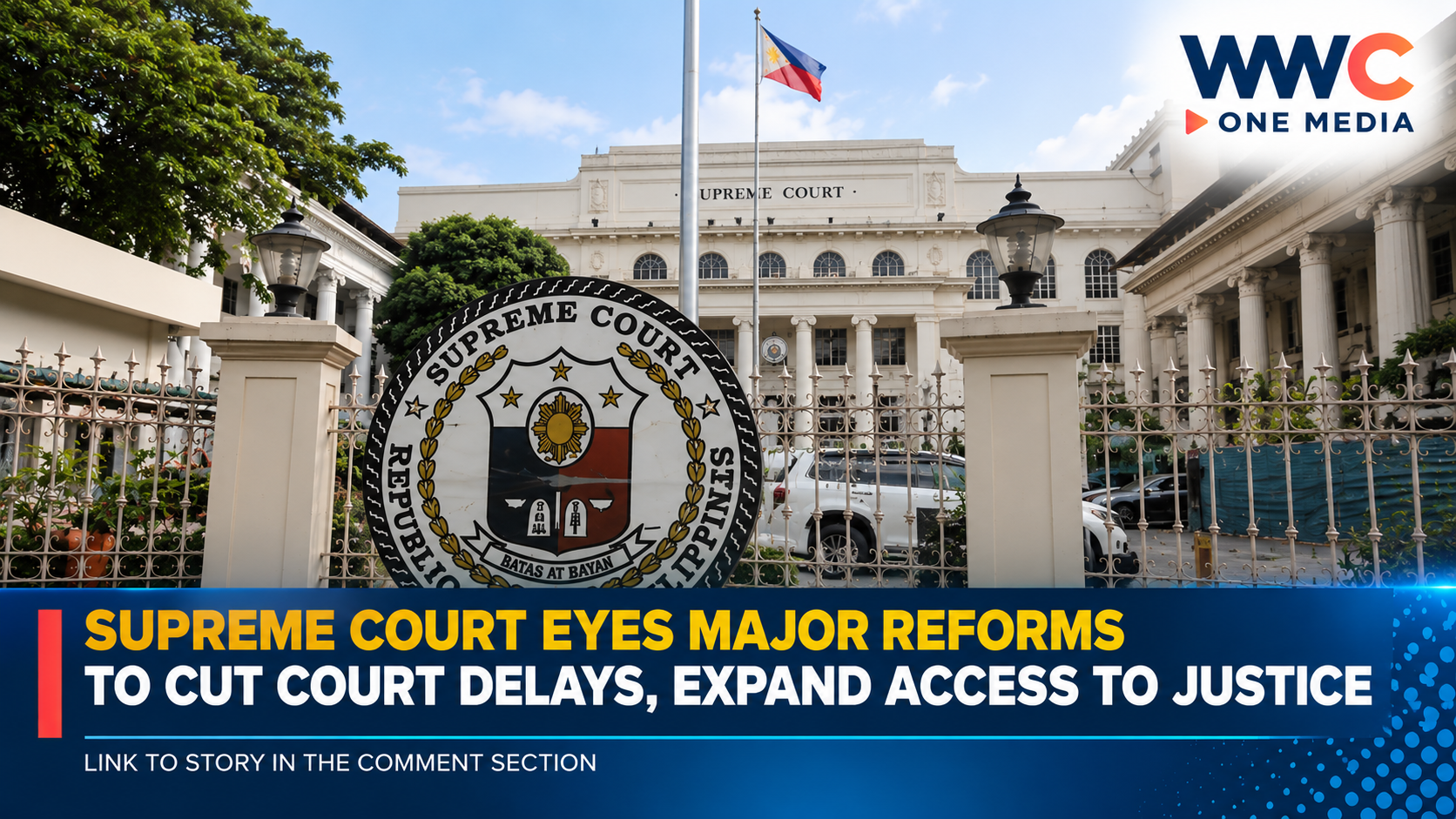
MANILA, Philippines — The Supreme Court is pushing forward with a series of judicial reforms aimed at tackling one of the country's most persistent justice-system problems: delays in the resolution of cases and barriers that keep Filipinos from accessing the courts.
The reform drive comes as the judiciary continues to modernize court operations, expand digital services, strengthen court performance monitoring and improve legal assistance for disadvantaged Filipinos.
The Supreme Court's broader modernization program is anchored in its Strategic Plan for Judicial Innovations 2022–2027, which seeks to make the Philippine justice system more efficient, accessible, technology-driven and responsive.
Court delays remain a major challenge
For many litigants, getting justice can take years because of procedural requirements, case backlogs, limited resources and the sheer volume of cases handled by courts.
The Supreme Court is therefore looking at reforms designed to improve the way cases move through the judicial system—from filing and record management to hearings, case monitoring and eventual resolution.
Recent initiatives show that the reforms are not limited to simply hiring more personnel or building additional courtrooms.
The judiciary is increasingly turning to digital technology and performance-based management to speed up court processes.
Digitalization takes center stage
One of the major components of the Supreme Court's modernization effort is the continued digitalization of judicial operations.
The Court has highlighted how digitized systems can significantly reduce delays in the elevation of records on appeal. Processes that previously required weeks or months to complete can be substantially shortened through electronic systems, while human review remains part of the process.
Videoconferencing is also being used to make hearings more accessible, particularly for litigants, witnesses and lawyers who would otherwise have to travel long distances.
For people living in remote communities, the shift could mean fewer transportation costs, less time away from work and family, and easier participation in court proceedings.
The judiciary has also adopted a framework governing the responsible use of human-centered artificial intelligence, with fairness, accountability and transparency identified as key principles.
High-performance courts being expanded
The Supreme Court has also begun an expanded pilot implementation of its Performance Development Framework 2.0 and Companion for High-Performance Courts.
The initiative is designed to improve court performance and make judicial services more accessible to the public. The pilot is being implemented with support from the European Union Governance in Justice Programme.
The effort reflects a broader shift toward measuring how courts perform and identifying operational problems that can contribute to delays.
The objective is straightforward: cases should move more efficiently while preserving the quality, independence and fairness of judicial decisions.
Legal aid gets a digital upgrade
Improving access to justice is also about helping people who cannot afford legal representation.
In March, the Supreme Court launched the first phase of its Unified Legal Aid Service (ULAS) Portal, a centralized digital platform intended to streamline the monitoring and delivery of mandatory pro bono legal services to indigent Filipinos.
The Court subsequently partnered with the Commission on Human Rights, National Anti-Poverty Commission, National Commission on Indigenous Peoples and Presidential Commission for the Urban Poor to strengthen the implementation of the Unified Legal Aid Service.
The program is intended to improve referrals, coordination and outreach so that vulnerable communities can more easily connect with legal assistance.
Chief Justice Alexander Gesmundo has described access to justice as one of the most pressing challenges facing the legal system, particularly because financial constraints, lack of information and structural barriers can prevent vulnerable Filipinos from obtaining legal representation.
Criminal justice reforms also target congestion
The Supreme Court's reform agenda extends beyond civil and commercial cases.
The judiciary has been working on measures to address overcrowding in jails and improve the criminal justice process, including stronger Justice Zones, proposed custodial hearings and expanded access to free legal assistance for persons deprived of liberty.
At the Second National Decongestion Summit, the Supreme Court reported that national jail congestion had fallen from 296 percent in May 2025 to 286 percent in September 2025, although officials stressed that serious overcrowding problems remain.
These measures form part of a larger effort to ensure that delays in the justice system do not unnecessarily keep people behind bars while their cases are pending.
Reform push comes amid calls for greater accountability
The latest reform drive also comes amid renewed public discussion about judicial accountability and the need for court proceedings to remain transparent and responsive.
In a September 3 statement, the Supreme Court said court proceedings at all levels must be accountable to the public and emphasized that allegations of misconduct or corruption should be brought through the proper complaint process, with evidence and an opportunity for the concerned judges or justices to respond.
The Court has likewise said it welcomes fair criticism of judicial decisions while maintaining that serious accusations should be addressed through established procedures.
The bigger question: Can reforms make justice faster?
The Supreme Court's modernization push represents a significant attempt to address problems that have persisted for years.
But technology alone cannot eliminate court backlogs.
The success of the reforms will ultimately depend on how effectively digital systems are implemented, whether court personnel receive sufficient training and resources, whether procedural bottlenecks are removed, and whether reforms translate into faster, more affordable and more accessible justice for ordinary Filipinos.
For litigants who have spent years waiting for their cases to be resolved, the real measure of reform will not be the number of new platforms or programs launched.
It will be whether they finally see their cases move.