
Taiwan Tracks 10 Chinese Ships Around Island as Beijing’s Maritime Pressure Continues

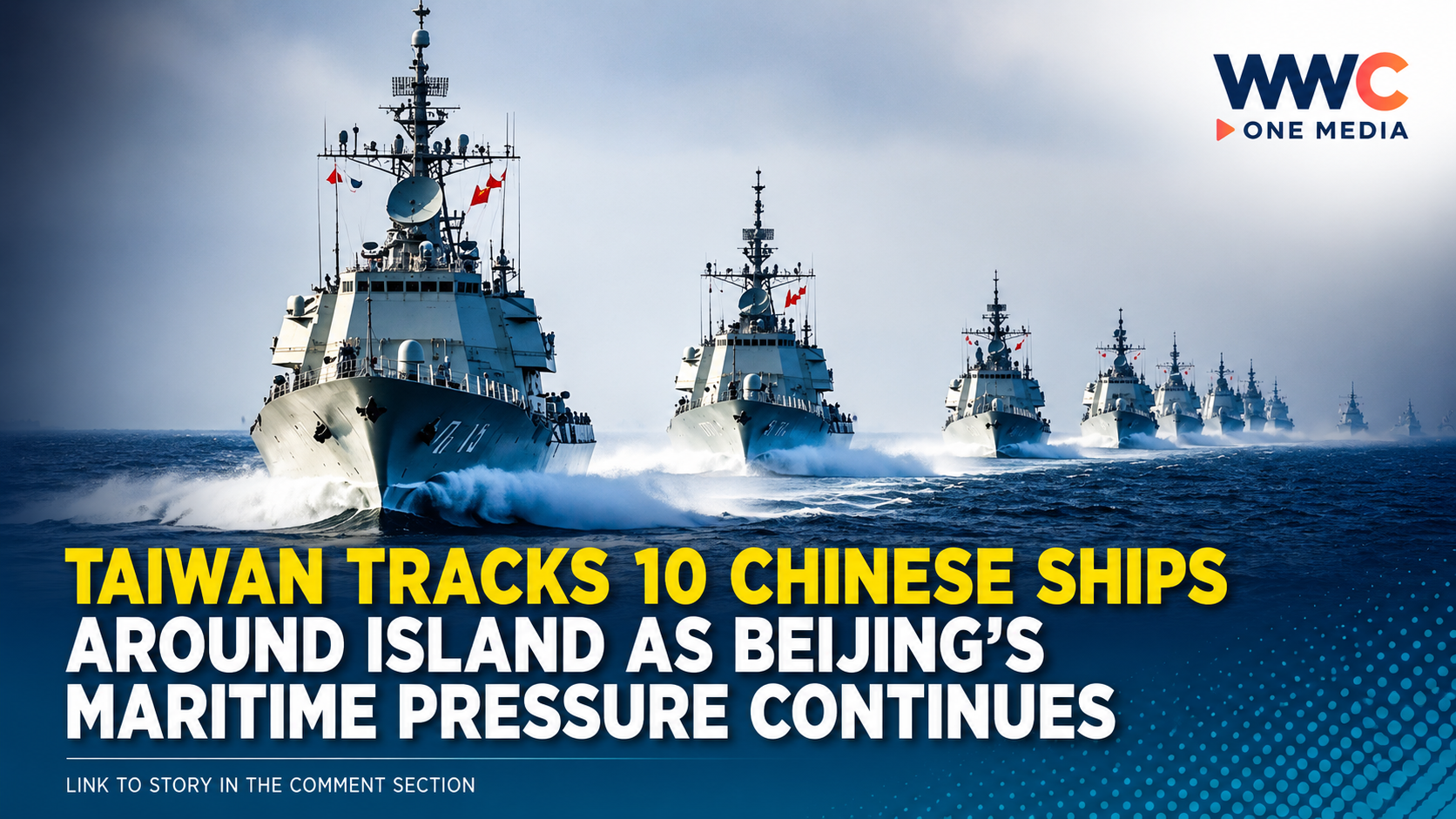
TAIPEI — Taiwan has detected 10 Chinese vessels operating around the island, prompting Taipei to deploy surveillance and military assets as pressure from Beijing continues to build across the Taiwan Strait and surrounding waters.
Taiwan’s Ministry of National Defense said it tracked five Chinese naval vessels and five Chinese official ships between 6 a.m. Thursday and 6 a.m. Friday, Sept. 4.
Taiwan responded by deploying aircraft, naval vessels and coastal-based missile systems to monitor the movements, according to the defense ministry.
The latest activity comes amid a sustained pattern of Chinese military and maritime operations around Taiwan. Taiwan News reported that, so far in September, Taiwan’s defense ministry had detected Chinese military aircraft once and Chinese ships on 26 occasions.
Another day of pressure around Taiwan
The latest 10-vessel count follows several days of similar activity.
On Thursday, Taiwan reported tracking eight Chinese ships, consisting of five naval vessels and three official ships. A day earlier, Taiwan also reported one Chinese military aircraft, five naval vessels and three official ships operating around the island.
The repeated presence has become part of what Taipei describes as China’s broader use of gray-zone tactics—activities designed to exert pressure and pursue strategic objectives without crossing into a large-scale conventional conflict. Taiwan News noted that Beijing has progressively increased the number of military aircraft and naval vessels operating around Taiwan since 2020.
Maritime pressure is expanding beyond military ships
The latest development also comes as Chinese maritime activity east of Taiwan attracts increased attention.
Taiwan’s Coast Guard Administration recently said it deployed patrol vessels to monitor Chinese ships operating off the island’s east coast after the China Coast Guard announced another patrol in the area.
According to reporting by the Taipei Times, two China Coast Guard vessels were observed east of Green Island, prompting Taiwan to criticize what it called an effort to use “law enforcement” activity to expand Beijing’s practical jurisdictional claims.
Reuters also reported last month that Taiwan’s coast guard confronted and shadowed a Chinese research vessel operating in sensitive waters west of the island. Taiwan regarded the activity as another form of maritime pressure.
Taiwan is preparing for more than a military confrontation
The growing maritime activity comes as Taiwan strengthens its broader defensive preparations.
Reuters reported Thursday that Taiwan’s cabinet proposed an additional NT$145.7 billion (about US$4.6 billion) in defense spending for 2026. The proposed funding includes domestically developed missile and drone capabilities and is intended to address what Taipei sees as growing military pressure from China.
Taiwan has also been placing greater emphasis on drones, surveillance and coastal defense as it prepares for scenarios ranging from gray-zone pressure to a potential blockade.
Recent Reuters reporting from the strategically important Penghu Islands highlighted how Taiwan is reinforcing those outlying positions, including with missiles, drones and civil-defense preparations. The islands sit in the Taiwan Strait and are considered strategically important to Taiwan’s ability to resist a potential Chinese attack.
Does 10 ships mean an attack is coming?
Not necessarily.
The presence of Chinese naval and official vessels around Taiwan does not by itself indicate that an invasion or attack is imminent. Taiwan has reported similar maritime activity repeatedly, making the more significant issue the continuing normalization of Chinese military and government-vessel operations around the island.
At the same time, the sustained activity is closely watched because repeated operations can increase pressure on Taiwan, complicate military planning and raise the possibility of accidents or miscalculation.
The latest episode therefore matters less as a single 10-ship event than as part of a broader pattern of persistent Chinese maritime pressure around Taiwan.
And that is what Taipei—and countries across the wider Indo-Pacific—will be watching next: whether the activity remains at its current level or becomes another step toward a more sustained campaign to pressure Taiwan’s air and sea access.