
Taiwanese Actress Tsai Yi-chen Apologises After Japan Temple Scandal — The National Treasure At The Center Of The Case Is Over 1,200 Years Old

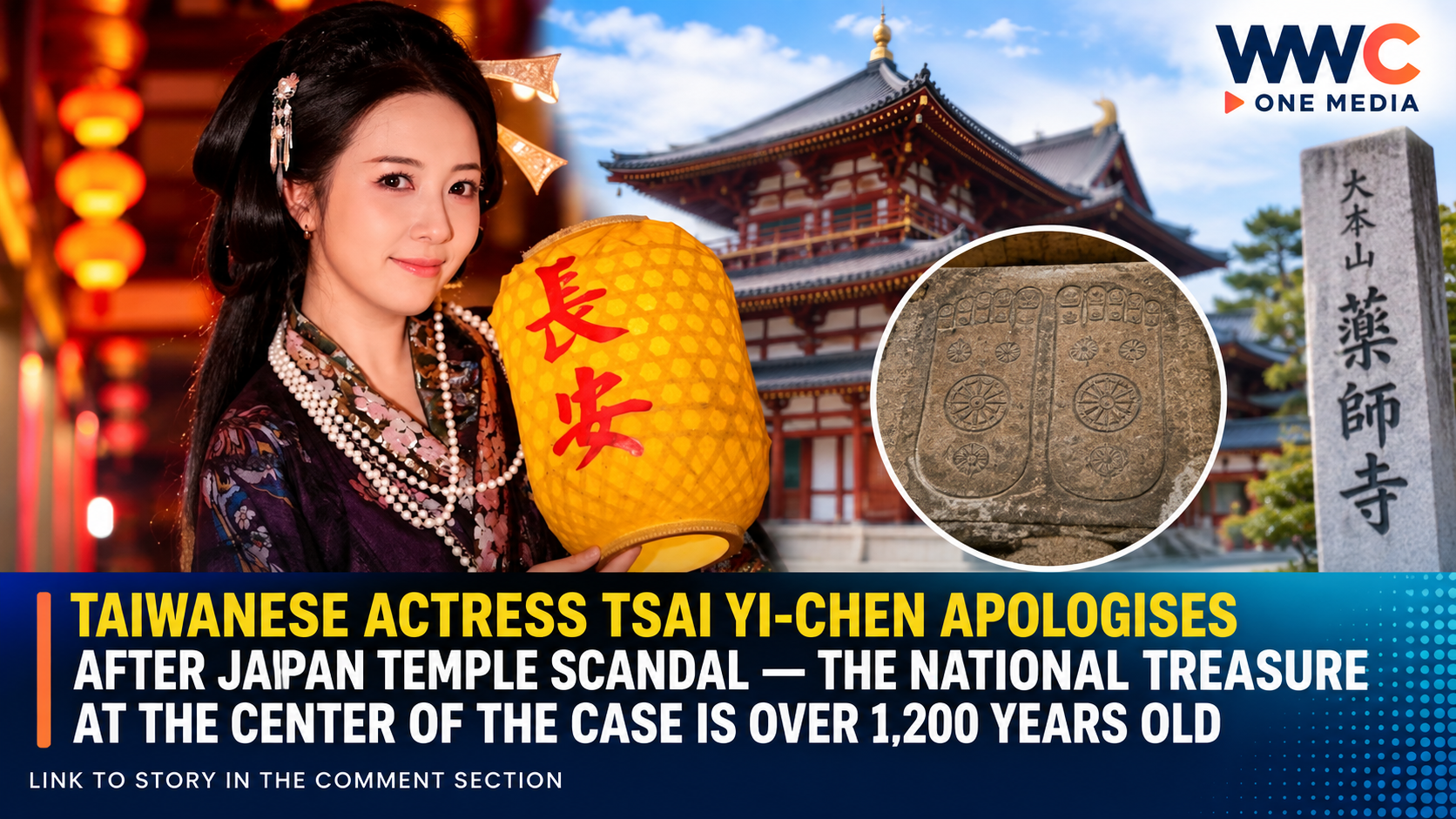
Taiwanese actress and host Tsai Yi-chen, also known by her former stage name Wuxiong (Five Bear), has publicly apologised after being arrested in Japan over an incident involving a national treasure at the historic Yakushiji Temple in Nara.
The 39-year-old said she had been released on the evening of Sept. 2 after completing the relevant investigative procedures in Japan. Japanese media reported that she was issued a 500,000-yen fine after being formally processed over the incident. She has since paid the fine and been released.
The controversy dates back to April 6, 2026, when Tsai allegedly poured a liquid onto the Buddha Footprint Stone (Bussokuseki) at Yakushiji Temple.
Japanese authorities later identified her through security-camera footage. When she returned to Japan on Aug. 22, she was arrested at Kansai International Airport in Osaka Prefecture, according to reports citing Japanese police and investigative sources.
What happened at Yakushiji?
The object at the centre of the case is not an ordinary temple stone.
Yakushiji's Buddha Footprint Stone is a National Treasure dating to 753, according to the temple's official historical materials. The stone depicts the footprints of Shakyamuni Buddha and is regarded by Yakushiji as the oldest surviving Buddha footprint stone in Japan.
Japan's official tourism information likewise dates the stone to 753 and describes it as the oldest of roughly 300 similar footprint stones in Japan.
Yakushiji itself is a temple with roughly 1,300 years of history and forms part of the UNESCO World Heritage property known as the Historic Monuments of Ancient Nara.
According to Japanese reports, the substance involved was a colourless, glycerin-containing liquid. Authorities said the stone was stained after the liquid was poured onto it.
During questioning, Tsai reportedly acknowledged the act and explained that she had a practice of pouring oil on things that moved or inspired her as a form of prayer. Japanese broadcaster TV Asahi also reported that she told investigators she had previously poured liquid on other things in Japan for similar prayer purposes.
Actress says she has 'no excuse'
Following her release, Tsai issued a statement in both Chinese and Japanese, apologising to Yakushiji, the Japanese public and people in Taiwan.
She acknowledged that her actions had caused trouble and distress and said she had come to understand that people travelling abroad have a responsibility to learn about the culture, history and laws of the countries they visit.
She specifically acknowledged the importance of showing greater care toward cultural assets with significant historical and cultural value, saying she had no excuse for her ignorance.
Tsai also apologised to Taiwan, saying that her actions had created concern and controversy at home. She promised to remember the incident as a lesson and said she would not repeat the mistake.
From arrest to release
The case attracted widespread attention after Japanese police announced the arrest of a Taiwanese woman in connection with the April incident.
Tsai's manager initially issued an apology on Aug. 24, saying that the matter was under investigation by Japanese authorities and that the team was working with her family and a lawyer in Japan while respecting the investigative process.
Japanese media subsequently reported that the case moved forward on Sept. 2, when the woman was formally processed and a 500,000-yen fine was imposed. Reports said the fine was paid and Tsai was released.
Her own statement the following day effectively confirmed that she had been released after the Japanese investigation procedures were completed.
Why the case has drawn so much attention
Beyond the celebrity connection, the incident has struck a nerve because of the historical importance of the object involved.
The Buddha Footprint Stone was created in 753 during Japan's Nara period and represents an early Buddhist tradition of depicting the Buddha symbolically through sacred footprints rather than a human-form statue. Yakushiji's own records describe it as a particularly rare surviving example of this tradition.
The case also highlights the potential legal consequences of interfering with protected cultural property in Japan. Taiwan's Central News Agency reported that Japan's Cultural Properties Protection Act provides criminal penalties for damaging or otherwise harming protected cultural properties.
For Tsai, the legal chapter has now ended with the payment of the fine and her release. But the wider controversy has continued to generate discussion in Taiwan and Japan about cultural respect, religious practices and the responsibilities of international visitors.
For now, Tsai's message is one of remorse: she has apologised to Japan and Taiwan, accepted the consequences of her actions and pledged not to repeat them.
The incident may be over legally — but the debate over where personal religious practices end and respect for another country's protected heritage begins is likely to linger.