
US Says Russia-Ukraine Peace Talks Are Moving Again — But the Hardest Question Could Still Kill the Deal

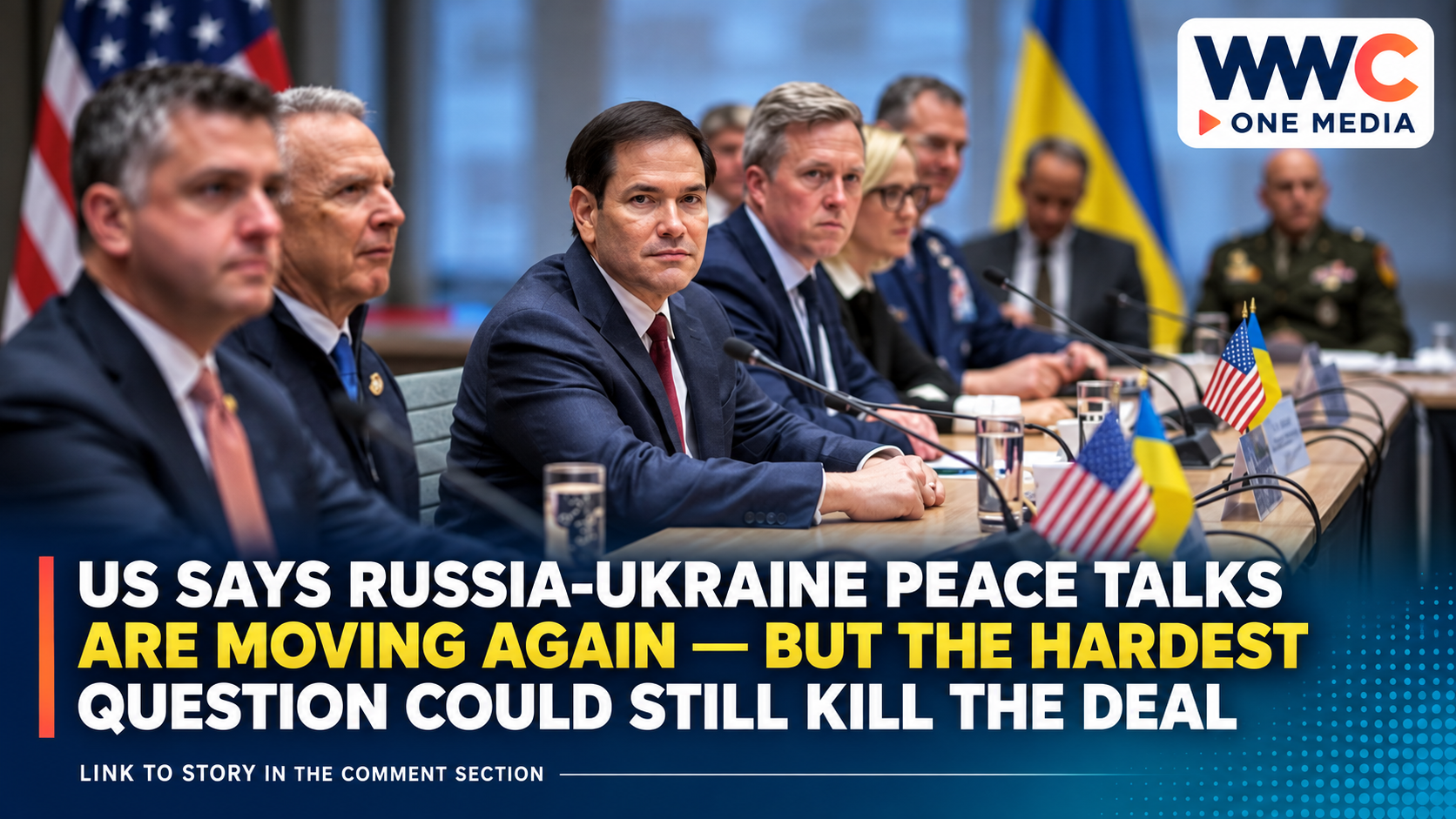
WASHINGTON/KYIV/MOSCOW — Washington is trying to breathe life back into stalled negotiations to end Russia’s war in Ukraine, with US special envoy Steve Witkoff saying weekend meetings in Moscow and Kyiv produced meaningful movement toward another round of three-way talks.
But behind the renewed diplomatic optimism lies the same problem that has frustrated previous negotiations: Russia and Ukraine remain deeply divided over territory, security guarantees and what a lasting settlement would actually look like.
Witkoff and fellow US envoy Jared Kushner traveled first to Moscow, where they held more than three hours of talks with Russian President Vladimir Putin, before continuing to Kyiv for discussions with Ukrainian President Volodymyr Zelenskyy. Their Kyiv stop marked their first official visit to the Ukrainian capital in the current diplomatic push.
Witkoff later said “substantive progress” had been made and pointed specifically to movement toward scheduling additional trilateral negotiations involving the United States, Russia and Ukraine. CNA, citing AFP, reported the same assessment Monday.
That language immediately raised hopes that direct negotiations could resume after months of diplomatic drift.
There is, however, an important distinction between talking about restarting negotiations and actually reaching a peace agreement.
Kremlin Opens the Door — Without Committing to a Date
Moscow has publicly left the door open.
Kremlin spokesman Dmitry Peskov said Russia does not rule out restarting the trilateral format with Ukraine and the United States. But he cautioned that discussions have not advanced far enough to announce either a venue or exact dates.
Peskov also declined to disclose details of Washington’s latest proposals or identify which unresolved issues were proving most difficult. The Kremlin said a future phone conversation between Putin and US President Donald Trump was also possible following the envoys’ diplomatic mission.
That makes the latest development significant — but far from a breakthrough.
The last major US-mediated Russia-Ukraine negotiations in Geneva in February also struggled over the same issues now confronting negotiators, particularly control of territory in eastern Ukraine.
What Changed in Kyiv?
The American envoys appeared more upbeat after their meetings in Ukraine.
Associated Press reported that Zelenskyy held three rounds of discussions with Witkoff and Kushner. National security advisers from Britain, France and Germany joined the final session, widening the negotiations beyond a purely US-Russia-Ukraine format.
The discussions went beyond immediate negotiations.
They included Ukraine’s air-defense requirements, energy security, reconstruction, long-term security guarantees and a proposed package designed to help the country survive another winter of Russian attacks.
Zelenskyy said difficult territorial questions ultimately would need to be handled at the leadership level, while emphasizing that Ukraine would need a strong military even if a peace agreement were reached.
Kushner, meanwhile, acknowledged the enormous difficulty of finding terms acceptable to both Moscow and Kyiv while saying Washington was trying to build a framework capable of producing a durable settlement rather than merely a temporary pause.
A New Idea: Stop Winter From Becoming Another Battlefield
Another potentially important element has emerged from separate reporting by Axios.
Zelenskyy said Washington is exploring whether Russia and Ukraine could agree to specific de-escalation measures before or during winter while broader negotiations continue.
Possible areas include attacks involving energy infrastructure, electricity facilities, grain shipments and oil and gas infrastructure, according to Zelenskyy.
Such an arrangement would fall well short of ending the war.
But it could reduce the risk of another winter dominated by attacks on critical infrastructure while giving negotiators additional time to pursue a wider settlement.
Zelenskyy said he believes September and October represent an important diplomatic window and suggested that upcoming international meetings could provide opportunities for further negotiations. He nevertheless remains skeptical about Moscow’s willingness to compromise, pointing to continuing Russian military operations and aerial attacks.
The Biggest Obstacle Hasn't Changed: Territory
For all the optimism surrounding renewed diplomacy, the underlying dispute remains extraordinarily difficult.
Russia continues to seek control over Ukrainian territory that Moscow claims as its own, including areas of the eastern Donbas that Russian forces do not fully occupy.
Ukraine has resisted demands to surrender territory and has insisted that any peace arrangement must include credible security guarantees capable of preventing another Russian attack.
Those competing positions helped derail earlier negotiations.
Reuters reported during February’s Geneva discussions that territorial control was one of the central sticking points, alongside the future of the Zaporizhzhia nuclear power plant and the role Western countries might play in Ukraine’s postwar security.
AP likewise noted after the latest meetings that the core demands of Moscow and Kyiv remain incompatible, particularly on territorial concessions.
That reality explains why Washington’s latest diplomatic push should be viewed as a possible reopening of negotiations — not evidence that peace is imminent.
Diplomacy Returns as the Human Cost Keeps Rising
The renewed negotiations are unfolding while the battlefield remains active.
Russia has intensified drone and missile attacks, while Ukraine has expanded strikes against infrastructure and energy targets inside Russia.
The United Nations has documented a sharp deterioration in civilian conditions during 2026.
UN human rights monitors recorded at least 437 civilians killed and 2,610 injured in Ukraine during July alone, the highest monthly number of civilian casualties documented since March 2022. Long-range missiles and drones remained a leading cause of civilian harm.
That mounting toll gives Washington, Kyiv, Moscow and European governments strong reasons to keep diplomatic channels open even when an overall peace settlement remains distant.
What Happens Next
The next major signal will be whether Washington can convert diplomatic statements into an actual negotiating session.
For now, all three sides are publicly leaving room for further discussions.
Washington says progress has been made.
Kyiv says it wants negotiations restarted while protecting its military position and securing Western guarantees.
Moscow says it does not oppose returning to trilateral talks — but has offered no public indication that its fundamental territorial demands have changed.
That means the latest diplomacy may have reopened a door that had nearly closed.
What remains unknown is whether either side is prepared to move far enough through it to make an agreement possible.
And after more than four years of full-scale war, getting Russia and Ukraine back to the same negotiating table may prove easier than deciding where the borders will be once they sit down.
WWC ONE MEDIA MM.J.E