
Van Driver Who Ran Over Cyclist Gets 14 Years in Jail—But the Original Murder Charge Took a Dramatic Turn

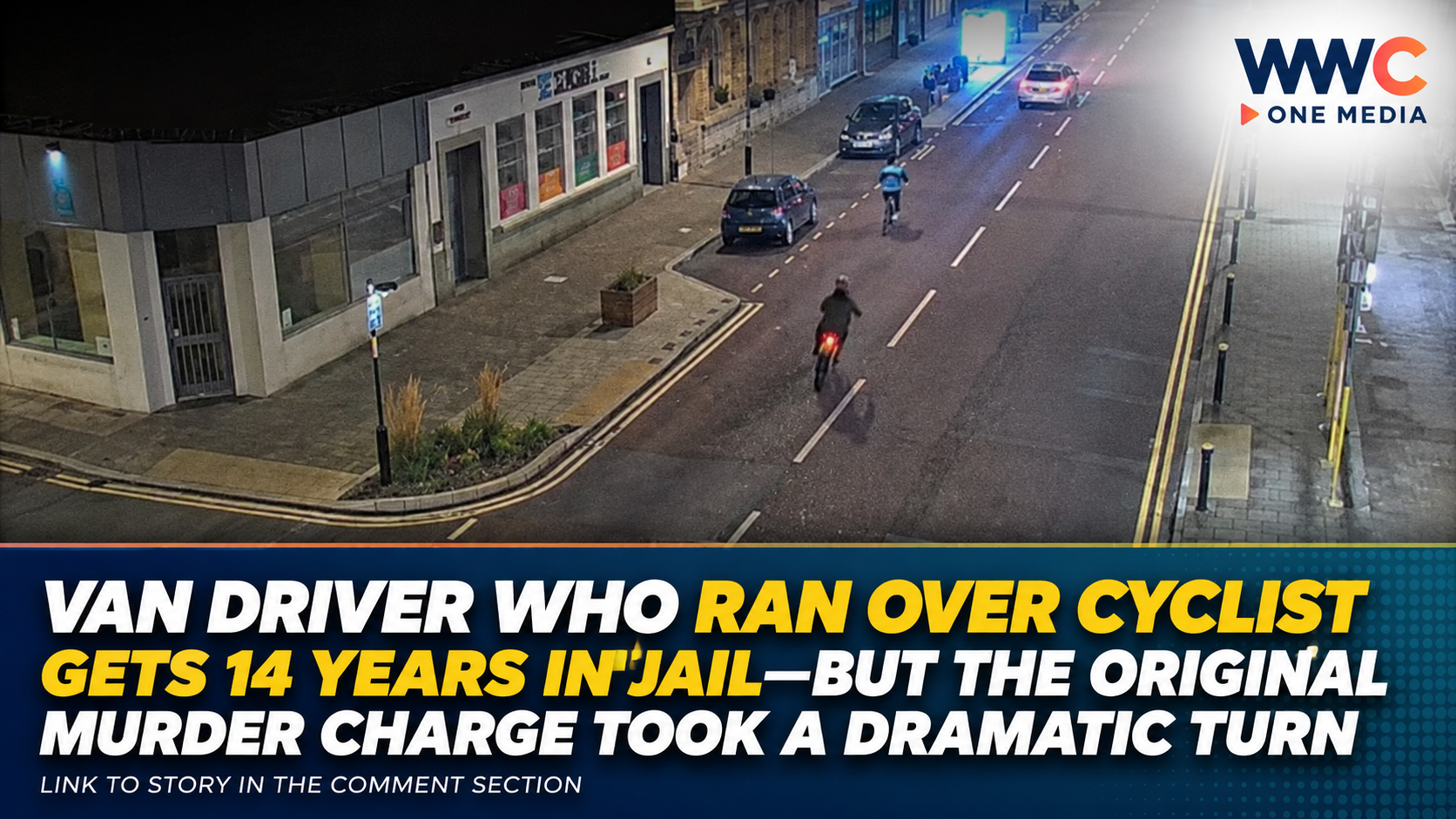
SINGAPORE — A 51-year-old van driver has been sentenced to 14 years in prison after a Singapore High Court found him guilty of deliberately causing grievous hurt to a cyclist in a 2023 road incident that initially led to an attempted murder charge.
Toh Sze Ee was sentenced on Wednesday, Sept. 2, after the prosecution's original attempted murder charge was amended near the end of the trial to voluntarily causing grievous hurt by dangerous means, with the van treated as the weapon used in the offence.
The case stemmed from a collision on March 16, 2023, along Kaki Bukit Avenue 5 in Singapore, where Toh drove into and ran over 32-year-old Bangladeshi national Hossen Selim, who was riding a bicycle.
Hossen suffered devastating injuries, fell into a coma and was eventually repatriated to Bangladesh in 2024. He died there in February 2025. The court proceedings did not establish that his later death was caused by the 2023 collision.
What happened on Kaki Bukit Avenue?
According to evidence presented in court, Toh and Hossen knew each other through dealings involving contraband cigarettes.
In February 2023, Hossen was arrested during a Singapore Customs operation. Toh escaped, but prosecutors said he later became concerned that Hossen had implicated him.
On March 16, the two men encountered each other again in the Kaki Bukit area.
The prosecution said Toh was driving a van when he made a U-turn and subsequently drove behind Hossen, who was cycling along the road. The van collided with Hossen at about 5pm.
The incident was captured by vehicle cameras from a nearby tipper truck and a bus.
Toh did not immediately remain at the scene. Evidence presented during the proceedings showed that he later inspected the front of the van and subsequently went elsewhere, including an abandoned warehouse where contraband cigarettes in the vehicle were disposed of.
He eventually abandoned the van.
Driver claimed he fell asleep
One of the central issues during the trial was Toh's explanation that he had fallen asleep at the wheel seconds before the collision.
Justice Andre Maniam rejected that account.
The judge found that Toh had a motive to hurt Hossen because he believed the victim had implicated, or might implicate, him in the contraband cigarette activities.
The court also considered accounts given by Toh and witnesses regarding his claim that he had fallen asleep. Justice Maniam found that the evidence did not support that explanation.
The High Court found that Toh voluntarily struck Hossen and intended to cause grievous hurt.
The van was travelling at 30kmh—but the court said that was enough
An important detail in the sentencing was the speed of the vehicle.
The van was travelling at a constant 30kmh, and the defence argued that there had been no acceleration intended to increase the impact.
But Justice Maniam noted that even at that speed, the van was capable of causing serious injuries—and Toh did not render assistance to Hossen after the collision.
The judge also found no demonstrated remorse and did not give Toh credit for cooperation with authorities.
The prosecution had asked for between 14 and 14.5 years' imprisonment, while Toh's lawyers sought a sentence of nine to 10 years. The court ultimately imposed 14 years.
Why wasn't he convicted of attempted murder?
This is one of the most significant developments in the case.
Toh had originally faced an attempted murder charge and claimed trial.
However, during closing submissions, the prosecution sought to amend the charge to voluntarily causing grievous hurt by dangerous weapons or means under Section 326 of Singapore's Penal Code.
The amended charge alleged that Toh used the van as an instrument capable of causing death when he collided with and ran over Hossen.
Toh did not object to the amendment, but he also did not plead guilty. Instead, his lawyers continued to seek an acquittal.
The amended offence carries a maximum punishment of life imprisonment, or up to 15 years' imprisonment, as well as caning and a fine.
Because Toh was already over 50 at sentencing, he could not be caned. The court instead imposed six months' imprisonment in lieu of 12 strokes of the cane, which forms part of the 14-year sentence.
The case began with a contraband cigarette investigation
The road incident was not an isolated event.
Earlier reporting showed that Toh and Hossen were connected through the illegal cigarette trade. In a separate Customs case, Toh had been accused of dealing with thousands of cartons of contraband cigarettes.
He later pleaded guilty to offences under Singapore's Customs Act in March 2025 and received a separate 32-month jail sentence, which he has already completed.
The High Court case therefore combined a violent confrontation with a broader criminal investigation surrounding contraband cigarette dealings.
A case that changed dramatically in court
The case initially drew attention because Toh was accused of trying to kill Hossen by deliberately driving a van into him.
But the final conviction was for a different offence.
The High Court found that Toh had voluntarily caused grievous hurt using the van, rejected his explanation that he had fallen asleep, and imposed a 14-year prison sentence.
The victim, meanwhile, never recovered from the injuries sustained in the collision. Hossen remained comatose after the incident, was eventually returned to Bangladesh and died in February 2025. His cause of death was not established in the open court proceedings as being caused by the collision.
The case highlights how a charge can evolve during a criminal trial—and how the final conviction and sentence can differ substantially from the offence with which an accused person was originally charged.
WWC ONE MEDIA MJE