
HD Hyundai and Philippines Deepen Naval Modernization Partnership as Subic Shipyard Takes Center Stage

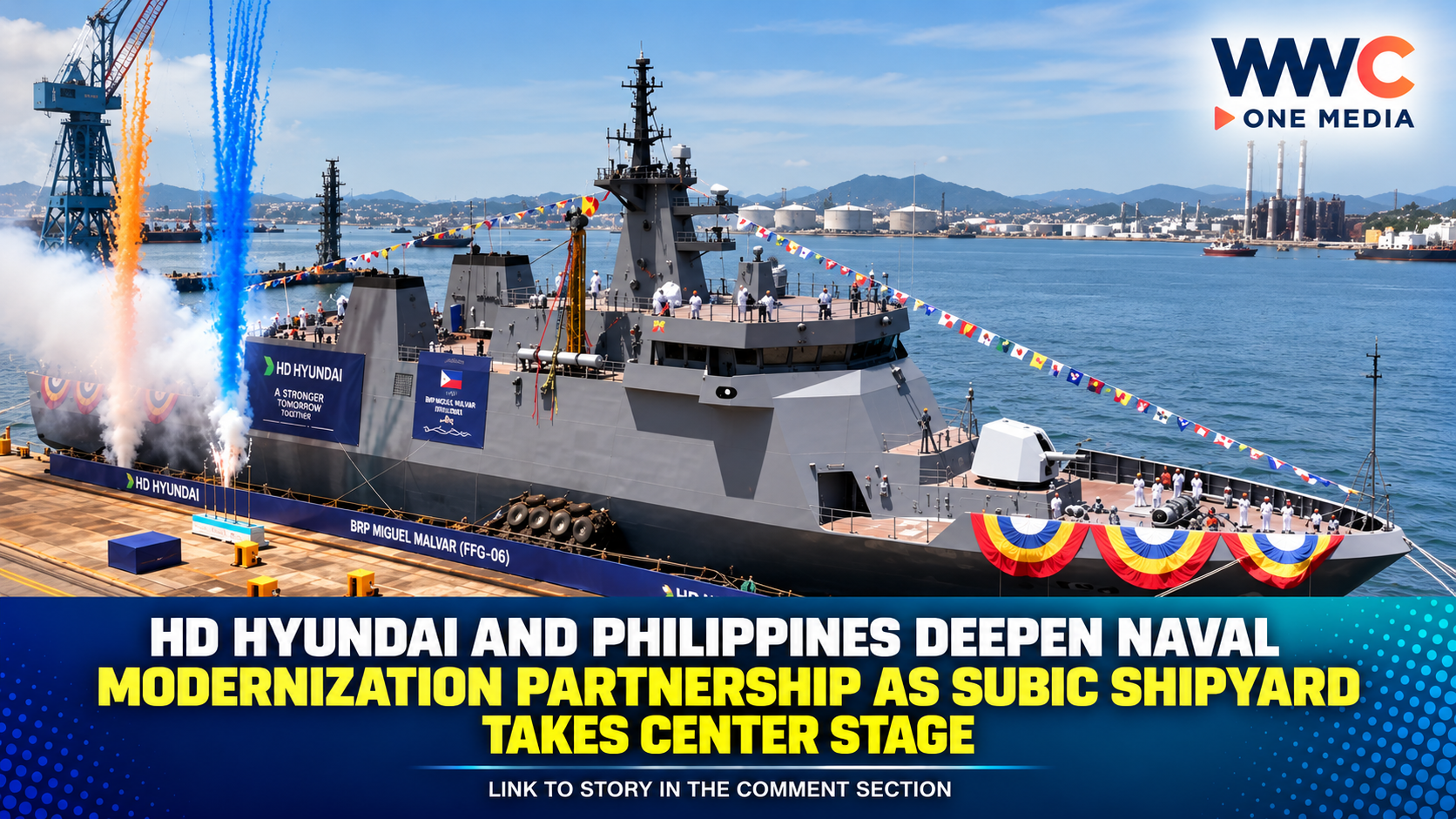
MANILA/SEOUL — The Philippines and South Korean shipbuilding giant HD Hyundai are moving to deepen their long-running defense and shipbuilding relationship, with both sides agreeing to broaden cooperation in support of Philippine Navy modernization and the development of the country's domestic shipbuilding industry.
HD Hyundai Chairman Chung Ki-sun met Philippine Defense Secretary Gilberto Teodoro Jr. in Seoul on September 7, where they reviewed a decade of defense cooperation and discussed expanding collaboration in shipbuilding and defense.
The discussions come as Manila continues efforts to strengthen its maritime capabilities and develop a more capable local defense-industrial base.
A decade of cooperation is entering a new phase
The relationship between HD Hyundai and the Philippines dates back to 2016, when the South Korean company secured its first Philippine Navy frigate contract.
Since then, HD Hyundai has secured orders for 12 naval vessels for the Philippines, with six already delivered, according to Yonhap. The relationship has subsequently expanded beyond individual naval vessels toward broader industrial cooperation.
The latest discussions therefore represent an expansion of an established partnership rather than the beginning of a completely new relationship.
Both sides agreed that the next phase should place greater emphasis on supporting the Philippine Navy's modernization while also improving the competitiveness of the Philippine shipbuilding industry.
Subic could become a bigger part of the strategy
One of the most important developments is the growing role of HD Hyundai Philippines' shipyard in Subic Bay.
HD Hyundai began operating the Philippine facility last year, giving the company a local industrial base from which it can expand commercial and potentially broader maritime activities.
The company began construction of its first commercial vessel at the Subic facility in September 2025. That vessel, a 115,000-ton petrochemical product carrier, has since been launched and is scheduled for delivery to its owner in 2027.
The development of the Subic facility could therefore become an important element of future industrial cooperation between South Korea and the Philippines.
HD Hyundai has indicated that it plans to gradually strengthen production capabilities at the facility based on local operating conditions.
Manila wants more than imported ships
The significance of the latest discussions goes beyond the acquisition of naval vessels.
Philippine officials have increasingly emphasized the importance of developing domestic capabilities that can support the country's long-term defense requirements.
According to Korean and Philippine reports, Teodoro described cooperation with HD Hyundai as strategically important not only for Philippine Navy modernization but also for revitalizing the country's shipbuilding sector.
That could mean a stronger focus on local industrial participation, shipbuilding expertise, workforce development and the broader maritime supply chain.
It also fits Manila's wider effort to strengthen its defense-industrial capabilities rather than relying solely on overseas procurement.
No new warship contract has been announced
Despite the attention surrounding the meeting, it is important not to overstate what was announced.
The latest discussions do not amount to a newly signed major naval-vessel procurement contract.
Instead, HD Hyundai and the Philippine government agreed to explore broader cooperation, building on the companies' existing naval relationship and the growing presence of HD Hyundai in Subic. Yonhap reported that the company intends to continue cooperation on subsequent naval projects, including follow-on frigate-related opportunities.
That distinction matters as the Philippines considers the next stages of its military modernization program.
The geopolitical backdrop is also changing
The expanded shipbuilding relationship comes at a strategically important time for the Philippines.
Manila has been strengthening security relationships with several partners while placing greater emphasis on maritime security and the protection of its interests in the South China Sea.
During the Seoul Defense Dialogue, Teodoro also warned that changes in regional military activity could create opportunities for China to expand its influence in the Indo-Pacific. Reuters reported that he stressed the continuing importance of the Philippines' security partnerships amid those regional developments.
That broader strategic environment gives the Philippines' naval modernization program added importance.
South Korea is becoming a major defense-industrial partner
South Korea has emerged as an increasingly important defense partner for the Philippines.
The relationship extends beyond HD Hyundai, with South Korean companies involved in supplying military equipment and naval platforms to Manila.
The growing partnership reflects Seoul's expanding role in Southeast Asian defense markets while giving the Philippines another source of industrial and technological cooperation.
For HD Hyundai, meanwhile, the Philippines offers both an established customer relationship and an opportunity to expand its shipbuilding footprint outside South Korea.
Why Subic matters
The development of the Subic shipyard could ultimately prove to be one of the most significant parts of the relationship.
A stronger local shipbuilding capability could provide economic benefits while giving the Philippines greater experience and capacity in maritime manufacturing.
For HD Hyundai, establishing a long-term presence in Subic provides a platform for expanding commercial shipbuilding and potentially supporting future maritime programs.
The two sides are therefore looking at cooperation from a much broader perspective than simply buying and selling ships.
The next test will be what comes after the agreement
The September 7 meeting produced no dramatic new fleet announcement—but it could mark an important turning point.
The Philippines wants to modernize its Navy while strengthening its domestic industrial capabilities. HD Hyundai wants to expand its long-term presence in the Philippine maritime sector.
Those interests increasingly overlap.
With 12 Philippine naval vessels already ordered and six delivered, plus an operating shipyard in Subic, the foundation for deeper cooperation is already in place.
The question now is how far that partnership will go.
The latest agreement opens the door to deeper naval and shipbuilding cooperation—but the next major development could come from what Manila and HD Hyundai decide to build on that foundation.