
Japan Expands Certified Support Network for Foreign Residents as 162 Coordinators Reach 38 Prefectures

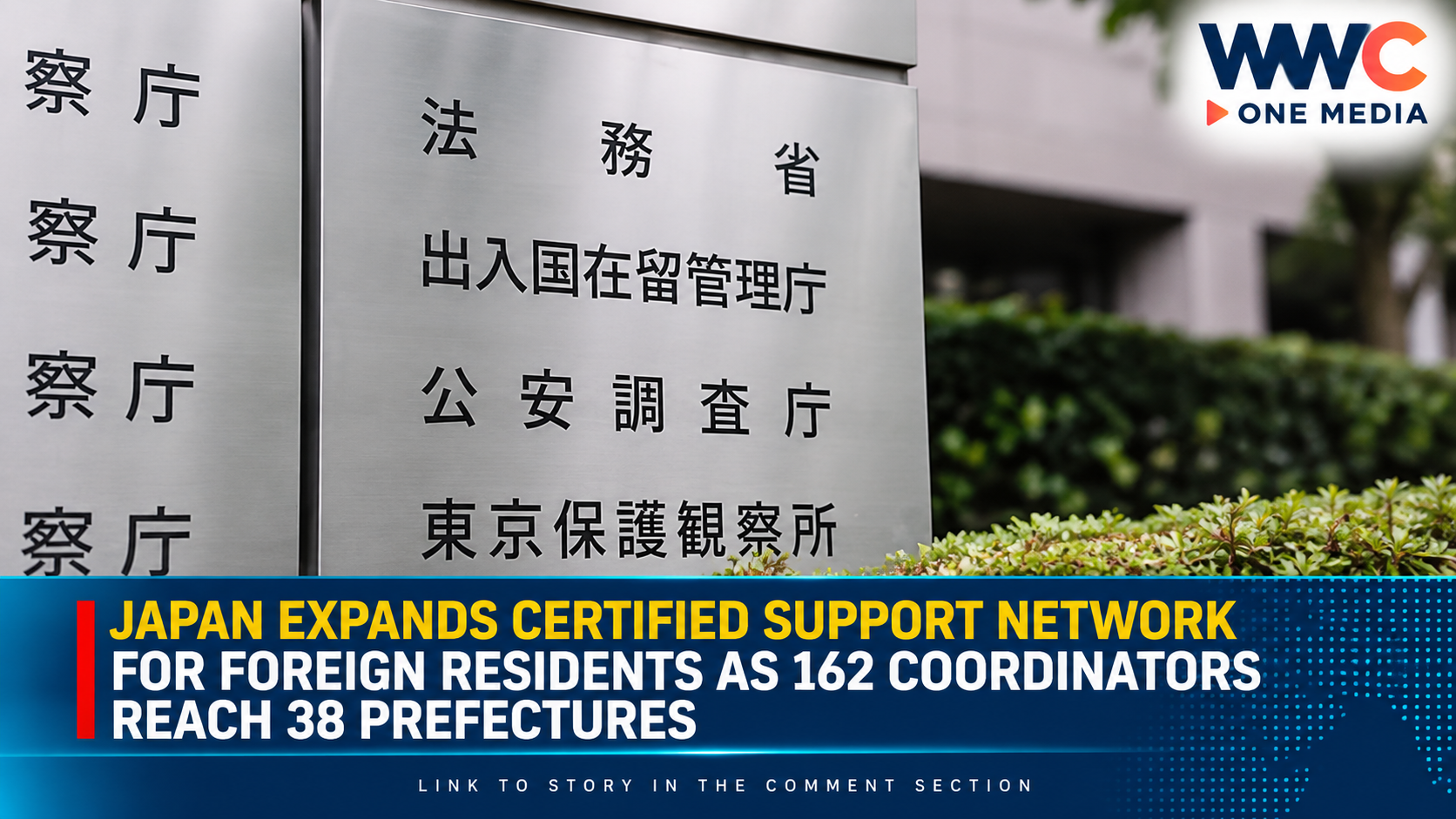
TOKYO — Japan is expanding a specialized support network for its growing foreign-resident population, with 162 certified coordinators now deployed across 38 of the country's 47 prefectures.
The coordinators are trained to help foreign residents navigate consultations involving local governments and other institutions, as authorities respond to increasingly complex needs among people living and working in Japan.
The certification system was launched by Japan's Immigration Services Agency (ISA) in fiscal 2024, amid a rise in both the number of foreign residents and the number and complexity of consultations they require.
What do the certified coordinators actually do?
Despite the immigration-related name of the government agency overseeing the program, the coordinators are not simply immigration officers.
Their role is to serve as a bridge between foreign residents and the various public services and organizations they may need to contact.
Training covers areas including residency status, immigration procedures and mental health, after which candidates must pass examinations to receive certification. The certification is valid for three years.
The program is particularly significant because foreign residents may encounter several systems at once—from municipal services and employment-related concerns to health, welfare and residency procedures.
Japan's foreign-resident population continues to grow
The expansion comes as Japan's foreign-resident population reaches unprecedented levels.
A separate report on the country's support system put the number of foreign residents at more than 4.1 million at the end of 2025, the first year-end total above four million.
That growth has increased pressure on municipalities to provide services that can accommodate people with different languages, cultural backgrounds and levels of familiarity with Japan's administrative systems.
The Japanese government has consequently been developing a broader framework for helping foreign residents integrate into local communities.
Coordinators are being asked to handle increasingly complex cases
The need for specialized support isn't limited to translating documents.
Foreign residents can require assistance involving multiple organizations at the same time, making coordination particularly important.
One certified coordinator interviewed by Jiji Press described working with people from fields including agriculture, medical care and welfare, illustrating how cases can extend well beyond immigration paperwork.
Japan's national and local governments have also been expanding other support measures.
For example, the Tokyo Metropolitan Government selected 19 projects for fiscal 2026 funding to support foreign residents, including programs providing legal and livelihood assistance and communication support for deaf foreign residents.
But expanding the network won't be easy
The government still faces a major challenge: finding enough qualified people willing and able to do the work.
An Immigration Services Agency official acknowledged that it is difficult to secure personnel simply by emphasizing the importance of the role.
That staffing challenge could become increasingly important as Japan's foreign-resident population grows and the cases brought to municipalities become more diverse.
To address continuity, the government plans to begin renewal courses next fiscal year for coordinators whose three-year certifications are approaching expiration.
More than an immigration issue
Japan's approach reflects a broader shift in how the country is responding to its changing demographics.
The OECD has noted that multiple Japanese ministries and agencies now have responsibilities related to foreign residents, including education, employment, health care, social-security information and local support.
That means helping foreign residents adapt to life in Japan increasingly involves cooperation among national agencies, municipalities and community organizations.
The certified coordinator system is intended to help connect those pieces.
A growing support network—but still a work in progress
With 162 certified coordinators covering 38 prefectures, Japan has taken a significant step toward creating a more specialized support system for foreign residents.
But seven prefectures still have no coordinator under the current certification network, and authorities face the ongoing task of recruiting and training more personnel.
As Japan's foreign-resident population continues to grow, the effectiveness of this network could become increasingly important—not only for helping newcomers navigate government systems, but also for building smoother relationships between foreign residents and the communities where they live.
The number 162 may look modest compared with Japan's millions of foreign residents. But the real test now is whether this growing network can expand quickly enough to meet the increasingly complex needs of the people it was created to support.