
Japanese Lawmaker Calls for Deeper Taiwan-Japan Security Cooperation

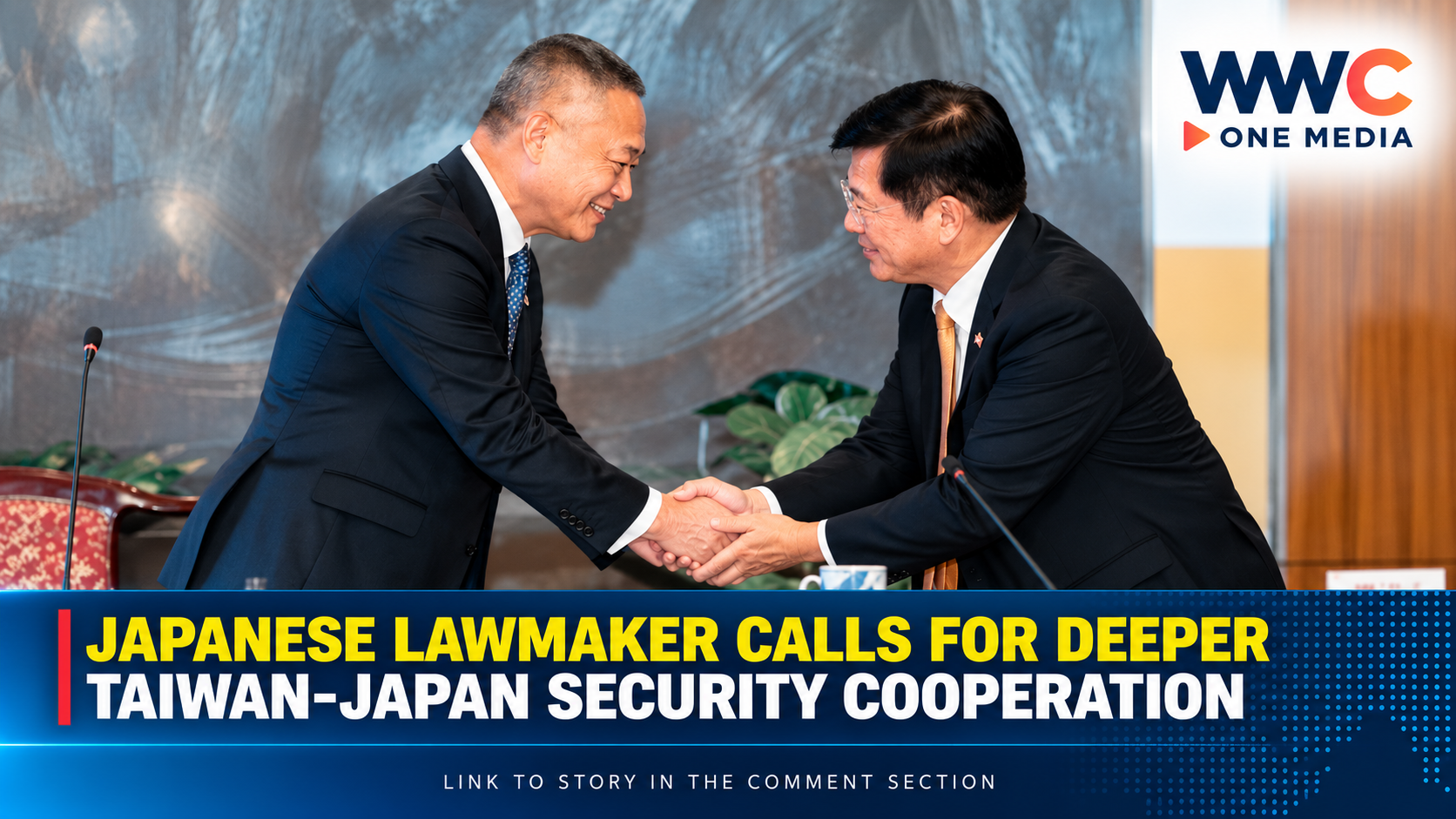
TAIPEI — Calls for closer Taiwan-Japan security cooperation are gaining momentum as a senior Japanese lawmaker urged both sides to strengthen ties amid growing regional challenges.
Former Japan Innovation Party leader Nobuyuki Baba, who is leading a 13-member delegation to Taiwan, said Taiwan and Japan should deepen cooperation in security and economic affairs to help support peace and stability in the Indo-Pacific.
Baba made the remarks during meetings with Taiwanese officials as the two sides discussed regional security, energy and broader economic cooperation.
The visit comes as Taiwan and Japan continue to expand their unofficial relationship despite having no formal diplomatic ties.
Baba backs closer security cooperation
Baba said the two sides face shared challenges and should work more closely to respond to changes in the regional security environment.
He also expressed agreement with Japanese Prime Minister Sanae Takaichi's previous characterization of a Taiwan contingency as potentially affecting Japan's security, according to Radio Taiwan International.
Taiwanese Foreign Minister Lin Chia-lung likewise described Taiwan and Japan as like-minded partners facing common challenges in the Indo-Pacific.
The two sides' discussions, however, extended beyond traditional security issues.
Lin highlighted potential cooperation in artificial intelligence, semiconductors, aerospace, energy, social resilience and economic security.
Economic security becomes a bigger part of the relationship
One of the most significant developments in Taiwan-Japan relations is the growing emphasis on economic security and resilient supply chains.
Lin said Taiwan and Japan have complementary industrial strengths as global supply chains undergo major changes.
Japan is pursuing 17 strategic growth sectors, while Taiwan continues to strengthen its position in semiconductors, artificial intelligence and other high-tech industries.
The Taiwanese foreign minister said greater cooperation could help both economies build more secure and resilient supply chains while reducing exposure to strategic risks.
That means the Taiwan-Japan relationship is increasingly about more than diplomatic exchanges.
Technology, energy, industrial resilience and economic security are becoming important pillars of the partnership.
Security dialogue has been intensifying
The latest comments follow another high-level exchange earlier this month involving Japanese Liberal Democratic Party lawmaker Nakatani Gen, a former defense minister.
During his September 1 visit, Nakatani said Japan was closely watching the Indo-Pacific security environment and stressed the importance of communication, cooperation and information sharing among regional partners.
Taiwanese Deputy Legislative Speaker Johnny Chiang also said deeper exchanges between Taiwan and Japan could contribute to regional peace and stability.
These developments suggest that parliamentary and political contacts are becoming an increasingly important channel for Taiwan-Japan discussions on regional security.
A relationship shaped by shared concerns
Taiwan and Japan have no formal diplomatic relations, but they maintain extensive economic, cultural and people-to-people ties.
Both sides have also responded to natural disasters affecting the other.
During Baba's latest visit, he thanked Taiwan for its assistance following the July earthquake in Kumamoto, describing the response as another reflection of the close friendship between the two societies.
Taiwanese officials have likewise highlighted Japan's support following major earthquakes in Taiwan.
Those ties provide a broader foundation for cooperation as both governments confront changing regional economic and security conditions.
What happens next?
The latest statements do not amount to a new defense treaty or formal military alliance between Taiwan and Japan.
Instead, they point toward deeper political dialogue and cooperation across security, economic security, technology, energy and supply-chain resilience.
For Taiwan, closer ties with Japan could provide another avenue for strengthening its relationships with like-minded regional partners.
For Japan, deeper engagement with Taiwan is increasingly connected to broader discussions about Indo-Pacific stability and the resilience of regional supply chains.
With political exchanges between Taipei and Tokyo continuing to grow, the question now is how far that cooperation can develop while both sides navigate their existing diplomatic constraints and the wider regional tensions surrounding the Taiwan Strait.
The latest message from Japanese lawmakers is clear: Taiwan-Japan ties are no longer being discussed only in terms of trade and friendship—the security dimension is becoming increasingly prominent.