
Pasig Is Giving Vulnerable Residents More Than Financial Aid — But One Skill Could Decide Whether the Help Lasts

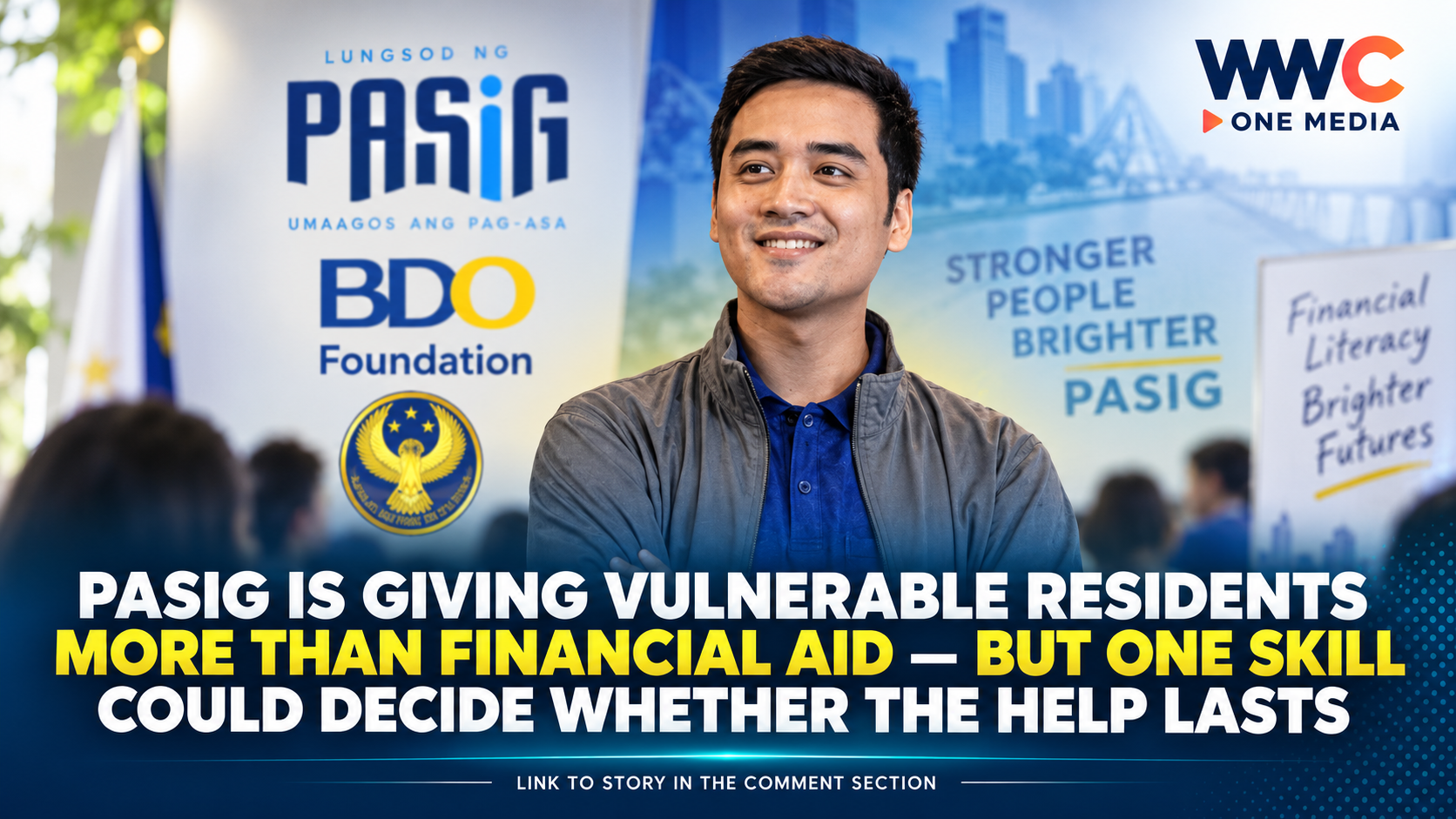
PASIG CITY, Philippines — Pasig City is expanding its push to help residents become more financially resilient, putting practical money management at the center of livelihood and social-support programs for sectors that are often the most vulnerable to economic shocks, debt and financial scams.
The initiative brings together the Pasig City Government, Bangko Sentral ng Pilipinas (BSP) and BDO Foundation, with financial education aimed at relocated families, micro-entrepreneurs, solo parents, persons with disabilities, senior citizens, people recovering from drug use and other community groups.
But there is an important timeline detail: the partnership itself was formally signed on June 16, 2026, rather than launched for the first time this September. The recent reports are highlighting the beneficiaries and implementation of a program Pasig announced earlier this year.
Financial Aid May Help Today — But Pasig Wants Residents Ready for Tomorrow
The strategy is based on a straightforward problem: livelihood assistance or skills training can provide opportunities, but beneficiaries still need to know how to manage income, control expenses and keep a small enterprise financially sustainable.
Zenaida Concepcion, officer-in-charge of the Pasig City Anti-Drug Abuse Office, said participants who finish livelihood and skills programs also need the knowledge required to manage and sustain a business.
The financial education component is therefore being positioned as a complement to—not a replacement for—existing government assistance and livelihood programs.
That distinction matters. The goal is not simply to teach residents how to save money, but to help beneficiaries make better decisions after receiving livelihood support, starting a small business or trying to rebuild their finances.
What Pasigueños Will Actually Learn
According to the Pasig City government, the program will include free seminars and learning sessions covering several practical areas:
- budgeting and household money management
- saving
- ways to grow income
- building toward financial independence
- recognizing fraud and scams
- protecting money from fraudulent transactions
Residents will also gain access to the BSP E-Learning Academy, or BELA, which provides online courses covering financial literacy, banking, economics and related subjects.
That anti-scam component has become particularly relevant as more everyday financial transactions move online.
The Manila Bulletin reported that the initiative will also reach sectors including market vendors, jeepney and tricycle drivers, cooperatives, students, teachers, homeowners' associations and young people, extending the potential reach beyond the vulnerable groups highlighted in the latest coverage.
BSP and BDO Foundation Have Different Roles
Under the agreement, the BSP is expected to provide technical assistance, learning materials and direct financial-education sessions, while BDO Foundation will help finance activities connected with the program.
The program will not depend entirely on outside instructors.
BSP and BDO Foundation are also expected to help train local financial education advocates who can eventually incorporate financial-literacy lessons into Pasig's own programs.
That could prove more significant over the long term than holding one-off seminars because it gives the city a mechanism for repeatedly reaching new beneficiaries.
BDO Foundation is the corporate social responsibility arm of BDO Unibank and has worked with the BSP and multiple government agencies on financial-education initiatives covering budgeting, saving, debt management, credit, entrepreneurship, investments, retirement planning and scam prevention.
Why Vulnerable Sectors Are at the Center
The latest rollout places particular emphasis on residents who may have fewer financial buffers when income suddenly disappears or expenses increase.
These include relocated families, people attempting to build micro-enterprises, solo parents, PWDs, seniors and individuals undergoing social reintegration after drug use.
For a micro-entrepreneur, for example, the difference between business revenue and personal income can determine whether a livelihood survives.
For a family receiving assistance, budgeting and saving can affect how long that support lasts.
And for seniors or inexperienced digital-finance users, understanding fraud warning signs may prevent savings from being lost to scams.
Those are precisely the kinds of practical outcomes the Pasig-BSP-BDO Foundation partnership is attempting to address.
Part of a Bigger Pasig Livelihood Strategy
The financial-literacy campaign is not occurring in isolation.
Pasig already operates programs intended to support employment and small businesses. Its TAPAT Loan Program, for example, provides a financing pathway for qualified Pasigueños seeking to start or expand livelihood activities, subject to orientation and assessment.
The city's 2026 procurement plan also specifically includes financial literacy training for social-welfare beneficiaries, showing that financial education has been incorporated into government programming rather than treated solely as a promotional event.
Earlier this year, Pasig's Cooperative Development Office and the Cooperative Development Authority also held a financial-literacy session for young savers involving 175 participants from 55 cooperatives, focusing on saving discipline and avoiding digital spending traps.
Taken together, the initiatives point toward a broader strategy: combine access to livelihood opportunities and government assistance with the financial skills needed to manage them.
Part of BSP's Nationwide Financial-Inclusion Campaign
The Pasig program is aligned with the BSP's National Strategy for Financial Inclusion, which seeks to broaden meaningful participation in the formal financial system while ensuring that financial products are accessible, useful and safely used.
BSP Deputy Governor Bernadette Romulo-Puyat said during the Pasig partnership launch that financial education should be brought closer to communities while financial services should be accessible, safe and genuinely useful.
Pasig is also not the only local government adopting this model.
Earlier in 2026, the BSP and BDO Foundation entered a similar financial-education partnership with Parañaque City, covering groups such as fisherfolk, micro-entrepreneurs, public-utility vehicle drivers, PWDs, senior citizens, solo parents and students.
BDO Foundation has also conducted financial-literacy and entrepreneurship programs for small entrepreneurs in Quezon City.
That wider rollout suggests local financial education is increasingly being treated as part of economic and social policy rather than merely an optional personal-finance seminar.
The Real Test Comes After the Seminars
Pasig's initiative has an ambitious objective: help residents receiving livelihood or social support move from temporary assistance toward greater financial stability.
But the real measure of success will not simply be the number of seminars held or participants trained.
It will be whether residents can turn those lessons into higher savings, better-managed businesses, safer borrowing, fewer scam losses and stronger household finances.
The partnership gives Pasig an institutional framework to pursue those goals. What remains to be seen is how consistently the training reaches its intended beneficiaries—and whether financial knowledge ultimately translates into measurable improvements in their lives.
WWC ONE MEDIA M.J.E