
Santo Tomas Hits Measles-Rubella Vaccination Target — But the Push to Find Every Missed Child Isn’t Over

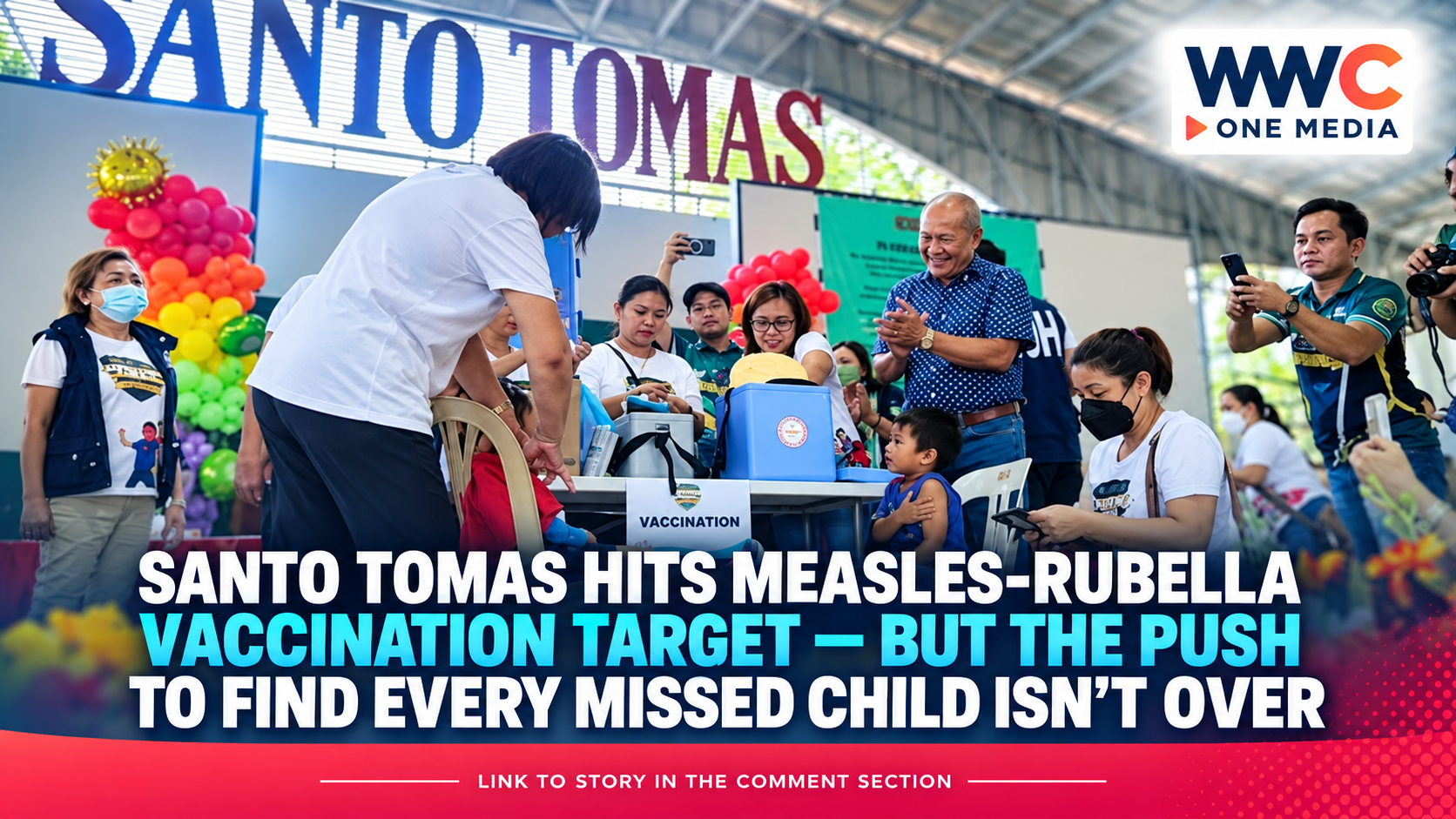
SANTO TOMAS, Isabela — Santo Tomas has reached the government’s key target in the nationwide campaign against measles and rubella, marking an important public-health milestone as health workers across Isabela continue efforts to protect young children from two highly contagious but vaccine-preventable diseases.
The achievement comes under the Department of Health’s 2026 Measles-Rubella Supplemental Immunization Activity, or MR-SIA, which aims to reach at least 95 percent of eligible children — the level health authorities are seeking in communities to sharply reduce the risk of disease transmission and outbreaks.
The campaign covers children aged 6 to 59 months, including youngsters who may already have received routine vaccinations. Unlike routine immunization alone, the supplemental campaign is designed to provide an additional layer of protection while giving health workers another opportunity to reach children who previously missed vaccine doses.
Santo Tomas milestone comes amid province-wide push
Isabela launched its province-wide Phase 3 MR-SIA campaign on August 10, bringing together the provincial government, municipalities and cities, the Department of Health-Cagayan Valley Center for Health Development, rural health units and community health workers.
Before the campaign began, provincial and regional health officials had already set their sights on achieving 95-percent vaccination coverage across Isabela.
That makes Santo Tomas' reported achievement significant: reaching the benchmark means the municipality has crossed the level public-health authorities consider crucial to building strong community protection.
The municipality operates its own Rural Health Unit in Centro, Santo Tomas, while the current local administration is headed by Mayor Leandro Antonio P. Talaue, according to the municipal government's official organizational records.
Isabela led early vaccination numbers in Cagayan Valley
The Santo Tomas result also comes after Isabela emerged as the biggest contributor to the early vaccination count in Cagayan Valley.
By August 20, more than 126,000 children had already been vaccinated across Cagayan Valley out of a regional target of roughly 309,000, according to Radyo Pilipinas, citing the region's National Immunization Program coordinator.
More than 63,000 of those vaccinated children were from Isabela, compared with over 38,000 in Cagayan, around 17,000 in Nueva Vizcaya and about 7,500 in Quirino.
At that stage of the campaign, 47 barangays in the region had already reached the 95-percent target, with some even surpassing it.
Why the 95% target matters
Measles spreads extremely easily through respiratory droplets and can cause high fever, cough, rashes and potentially serious complications such as pneumonia and inflammation of the brain.
Rubella is generally milder among children, but infection during pregnancy can have devastating consequences, including miscarriage, fetal death or congenital rubella syndrome, which can result in serious birth defects.
Health officials say maintaining vaccination coverage above 95 percent across communities helps limit transmission and provides indirect protection to people who cannot receive vaccines for medical reasons.
The nationwide campaign began on August 10 and was initially scheduled to end on August 28. In several regions, health authorities continued vaccination activities into early September as teams sought children who had not yet been reached.
Vaccine concerns remain part of the challenge
The campaign has not been without controversy.
On August 28, the DOH announced that it was investigating reported deaths involving children following vaccination. The agency stressed, however, that an adverse event occurring after immunization does not automatically mean the vaccine caused it, and that medical records, vaccination histories and laboratory findings must first be independently assessed.
The DOH maintained that measles-rubella vaccines remain an important tool against vaccine-preventable disease and urged the public not to spread unverified claims while investigations are ongoing.
Health authorities in other parts of the country have likewise identified vaccine misinformation and parental hesitancy as obstacles to reaching the 95-percent goal.
For Santo Tomas, hitting the benchmark is therefore more than a statistical victory. It reflects the combined work of parents, barangay health workers, local officials and vaccination teams willing to go into communities and identify children who could otherwise remain unprotected.
But reaching 95 percent does not mean the job is finished.
The bigger challenge is maintaining strong routine immunization after the supplemental campaign ends — and ensuring that the remaining children who were missed are eventually reached.
Because when it comes to measles, even relatively small pockets of unvaccinated children can become vulnerabilities when the virus enters a community.
WWC ONE MEDIA M.J.E