
Seoul Expands Guided Night Walks Through Historic Districts as New Namsan Route Lights Up the City

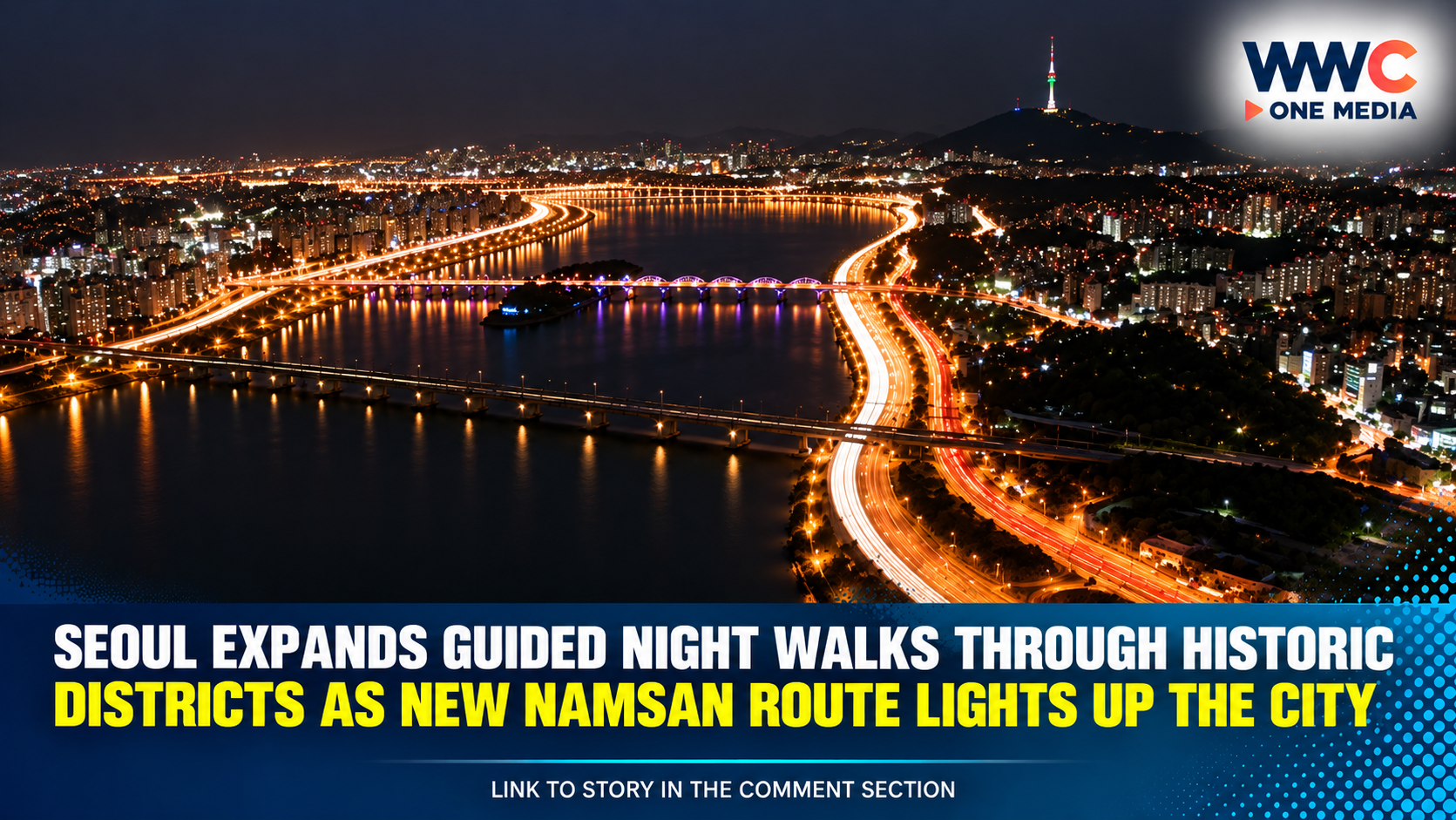
SEOUL, South Korea — Seoul is turning its historic streets, fortress walls and cultural landmarks into nighttime destinations as the city expands its official guided walking tour program.
The Seoul Metropolitan Government announced Sept. 7 that the number of dedicated nighttime walking routes will increase from nine to 10, while the operating season will be extended from May–October to March–November.
The city is also pushing back the final regular departure time from 7 p.m. to 8 p.m., giving visitors more time to explore Seoul after sunset.
The expansion is part of Seoul's broader effort to increase nighttime tourism, encourage visitors to stay longer and connect tourist routes with nearby commercial districts.
New Namsan Fortress route becomes the headline attraction
The biggest addition is a new Namsan night course, taking visitors along a 2.06-kilometer route from the Namsan Sky Forest Trail to N Seoul Tower and the Palgakjeong Pavilion.
According to Seoul's official tourism guide, the route combines Namsan's natural scenery with views of Seoul at night while introducing visitors to the mountain's history from the Joseon period to the present.
The route includes several viewpoints and landmarks, including the Zelkova Tree Observatory, Sunset Observatory, Namsan Sky Forest Trail Health Garden, N Seoul Tower and Namsan Observatory.
That combination of history, nature and nighttime city views is exactly what Seoul is hoping will make the new route attractive to both international travelers and residents.
Friday nights are getting even later
Seoul is also introducing special 9 p.m. Friday night courses at three popular locations: Gwanghwamun Square, Cheonggyecheon Stream and the Naksan City Wall.
The goal is to give visitors more opportunities to participate in cultural tourism after the traditional sightseeing day has ended.
The city says the expanded nighttime program is designed to increase visitors' time in Seoul and link walking-tour routes with surrounding commercial areas.
That means the strategy is not simply about sightseeing.
Officials are also hoping that tourists who finish a night walk will continue into nearby restaurants, markets, cafes and shopping districts.
Historic Seoul becomes a nighttime experience
The expanded program covers some of Seoul's best-known historic and cultural areas.
Existing nighttime tours include Namsangol Hanok Village, palace areas and sections of the historic Seoul City Wall, while the official Seoul tourism website now lists multiple nighttime walking experiences for visitors.
The Namsan route is particularly significant because it brings together Seoul's historical defensive landscape and its modern skyline.
Visitors can move from traces of the old city toward the illuminated N Seoul Tower, creating a visual contrast between Joseon-era Seoul and the modern capital.
The city wants tourists to stay out later
The expansion also fits into Seoul's wider push to develop what officials describe as a “24-hour vibrant economic city.”
The Seoul government says longer operating periods and later tour times are intended to increase nighttime visitor activity and connect tourism with local businesses.
The strategy reflects a broader change in how major Asian cities are approaching tourism.
Instead of concentrating visitors around daytime attractions, Seoul is increasingly promoting experiences that extend into the evening—from palace night programs and hanok experiences to guided walks and illuminated historic landmarks.
Seoul's night-tour strategy goes beyond walking tours
The city already has a growing ecosystem of nighttime cultural programs.
Earlier this year, Seoul's Public Hanok Night Out expanded its programming in Bukchon and Seochon, allowing visitors to experience traditional Korean houses through evening exhibitions, performances, tours, workshops and cultural activities.
The 2026 program involved 16 public hanoks and 34 cultural programs, including guided neighborhood walks and hands-on traditional crafts.
Seoul also continues to promote nighttime palace experiences. The official tourism guide, for example, features the 2026 Changdeokgung Moonlight Tour, which combines an evening stroll through the palace with historical commentary and traditional performances.
Together, these programs show how Seoul is increasingly turning its cultural heritage into an after-dark tourism experience.
Why the Namsan route could become a tourist favorite
The new Namsan route has one major advantage: it offers something that many conventional sightseeing tours cannot.
Visitors can experience Seoul's history while simultaneously seeing the contemporary city illuminated below them.
The official route starts at the Namsan Sky Forest Trail entrance and passes through scenic observation points before reaching N Seoul Tower and the Namsan Observatory.
For travelers, that creates a particularly attractive combination:
ancient walls + mountain trails + sunset views + Seoul's skyline.
And because the route is guided, participants also receive historical context rather than simply walking through the area on their own.
Seoul is betting that the city looks different after dark
The expansion sends a clear message about Seoul's tourism strategy.
The city isn't simply asking visitors to see more attractions.
It wants them to experience Seoul differently.
A palace courtyard under moonlight feels different from the same site in the afternoon. A fortress wall overlooking a sea of city lights creates a different experience from a daytime historical tour. And a walk that ends near a market or commercial district can turn sightseeing into an entire evening out.
With the nighttime walking season now stretching from March through November, Seoul is giving visitors considerably more opportunities to discover that side of the capital.
And with the new Namsan Fortress route leading travelers from historic trails toward one of Seoul's most recognizable landmarks, the city's newest night-tour strategy may prove that Seoul's history becomes even more compelling when the sun goes down.