
Thailand Orders 3 Israeli Remains Moved From Cemetery — Then Officials Uncover a Much Bigger Problem

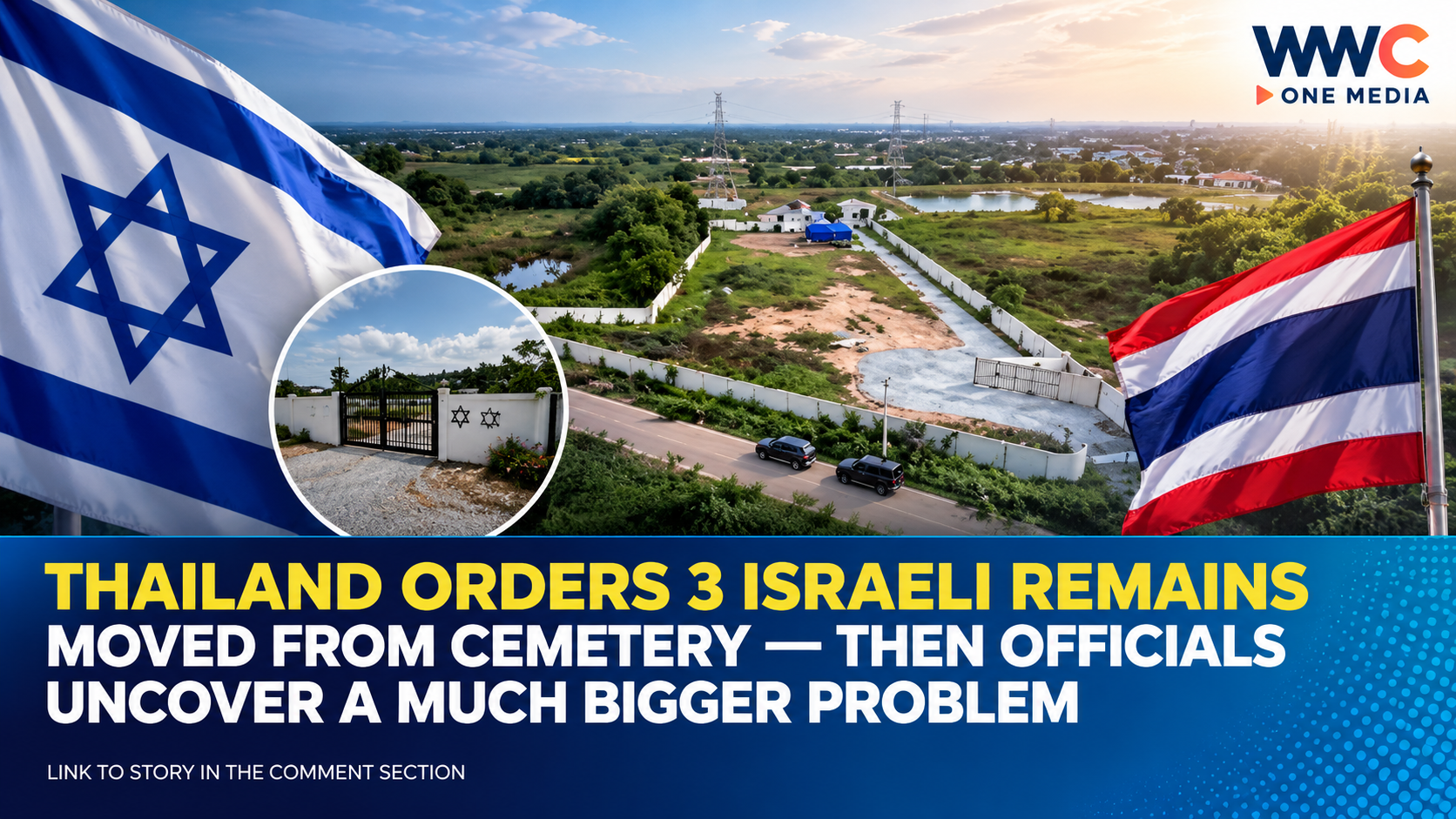
BANGKOK — Thailand has ordered the removal of three sets of Israeli remains from a Jewish cemetery in Chachoengsao after authorities determined that the burials apparently took place after the cemetery's operating licence had expired.
Deputy Interior Minister Polapee Suwunchwee said local authorities will issue a written order requiring the three remains to be removed from the cemetery in Bang Khla district. The action follows an inspection that uncovered four burial sites at the property.
But the case is more complicated than the headline suggests.
Officials say one of the four burials appears to have taken place while the cemetery still held a valid licence, while the other three are believed to have occurred after the licence expired in 2023.
That distinction could become crucial as Thailand expands its investigation into cemetery licensing and other foreign-linked activities.
Why are the three remains being removed?
The cemetery was originally granted a licence in 2021. That licence expired in 2023, and authorities rejected an application to renew it after inspections found that the site did not meet several legal requirements.
Officials said the cemetery failed regulations governing its distance from roads and waterways.
According to reporting by the Bangkok Post and other Thai outlets, the cemetery was measured at only about 187 metres from a public canal, while the applicable regulation requires a minimum distance of 400 metres. Parts of the cemetery were also reportedly just 3.6 to 9 metres from a public road, while the stated requirement is at least 50 metres.
The cemetery operator appealed the licence decision to the Interior Ministry but was unsuccessful. The dispute was subsequently taken to the Administrative Court, where the case remains pending.
Four graves were discovered — but their legal status is different
An inspection on September 4 found four sets of remains at the cemetery.
Authorities believe one person was buried sometime between 2021 and 2023, when the cemetery's licence was still valid.
The other three burials are believed to have occurred after the licence expired, and officials said the local authorities were not notified about those burials.
That is why the government is moving specifically against the three newer burials.
The fourth burial is being treated differently because it apparently occurred while the cemetery was legally licensed. Officials are still reviewing whether the remains can legally remain at the site now that the cemetery no longer has a valid operating licence.
So, contrary to some potentially misleading headlines, Thailand has not announced that all four bodies will automatically be removed.
At present, the government action specifically concerns the three burials believed to have occurred after the licence expired.
The cemetery itself had already faced regulatory problems
The licensing controversy did not begin with the discovery of the graves.
Authorities had already rejected the cemetery's renewal application after determining that the property failed requirements involving its location.
The measurements cited by officials have become an important part of the controversy: approximately 187 metres from a public canal versus the required 400 metres, and sections of the property only a few metres from a public road.
The situation has also triggered questions about how the cemetery received its original licence in 2021 despite the later findings.
The Bangkok Post reported that an anti-corruption complaint has been filed concerning the original approval, with the distance requirements among the issues being questioned.
Bangkok Jewish burial sites also face inspection
The Chachoengsao case is now expanding beyond the province.
Polapee said authorities are checking several Jewish burial locations in Bangkok's Charoen Krung area after reports that some sites may have operated without proper licences for decades.
Officials have identified approximately four or five locations for examination, according to Thai PBS World and The Nation.
Authorities have also indicated that cemetery licensing could be reviewed more broadly across Thailand.
Any site found to be operating unlawfully could face further legal action, although individual cases will depend on the facts and applicable regulations.
The cemetery controversy comes amid a wider government investigation
The cemetery issue is also unfolding alongside a broader Thai government investigation into alleged illegal business arrangements and land ownership involving foreign-linked companies.
Polapee said authorities are examining thousands of companies and land holdings as part of the wider investigation. Thai PBS World reported that authorities are looking into more than 1,500 companies suspected of illegally holding land, while another 14,000 foreign-linked companies are being investigated. The companies collectively control more than 5,800 land plots valued at over 60 billion baht, according to the deputy minister's figures.
The Department of Special Investigation is also considering whether aspects of the wider matter should be handled as a special case because the alleged financial damage exceeds 300 million baht.
That broader investigation should not be confused with the cemetery case itself. The immediate action regarding the three Israeli remains is based on the cemetery's expired licence and the circumstances surrounding the later burials.
What happens next?
The next step is for the Bang Khla district chief and Chachoengsao governor to issue the formal written order concerning the three remains.
Officials will also determine what can legally happen to the fourth burial, which appears to date from the period when the cemetery still had a valid licence.
Meanwhile, inspections of Jewish burial sites in Bangkok are expected to provide authorities with more information about licensing and compliance.
The case could therefore become a significant test of how Thailand applies its cemetery regulations — not only to the Chachoengsao site, but to other burial grounds operating across the country.
WWC ONE MEDIA M.J.E