
War Expands as Houthis Attack Saudi Cities and US Strikes Iranian Oil Tankers

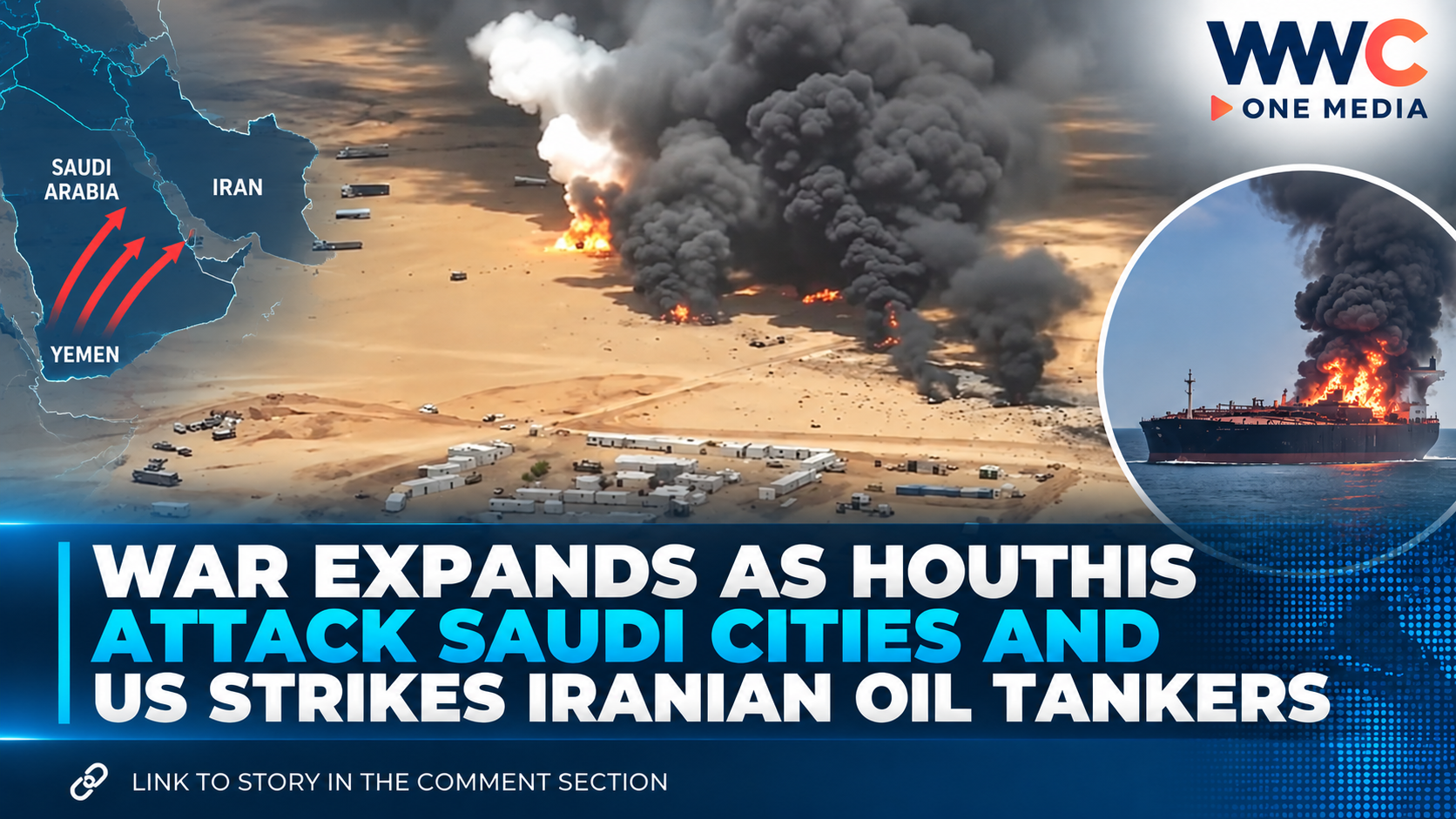
DUBAI/CAIRO — The Middle East conflict widened dramatically on Tuesday as Iran-backed Houthi forces launched missile and drone attacks on four Saudi cities, while US forces struck Iranian oil tankers and Iran retaliated against American targets, raising fears that the widening war could further threaten global energy supplies.
The Houthi attacks wounded 73 people and sparked fires at oil installations in southern Saudi Arabia, marking one of the most significant expansions of the conflict since the war began six months ago.
Houthis strike four Saudi cities
The Iran-aligned Houthis launched attacks against Abha, Khamis Mushait, Jazan and Najran, using drones and missiles against targets that included energy infrastructure and military facilities.
Saudi officials said the strikes caused casualties and damage, while fires broke out at several oil-related sites. A major refinery in Jazan, capable of processing about 400,000 barrels of crude a day, was among the facilities affected.
The Houthis said the operation was retaliation for Saudi military actions in Yemen and claimed to have targeted important industrial and energy facilities.
Saudi Arabia condemned the attacks and vowed to defend its territory, raising the prospect of a renewed escalation in a conflict that had been relatively restrained since the 2022 truce.
US strikes Iranian oil tankers
At the same time, the United States escalated its confrontation with Iran by striking Iranian oil tankers.
US officials said the attacks followed missile launches by Iran's Revolutionary Guard against American naval forces. The US military has described the targeted tankers as part of an Iranian oil network linked to the Revolutionary Guard.
The latest strikes came after US forces had already disabled or destroyed Iranian tankers earlier in the week, deepening the confrontation over Iran's oil exports and maritime activity.
Iran responded by targeting a US base in Jordan and issuing warnings to commercial shipping in the region. Tehran has also threatened to establish a maritime exclusion zone around the Gulf, adding another potential flashpoint to an already dangerous confrontation.
Oil markets feel the pressure
The expanding attacks are threatening some of the Middle East's most important energy and shipping routes.
Brent crude prices moved toward US$100 a barrel as traders assessed the risk of further disruptions to oil production and transportation. The attacks on Saudi facilities are particularly concerning because the kingdom is one of the world's largest oil producers.
The Houthis have also threatened shipping around the Bab el-Mandeb, a strategic maritime passage connecting the Red Sea with the Gulf of Aden. Any sustained disruption could affect oil shipments and commercial trade between Europe and Asia.
Conflict risks spreading further
The latest developments show how the war is increasingly moving beyond the direct confrontation between the United States and Iran.
Saudi Arabia, a key US ally, is now facing direct attacks from Iranian-backed forces in Yemen. American military operations are targeting Iranian oil infrastructure at sea, while Iran is threatening US forces and commercial shipping.
The renewed violence also comes as fighting between Houthi forces and Saudi-backed Yemeni forces has intensified inside Yemen, threatening to undo years of efforts to contain the country's civil war.
With Saudi oil facilities burning, Iranian tankers under US attack and new threats emerging around vital waterways, the Middle East war is no longer confined to one battlefield — and the risks to regional security and the global energy system are growing by the day.
WWC ONE MEDIA J.M.D