
11-Year-Old Thai Boy Loses Over ฿1 Million in Pokémon Card Scam — Collector Community Shocked as Alleged Fraud Victims Pile Up

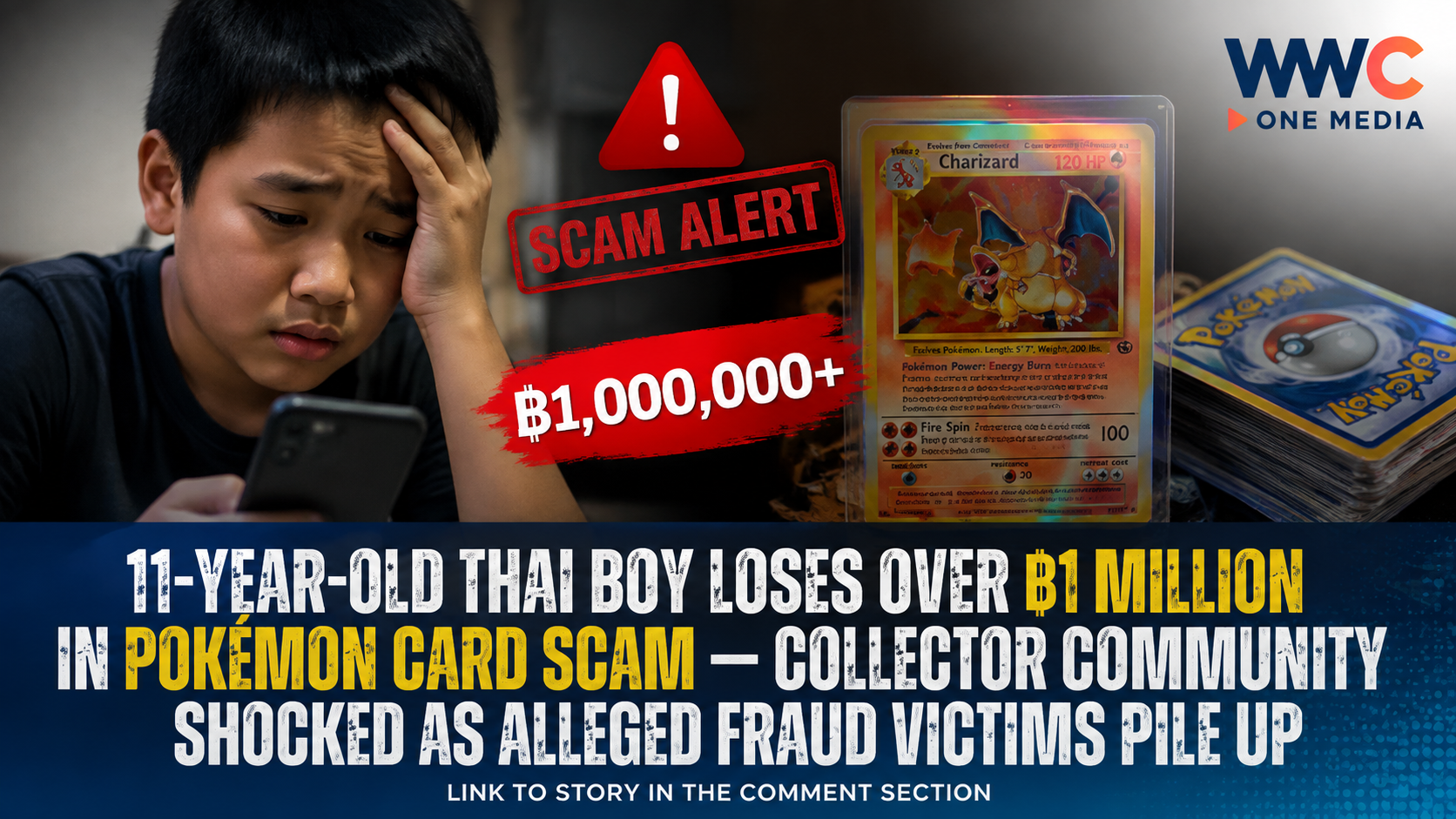
An 11-year-old boy’s dream of owning a rare Pokémon card turned into a devastating financial loss after he allegedly became one of more than two dozen victims in a multi-million-baht trading card scam in Thailand.
The young collector reportedly lost more than 1 million baht (around US$30,000) after paying for a highly valuable Pokémon card that was never delivered, according to reports from the Bangkok Post and other regional media outlets.
The case has sparked concern among Thailand’s growing community of collectible card enthusiasts, with authorities investigating allegations that a trader used trust built within the hobby community to convince victims to send increasingly larger payments.
From Trusted Seller to Alleged Scam: How the Scheme Unfolded
According to reports, the suspect — identified only as “Mr. Mor” — allegedly presented himself as a reliable dealer capable of sourcing rare Pokémon cards and other collectibles from overseas.
Several victims said the trader initially completed transactions successfully, delivering genuine products and building credibility among collectors.
That early success reportedly encouraged buyers to place larger orders for rare and expensive cards.
But problems allegedly began when customers started waiting for high-value items that never arrived.
The suspect reportedly blamed delays on issues such as:
- international shipping problems
- customs procedures
- import restrictions
Victims later claimed communication stopped and the trader’s online selling pages were shut down.
At Least 25 Victims Reportedly Lost More Than ฿5 Million
The 11-year-old collector is not the only person affected.
Authorities reportedly received complaints from at least 25 victims, with combined losses exceeding 5 million baht (around US$150,000).
Many victims were collectors who viewed Pokémon cards not only as a hobby but also as valuable assets that can appreciate in price.
One reported victim, a teenage trader, said previous successful transactions helped convince others that the seller was trustworthy. Another collector reportedly lost hundreds of thousands of baht after repeated dealings with the trader.
Why Pokémon Cards Have Become a Target for Scammers
The popularity of Pokémon cards has exploded globally, with rare editions sometimes selling for thousands or even hundreds of thousands of dollars.
Because some cards are treated like investments, scammers can exploit:
- collectors searching for limited-edition cards
- buyers looking for below-market prices
- online communities built around trust
- inexperienced younger collectors
Experts warn that online collectible markets can be vulnerable because many transactions happen through social media groups rather than regulated marketplaces.
Police Investigation Underway
Victims have reportedly filed complaints with Thailand’s Economic Crime Suppression Division, seeking legal action against the alleged seller.
Authorities are expected to investigate payment records, online communications, and the suspect’s trading activities as part of the case.
Safety Reminder for Parents and Young Collectors
The incident highlights the risks faced by young people participating in online buying and selling communities.
Experts recommend:
✅ Avoid sending large payments without verified protection
✅ Use trusted marketplaces with buyer safeguards
✅ Check seller histories beyond screenshots and reviews
✅ Be cautious of “rare deals” priced far below market value
✅ Parents should monitor high-value online purchases involving minors
The Bigger Question: How Did a Child End Up Losing More Than ฿1 Million?
The case has raised wider questions about online consumer protection, especially as younger collectors enter digital marketplaces where expensive hobbies can quickly become financial risks.
What started as a search for a rare Pokémon card has now become a warning story for collectors worldwide: in online trading, trust can sometimes be the most valuable thing being sold — and the easiest thing to exploit.