
₱4.38-BILLION AGRI BLOW: Habagat, 4 Cyclones Leave Filipino Farmers Reeling—And the Damage May Not End Here

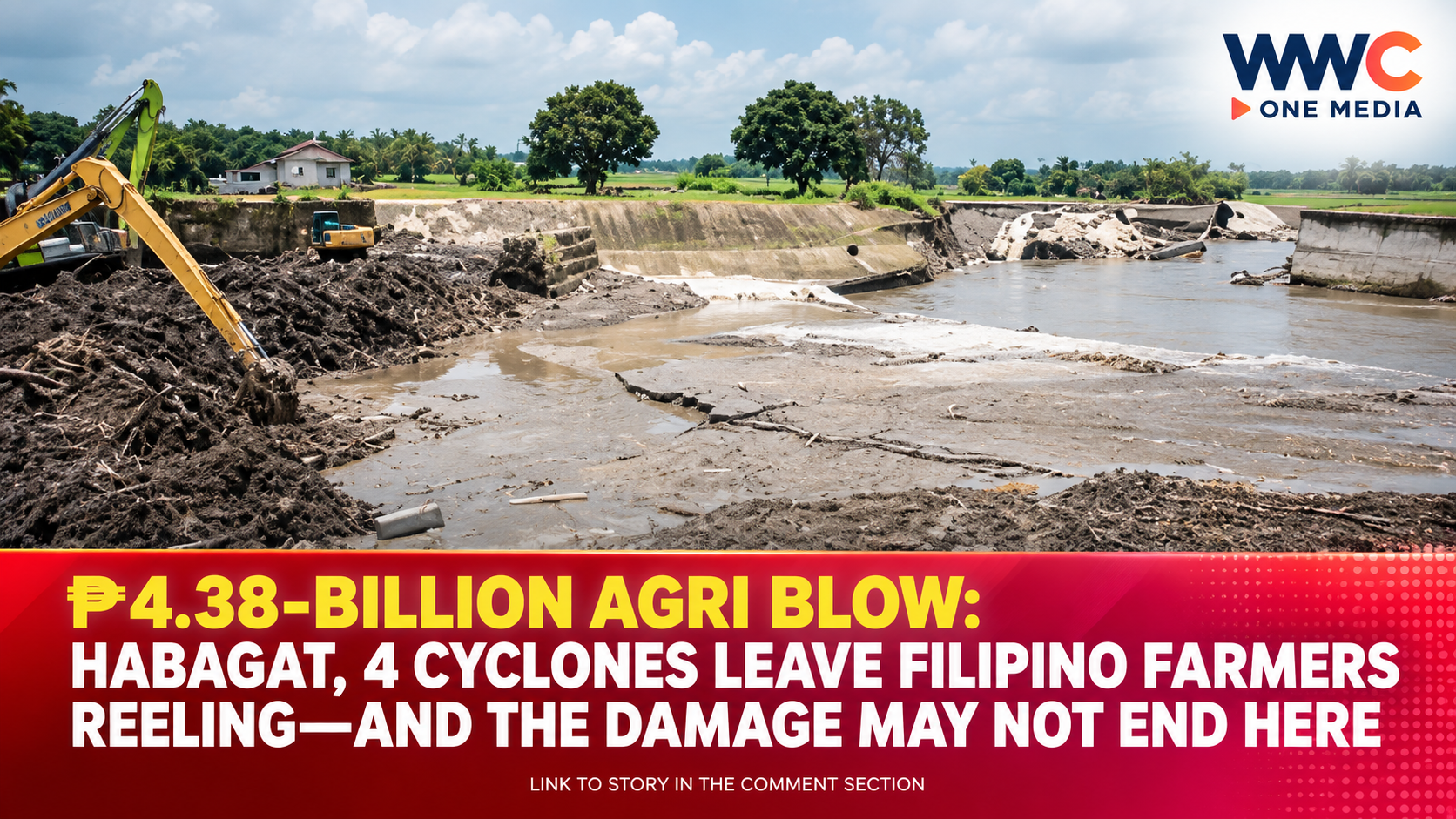
MANILA, Philippines — The Philippines’ agriculture sector has suffered an estimated ₱4.38 billion in damage and losses following the combined effects of the enhanced southwest monsoon or Habagat and four tropical cyclones—Luis, Maymay, Neneng and Pilandok.
The latest assessment underscores the growing cost of successive weather disturbances on farmers, fisherfolk and the country’s food supply chain.
Earlier assessments had placed agricultural losses at ₱3.39 billion after Habagat and Tropical Cyclones Luis, Maymay and Neneng battered several parts of the country. At that stage, the Department of Agriculture reported that about 80,500 farmers and fisherfolk had been affected, with 72,766 hectares of agricultural areas damaged and around 82,631 metric tons of production losses.
The damage continued to climb as field assessments incorporated the effects of additional weather disturbances.
Rice takes the biggest hit
Rice remains the most heavily affected agricultural commodity.
The latest assessment cited by BusinessMirror placed rice production losses at approximately 65,106 metric tons, with the corresponding damage valued at about ₱2.04 billion. Agriculture Secretary Francisco Tiu Laurel Jr. said much of the damaged rice was already nearing harvest.
Despite the substantial monetary loss, the Agriculture Department said the damaged rice represents less than 1% of the country's projected 2026 rice production of roughly 20.3 million metric tons. This suggests that the immediate national rice supply may remain manageable, although localized disruptions could still affect consumers and producers.
The earlier DA assessment likewise showed rice accounting for the largest portion of agricultural losses, at ₱1.86 billion, before the latest damage estimates were incorporated.
Vegetables, fisheries and other crops also damaged
The impact extends well beyond rice.
High-value crops—including vegetables, fruits, root crops and other commercial commodities—sustained significant losses. Earlier DA figures placed losses in high-value crops at ₱867.69 million. Corn and cassava losses were estimated at ₱103.61 million and ₱25.65 million, respectively.
The fisheries sector was also hit hard. Earlier assessments recorded approximately ₱412.84 million in losses involving commodities such as milkfish, tilapia, mangrove crab, oysters, freshwater prawns, catfish, shrimp and fingerlings.
Farm infrastructure, irrigation facilities, machinery and livestock were likewise affected.
Nearly 100,000 farmers and fishermen affected
The latest assessment reported by BusinessMirror said the successive weather disturbances had affected 97,589 farmers and fishermen and damaged about 81,383 hectares of agricultural areas. Production losses had reached approximately 100,602 metric tons.
The affected areas span multiple regions, with previous DA assessments identifying damage across the Cordillera Administrative Region, Ilocos Region, Cagayan Valley, Central Luzon, CALABARZON, MIMAROPA, Bicol Region and Western Visayas.
Government moves to assist affected farmers
The government has begun deploying assistance as damage assessments continue.
The Philippine Crop Insurance Corp. (PCIC) allocated ₱187 million in indemnification payments for nearly 25,000 farmers, covering reported losses from August 1 to 26 in eight regions. Rice farmers accounted for the largest share of insurance claims at ₱132.9 million, followed by high-value crops at ₱42.1 million and corn at ₱9.3 million.
The Department of Agriculture had also made hundreds of millions of pesos worth of agricultural inputs available to affected producers, including rice, corn and vegetable seeds. Farmers may also access loans of up to ₱25,000 through the Agricultural Credit Policy Council's Survival and Recovery (SURE) Loan Program.
The National Food Authority was also directed to release rice stocks to affected local government units, while KADIWA trucks were deployed to help move agricultural commodities and assistance into affected areas.
The bigger concern: food prices
While officials have indicated that the rice losses are unlikely to create a nationwide supply crisis, the broader impact could still be felt at public markets.
Agriculture Secretary Tiu Laurel warned that localized supply disruptions could create inflationary pressure, particularly on vegetables and fish, where weather-related shortages can quickly translate into higher prices. Rice, meanwhile, is considered less vulnerable to immediate price pressure because of available domestic stocks and imports.
That distinction is important: the ₱4.38-billion damage figure does not automatically mean rice prices will surge nationwide. But repeated weather shocks can strain farmers' incomes, disrupt supply routes and reduce the availability of certain commodities in affected communities.
A warning for the agriculture sector
The latest losses highlight a growing challenge for Philippine agriculture: farmers are not only battling production costs and market volatility but are also increasingly exposed to weather-related disruptions.
The Department of Agriculture has emphasized the importance of faster insurance payouts and recovery assistance so affected producers can return to farming before temporary losses become longer-term supply problems.
For now, officials say national rice supply remains relatively stable despite the damage.
But with nearly ₱4.4 billion in agricultural losses, tens of thousands of farmers and fisherfolk affected, and more than 100,000 metric tons of production lost, the latest disaster serves as another stark reminder of how quickly extreme weather can threaten both rural livelihoods and the country's food system.
WWC ONE MEDIA M.J.E