
51 Attacks, Three Provinces, One Night: Thailand’s Deep South Erupts as PM Calls Emergency Security Meeting

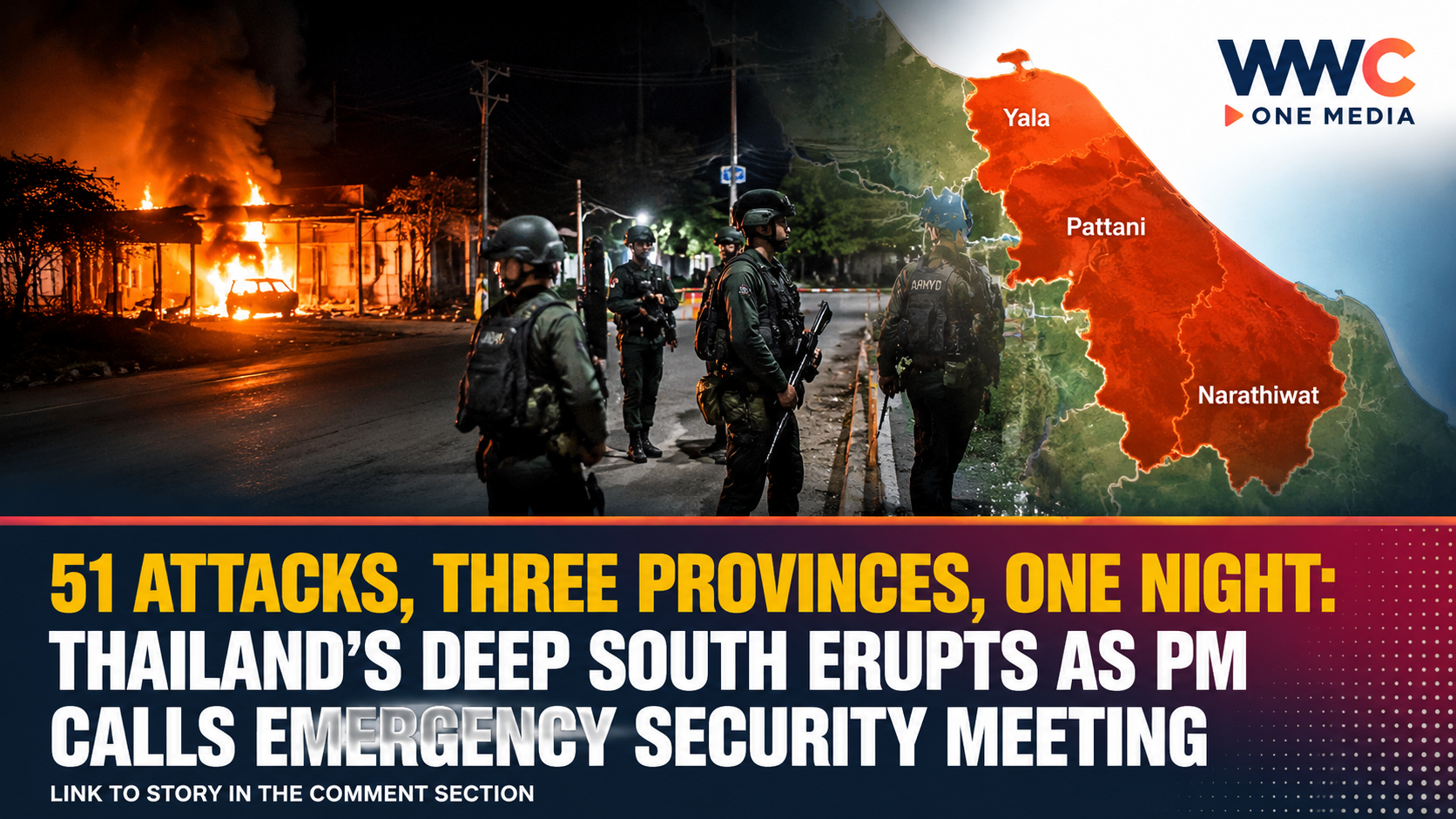
Thailand has moved to strengthen security across its southern border provinces after a coordinated wave of 51 bomb, arson and property-damage incidents struck Narathiwat, Pattani and Yala overnight on August 22.
The attacks prompted Prime Minister and Interior Minister Anutin Charnvirakul to call an urgent security meeting on Sunday as authorities assessed the scale of the violence and worked to prevent further incidents.
The incidents began at around 8 p.m. Saturday and were reported across 21 districts in the three provinces, according to Thailand's Internal Security Operations Command Region 4 Forward Command.
Narathiwat recorded the largest number, with 22 incidents across 12 districts. Pattani reported 11 incidents across six districts, while Yala recorded 18 incidents. Two civilians were initially reported injured in Narathiwat, while no injuries were initially reported in Pattani or Yala.
PM Calls Urgent Security Meeting
Anutin convened senior security officials to review the situation and determine the government's response.
The meeting brought together senior defence, interior and military officials as authorities reviewed developments in the three southern provinces.
Officials said security measures had been strengthened, with Yala placed at the highest level of preparedness. Residents were also advised to remain vigilant and avoid areas affected by the attacks.
Authorities are now inspecting affected locations, securing the surrounding areas, assisting residents and collecting evidence as investigators search for those responsible.
Government Buildings, Businesses and Infrastructure Damaged
The overnight violence involved a combination of bombings, arson attacks and damage to public and private property.
Reports from multiple outlets said a local government office, a convenience store and other infrastructure were among the sites affected. Telecommunications facilities, electrical poles and railway infrastructure were also reported to have suffered damage.
Thailand's State Railway temporarily suspended service on a section of the Narathiwat line after damage was discovered following the overnight unrest.
Narathiwat authorities also imposed an overnight curfew following the attacks, covering the period from late Saturday night into Sunday morning as security forces worked to regain control of affected areas.
No Group Has Claimed Responsibility
Despite the scale and apparent coordination of the attacks, no group has publicly claimed responsibility for the August 22 violence.
Thai security authorities have suggested that the incidents appeared to have been prepared in advance, with perpetrators operating across a wide geographic area. Investigators are now examining the attacks and gathering evidence to identify those responsible.
That distinction is important: while the attacks occurred in an area affected by a long-running separatist insurgency, authorities have not publicly established responsibility for this particular wave of incidents.
Violence Comes Amid Renewed Pressure on Thailand's Southern Peace Process
The latest attacks come at a particularly sensitive time for Thailand's troubled southern provinces.
The conflict in the predominantly Muslim border region has continued for more than two decades. Reuters reported earlier this week that Thailand is seeking a new approach to the long-running insurgency, including discussion of political grievances, decentralisation and possible amnesty measures. The peace process has been facilitated by Malaysia since 2013, although negotiations have repeatedly stalled amid political instability and renewed violence.
The recent escalation follows another deadly incident in July, when five Thai paramilitary rangers were killed and six civilians were wounded in an attack in Narathiwat.
Violence Has Not Disappeared From the Deep South
Fresh figures published by The Nation show just how persistent the conflict remains.
From 2017 through July 31, 2026, Thailand's southern border provinces recorded 1,271 unrest incidents involving 3,270 people killed or injured, according to figures cited by the newspaper. The data combine deaths and injuries and do not provide a separate breakdown for the two categories.
The figures show that although the intensity of the conflict has fluctuated over the years, violence remains a significant security challenge for Thailand.
The latest attacks therefore represent more than a single night of unrest—they underscore the continuing difficulty of securing the region while Bangkok simultaneously seeks a political path toward a longer-term settlement.
What Happens Next?
For now, Thai authorities are concentrating on securing affected locations, protecting civilians and identifying those behind the attacks.
Residents in the affected provinces have been urged to remain cautious, avoid restricted areas and report suspicious people, vehicles or objects rather than approaching them. Security forces are continuing inspections and evidence collection.
The biggest unanswered question is whether the 51 incidents mark an isolated coordinated operation—or the beginning of another sustained escalation in Thailand's Deep South.
With security levels raised and the government urgently reviewing the situation, authorities now face pressure on two fronts: preventing another wave of violence while keeping a fragile peace process alive.
For Thailand, what happens next could determine whether this latest night of violence fades quickly—or becomes the start of a much larger security crisis.