AcroMeta Targets Southeast Asia With Technology That Could Transform Cell Therapy Logistics

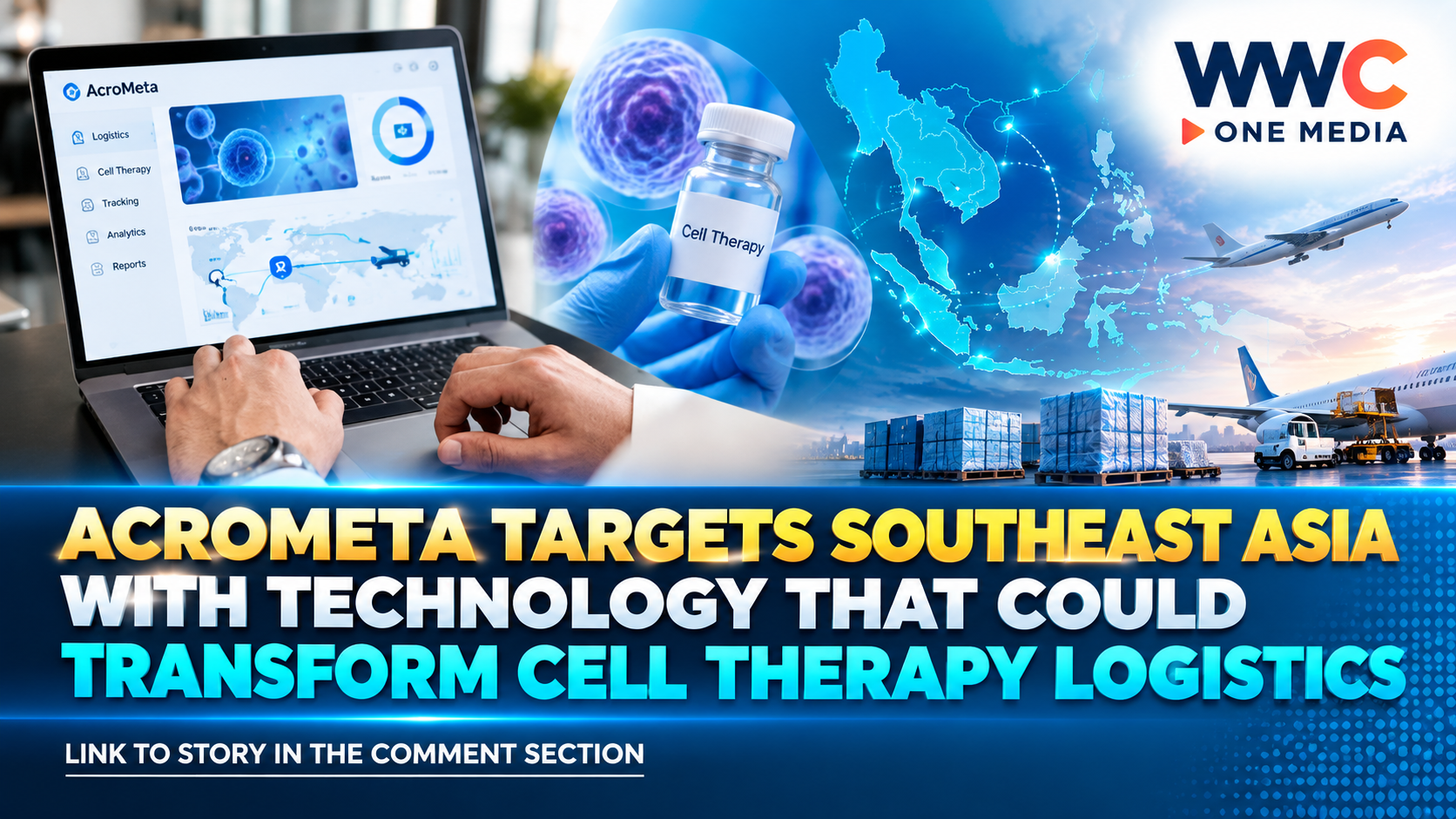
SINGAPORE — Singapore-listed AcroMeta Group is moving into the fast-growing cell and gene therapy logistics market, seeking exclusive rights across Southeast Asia for technology designed to transport living cells without relying on conventional refrigerated or cryogenic supply chains.
The company has signed a non-binding term sheet with Macro HRD SG Pte. Ltd. that would give AcroMeta an option to obtain exclusive licensing rights for Ambient Temperature Cellular Logistics, or ATCLS, across Southeast Asia.
The proposed arrangement covers the region's 11 Southeast Asian markets, including Singapore, Malaysia, Indonesia, Thailand, Vietnam and the Philippines. However, the deal is not yet final: the term sheet is an expression of intent, and the parties still need to negotiate and sign definitive agreements.
A potential alternative to traditional cold-chain logistics
ATCLS is designed to address one of the major logistical challenges facing advanced medical treatments: keeping sensitive biological materials viable while they are transported between laboratories, treatment centres and manufacturing facilities.
Traditional cell and gene therapy logistics can require tightly controlled refrigerated or cryogenic conditions throughout transportation. ATCLS instead uses proprietary preservation and reactivation methods intended to maintain living cells at ambient temperatures.
The platform also incorporates systems for real-time governance, chain-of-identity and process control — important requirements when handling biological materials that must be accurately tracked from collection through transportation and eventual use.
If commercially proven at scale, such a system could potentially reduce some of the infrastructure and geographic constraints associated with conventional cold-chain transportation.
AcroMeta gets a 12-month option
Under the proposed arrangement, AcroMeta would receive an exclusive option to acquire the ATCLS licensing rights for the agreed Southeast Asian territories.
The option is expected to run for 12 months, unless both parties agree to extend it.
The companies are also exploring a broader strategic relationship in which AcroMeta could take an equity stake in Macro-ATCLS Pte. Ltd., the entity being established to commercialise the technology. Macro-ATCLS is intended to hold the intellectual property and global licensing rights for the ATCLS platform.
The parties intend to conclude a definitive agreement by 30 September 2026, although that deadline can be changed by mutual agreement.
That distinction is important for investors: AcroMeta has secured an option, rather than already obtaining a fully commercialised exclusive licence.
Southeast Asia becomes the target market
The proposed territory covers Brunei, Cambodia, Indonesia, Laos, Malaysia, Myanmar, the Philippines, Singapore, Thailand, Vietnam and Timor-Leste.
The region could offer an attractive expansion opportunity because advanced healthcare, biotechnology and pharmaceutical industries are developing across several Southeast Asian economies.
For AcroMeta, the move also represents a diversification away from its more traditional engineering and facility-management activities.
The company has previously pursued other technology-related opportunities, including an agreement giving it exclusive rights to operate AI-powered trade platforms in mainland China.
Why cell logistics matters
The logistics challenge is becoming increasingly important as medical research moves toward therapies involving living cells.
Potential applications for ATCLS include areas such as stem-cell therapies, CAR-T and other immune-cell treatments, regenerative medicine, gene therapy, and certain organ and tissue applications, according to information surrounding the proposed partnership.
Unlike conventional pharmaceutical products, living-cell therapies can be particularly sensitive to transportation conditions. Maintaining the right environment while preserving the identity and integrity of biological material is therefore a critical part of the treatment chain.
A technology that could safely move such materials without continuous ultra-cold infrastructure could, in principle, make transportation more flexible and potentially expand access to therapies across geographically dispersed markets.
But that potential will ultimately depend on validation, regulatory acceptance, clinical requirements and commercial scalability.
The biggest question: Can it work at scale?
The proposed deal gives AcroMeta an opportunity to enter a potentially high-growth sector, but there are still significant hurdles before the technology can become a major commercial business.
The term sheet does not guarantee that the licensing arrangement will be completed. The parties still have to agree on the final investment structure, commercial terms and other conditions.
There are also practical questions around how ATCLS will perform across different types of cells, treatment processes and regulatory environments.
For a technology handling living biological material, reliability is crucial. Any commercial rollout would need to demonstrate that cells can be preserved, transported, recovered and reactivated consistently while maintaining the characteristics required for their intended medical use.
A strategic bet beyond AcroMeta's core business
For AcroMeta, the proposed partnership is more than a logistics expansion. It is a strategic bet on the infrastructure supporting the next generation of healthcare.
The company's potential role would be to commercialise the technology throughout Southeast Asia and potentially appoint sub-licensees in individual markets, allowing the platform to expand through regional partners.
The opportunity could become significant if ambient-temperature cellular logistics proves capable of reducing costs and simplifying transportation for advanced therapies.
For now, however, AcroMeta's Southeast Asian ambitions remain a proposed transaction rather than a completed rollout.
The next major milestone will be whether the parties can convert the non-binding term sheet into a definitive agreement — and, beyond that, whether the technology can move from an innovative concept into a reliable logistics platform for the region's rapidly developing biotechnology and healthcare industries.
WWC ONE MEDIA J.M.D