
BIR Destroys 240,550 Illegal Vapes With ₱1.539-B Tax Liability — But the Bigger Crackdown May Be Just Beginning

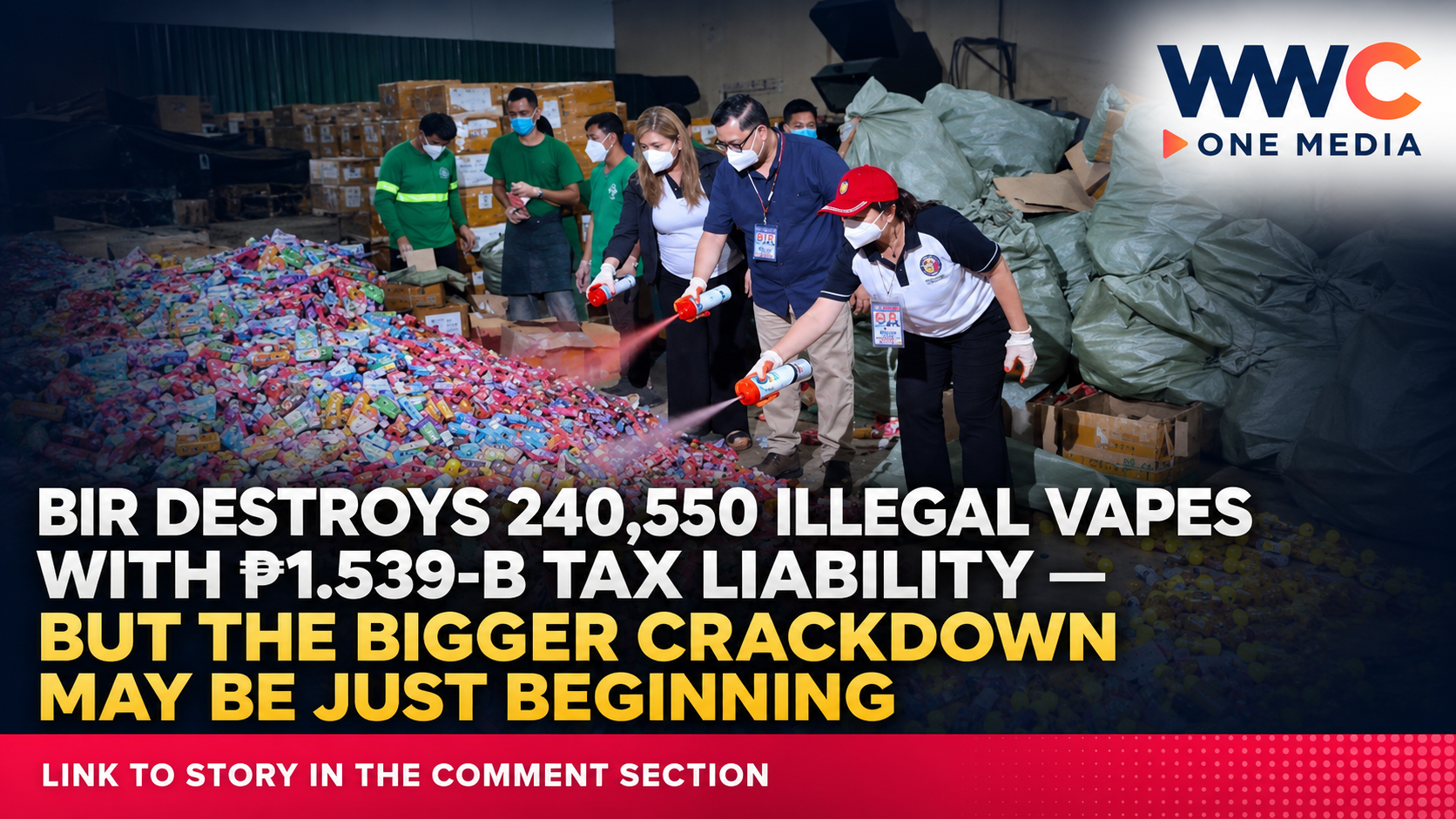
MANILA, Philippines — More than 240,000 illicit vape products carrying an estimated ₱1.539 billion in tax liability have been permanently destroyed as the Bureau of Internal Revenue intensifies a crackdown that is increasingly moving beyond small retailers and into warehouses and major distribution networks.
The Bureau of Internal Revenue’s Revenue Region No. 6, which covers the City of Manila and Palawan, destroyed 240,550 illicit vape products on August 24 at the DIGAMA Waste Management Facility in Porac, Pampanga.
The figure is significant not only because of the sheer volume of products removed from circulation, but because authorities estimate the associated tax liability at nearly ₱1.54 billion. The amount refers to estimated tax liability connected with the illicit products—not necessarily their retail or street value.
BIR Commissioner Charlito Martin Mendoza said the government’s campaign against illegal vape products cannot stop once merchandise has been confiscated.
“Enforcement does not end with seizure,” Mendoza said, stressing that confiscated products must be permanently taken out of circulation while authorities pursue those involved in their illegal manufacture, importation, distribution and sale.
From Vape Shops to Warehouses
What makes the latest operation particularly notable is the BIR’s changing enforcement strategy.
Revenue Region No. 6 Regional Director Remir Macatangay said authorities initially concentrated on individual retail stores before expanding their operations to warehouses where much larger quantities could potentially be intercepted before reaching consumers.
That shift ultimately led investigators to Tap Fog Philippines, which Macatangay described as the target of the largest single illicit-vape enforcement operation ever conducted by the BIR.
According to the bureau, some of the products destroyed in Pampanga came from that operation.
But the Tap Fog name has surfaced in the government's vape enforcement campaign before.
In February 2024, the BIR announced that courts had issued warrants of arrest against individuals linked to the Tap Fog case stemming from a November 2022 raid. Authorities placed the estimated civil liability in that earlier case at approximately ₱1.24 billion, including fines and penalties.
The allegations included unlawful possession or removal of excisable products without payment of taxes, alleged tax evasion, failure to pay taxes and violations involving tax stamps and minimum lawful pricing requirements. The cases were brought before the Court of Tax Appeals and Metropolitan Trial Court.
The latest destruction should therefore be seen as part of a much longer enforcement campaign—not an isolated raid.
Billions at Stake in Illegal Vape Trade
The scale of the problem has become increasingly difficult for authorities to ignore.
In August 2025, the BIR filed criminal complaints against numerous vape businesses following nationwide enforcement operations, with the cases involving an estimated ₱711.3 million in tax liability.
The bureau also said at the time that it had filed approximately ₱8.7 billion worth of tax-evasion cases in April 2025 involving several large-scale illicit vape businesses, including those associated with the Flava, Denkat and Flare brands.
Then in December 2025, the BIR launched a simultaneous nationwide destruction of illicit vape products.
The bureau reported that 448,494 units were scheduled for destruction during that operation, carrying an estimated ₱1.34 billion in unpaid excise taxes and penalties. Overall seizures cited by the BIR at the time reached 742,778 illicit vape products with estimated tax liability of approximately ₱2.73 billion, including penalties.
The enforcement campaign continued this year.
During a nationwide Tax Compliance Verification Drive on July 20, 2026, the BIR inspected 3,590 establishments involved in cigarettes, vapor products and heated tobacco products. The operation resulted in 1,793 apprehensions involving tax-compliance violations, according to the bureau.
Study Says Illegal Vapes Dominate the Market
The government seizures also come against research suggesting that illicit vaping may extend far beyond the products authorities have already confiscated.
A study by the EU-ASEAN Business Council and Euromonitor International, reported by GMA News in May, estimated that the Philippine government lost around ₱141 billion in revenue from illicit tobacco trade between 2024 and 2025.
More strikingly, the study estimated that 86 percent of e-vapes sold in the Philippines were illicit, defined as products that were non-duty-paid, noncompliant with regulations or otherwise sold outside legal requirements.
The researchers estimated illicit vape sales alone generated roughly ₱23 billion for illegal operators during the period. Those figures come from an industry-linked study and are estimates rather than government seizure totals, but they illustrate the potential scale of the market authorities are attempting to police.
Congress Is Looking at Vape Taxes Too
Enforcement is only one part of the government's response.
The House Committee on Ways and Means is currently studying proposals that could overhaul how vapor products are taxed, including measures that would establish a unified excise-tax structure for nicotine salt and freebase nicotine products.
Committee chair and Marikina Rep. Miro Quimbo has said lawmakers are trying to balance public-health objectives and government revenue while avoiding tax structures that could unintentionally create stronger incentives for illicit trade.
Several bills under consideration seek to close regulatory gaps, simplify enforcement or abolish the existing tax distinction between different categories of nicotine vapor products.
One proposal, House Bill 2618, would impose a unitary excise tax of ₱66.15 per milliliter on both nicotine-salt and freebase products while imposing additional specific taxes on vapor-product devices. The proposal remains subject to the legislative process and is not yet the governing tax regime.
Destruction Is the End of the Product—Not Necessarily the Case
Under BIR regulations, forfeited excisable articles such as illicit tobacco and vapor products may be destroyed when allowing them back into circulation would threaten public health or undermine enforcement of tax laws.
The rules also establish procedures governing the disposal of confiscated products following enforcement operations.
For authorities, destroying the latest 240,550 units therefore closes only one chapter.
The bigger question is what comes next.
Moving enforcement from storefronts to warehouses may allow investigators to target suppliers before illegal products reach thousands of sellers. But with previous enforcement actions already involving billions of pesos in alleged tax liabilities—and research indicating that illicit products could account for a substantial share of the vape market—the latest destruction also exposes just how large the challenge may have become.
The BIR says its objective is clear: protect government revenue, defend businesses that comply with tax rules and prevent illicit vapor products from returning to consumers.
After 240,550 illegal vape products and an estimated ₱1.539 billion in tax liability, however, one question remains:
How much of the illicit vape supply is still out there?