
From Hunger To Obesity: Developing Countries Face A New Child Health Crisis

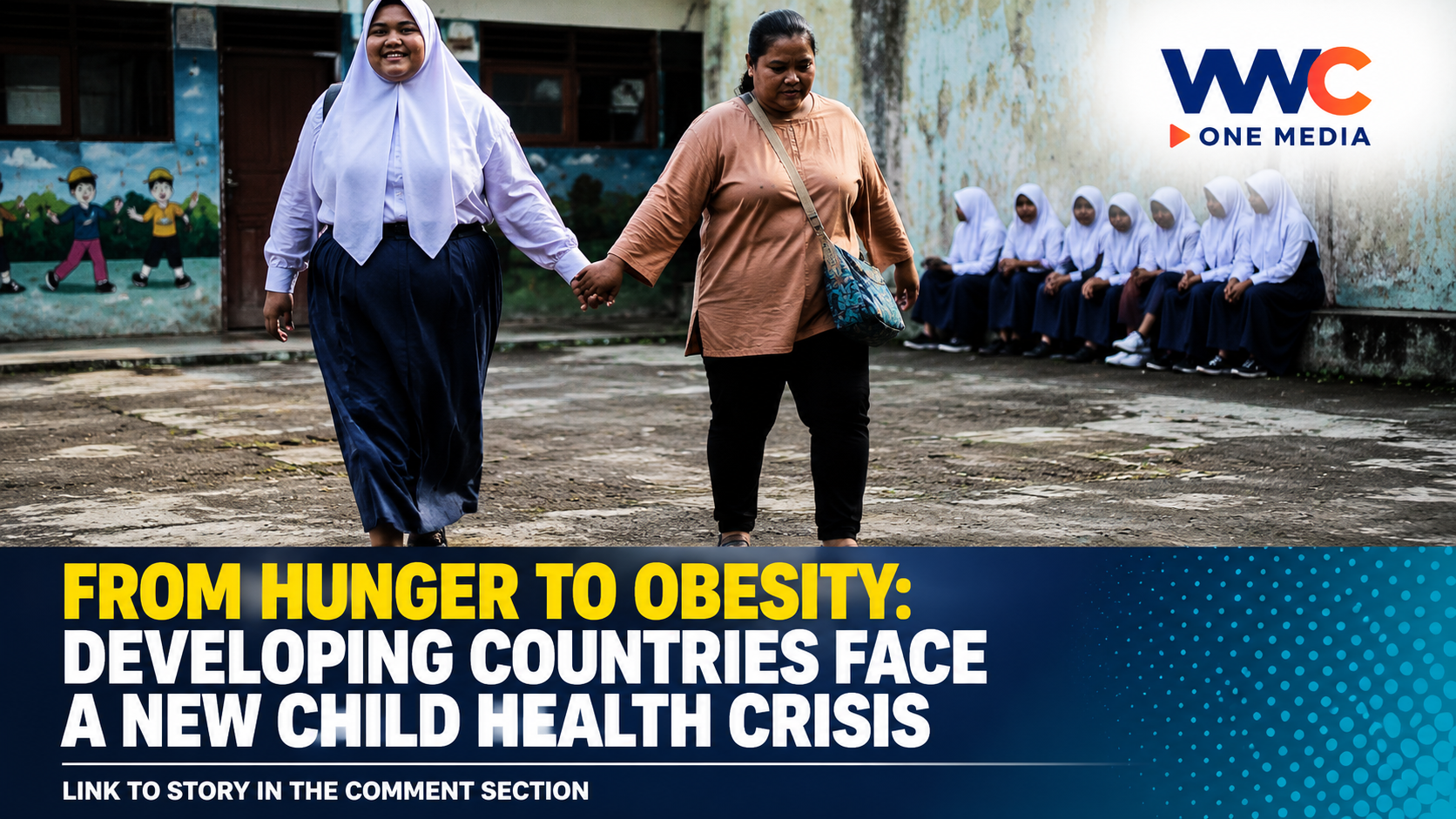
The global fight against childhood malnutrition is entering a dangerous new phase.
For decades, many developing countries focused primarily on hunger, underweight and stunting. But as diets, incomes, food markets and lifestyles have changed, another threat has rapidly emerged: childhood overweight and obesity.
The result is a growing “double burden” in which undernutrition and obesity can exist side by side — sometimes within the same country, community or household.
A major international analysis published in Nature found that the rise in childhood obesity has slowed or plateaued in many wealthier countries but is continuing to accelerate across large parts of Asia, Africa, Latin America, the Caribbean and Pacific Island nations. The research examined data from 4,050 population-based studies involving about 232 million people across 200 countries.
Obesity Has Now Overtaken Underweight Globally
The scale of the shift became particularly striking in 2025.
UNICEF reported that obesity among children and adolescents aged 5 to 19 surpassed underweight for the first time globally — about 9.4% versus 9.2%, representing roughly 188 million children and adolescents living with obesity.
At the same time, approximately 391 million children and adolescents aged 5 to 19 were overweight, meaning that roughly one in five children in this age group was carrying excess weight. More than 80% of children and adolescents living with overweight are now in low- and middle-income countries.
This does not mean hunger has disappeared.
Far from it.
Undernutrition, wasting, stunting and micronutrient deficiencies continue to threaten millions of children, particularly in poorer communities. What is changing is the nutritional landscape: children can now face inadequate nutrition at one stage of life and excessive consumption of unhealthy, nutrient-poor food at another.
Indonesia Shows How Quickly The Transition Can Happen
Indonesia has become one of the clearest examples.
According to the Reuters report, obesity among Indonesian school-aged children and adolescents has risen rapidly, even as the country continues to confront undernutrition.
Researchers involved in the global obesity project found that obesity had become more prevalent than undernutrition among Indonesian school-aged children — making Indonesia the most populous country after China and the United States to cross that threshold.
Reuters reported that obesity and undernutrition together affect an estimated 20% of Indonesia's roughly 60 million school-aged children.
The problem is being driven by a rapid transformation in the food environment.
Cheap, highly processed foods, sugary products, sedentary lifestyles and aggressive marketing are becoming increasingly accessible, while healthier foods can remain less affordable or less convenient.
The Nature study found that obesity is accelerating not only in countries where prevalence is already high, but also in countries where obesity levels remain comparatively low. Researchers identified this acceleration across parts of South and Southeast Asia, Africa, Latin America and the Pacific.
The Food Environment Is Becoming A Major Battleground
UNICEF warns that this is not simply a matter of children making poor individual choices.
Its 2025 Child Nutrition Report found that unhealthy food environments are increasingly shaping what children eat, with ultra-processed foods and sugary drinks becoming staples in many children's diets.
The organization reported that three out of four young people surveyed globally had seen advertisements for junk food during the previous week, while 60% said the advertising increased their desire to consume those products.
That means the battle over childhood nutrition is increasingly being fought not only at the dinner table, but also in supermarkets, schools, streets and digital spaces.
The Health Consequences Could Last A Lifetime
Childhood obesity is not simply about weight.
WHO says children and adolescents living with overweight or obesity face greater risks of developing conditions such as type 2 diabetes and cardiovascular disease earlier in life. Obesity can also have serious psychological and social consequences, including stigma, discrimination and bullying.
And the economic consequences could become enormous.
WHO estimates that the global economic cost of overweight and obesity could reach around US$3 trillion annually by 2030 if current trends are not reversed.
The concern is particularly serious for developing nations because many health systems are already dealing with infectious diseases, undernutrition and limited healthcare resources.
WHO Is Turning Its Attention To Schools
In January 2026, WHO issued new global guidance calling for healthier food environments in schools.
The organization said schools have a crucial role in addressing the double burden of malnutrition and recommended a whole-school approach covering the food and beverages provided or sold within school environments.
WHO noted that although more than 100 countries had policies related to healthy school food as of October 2025, far fewer had strong restrictions on marketing foods high in sugar, salt or unhealthy fats to children.
That gap could prove increasingly important as food companies gain greater access to young consumers through digital advertising and inexpensive processed products.
The Bigger Warning
The most important message from the latest research is that the developing world is not simply replacing one nutrition problem with another.
It is facing both at the same time.
Children can still go to bed hungry while living in communities saturated with cheap, calorie-dense and nutrient-poor foods. Families can struggle with food insecurity while simultaneously facing rising childhood obesity.
The Nature researchers say the continuing rise in low- and middle-income countries highlights the need for stronger public-health policies addressing food affordability, marketing, urban environments and access to healthier diets.
UNICEF is likewise calling for stronger food-labeling rules, restrictions on unhealthy-food marketing, healthier school environments, fiscal measures and greater access to nutritious food.
The world's child nutrition crisis is changing — and governments may now have to fight hunger and obesity at the same time.
WWC ONE MEDIA J.M.D