
Germany Battles Gaza Genocide Claims at UN's Top Court as Nicaragua Targets Arms Support for Israel

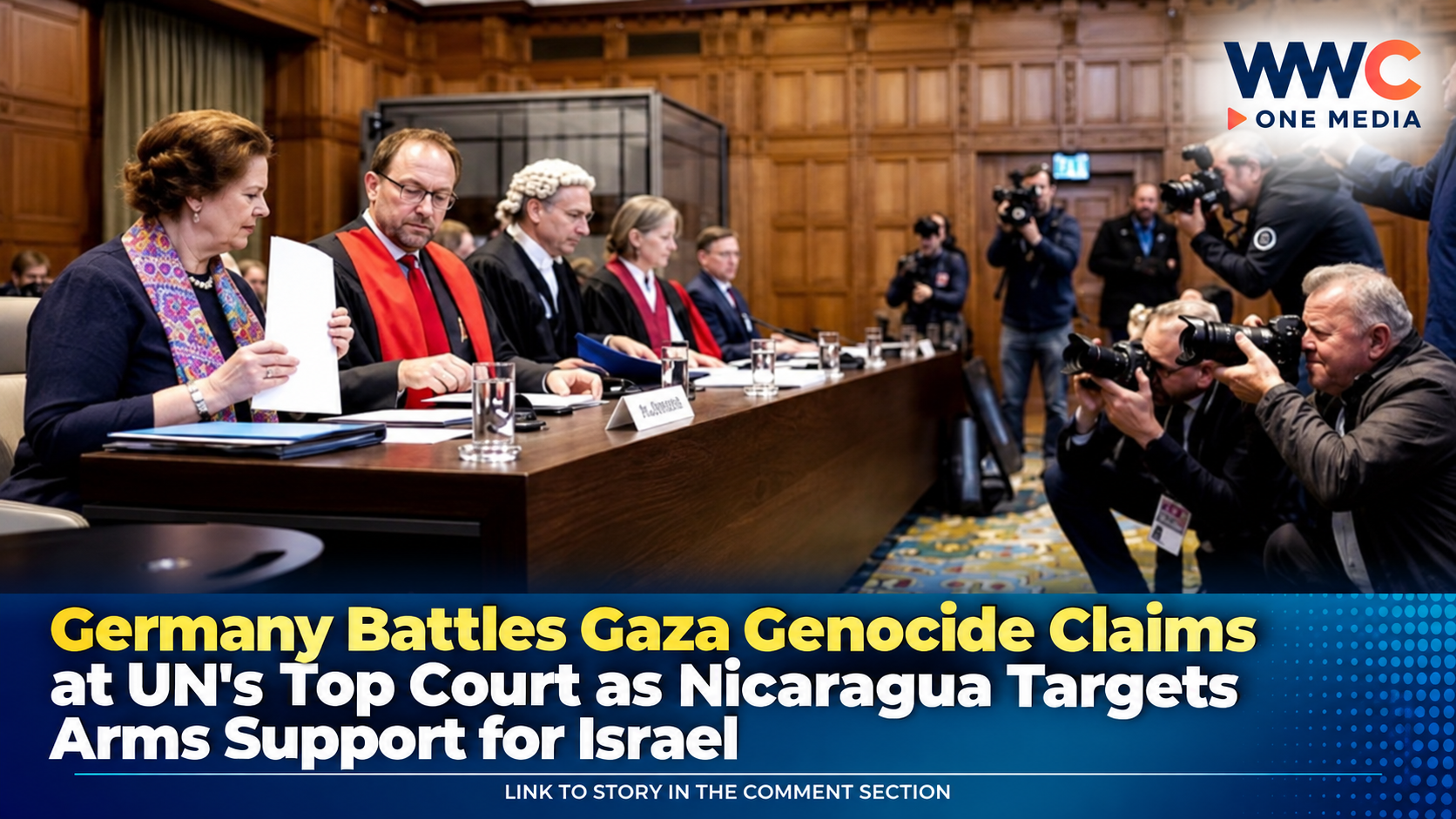
THE HAGUE — Germany has asked the United Nations' highest court to throw out a case accusing Berlin of helping facilitate genocide in Gaza through its military and political support for Israel.
The case, brought by Nicaragua before the International Court of Justice (ICJ), has placed Germany's long-standing support for Israel under intense international legal scrutiny.
Berlin strongly denies wrongdoing and argues that Nicaragua's case was improperly filed and should not proceed.
The hearings come as the legal battle over Gaza continues to expand beyond Israel itself, with governments and international institutions facing increasing pressure over their role in the conflict.
Germany asks UN court to dismiss case
Germany appeared before the International Court of Justice in The Hague on Monday, Sept 7, asking judges to reject Nicaragua's case on jurisdictional and procedural grounds.
Nicaragua accuses Germany of violating the 1948 Genocide Convention and other international obligations by allegedly providing weapons and other forms of support that could facilitate violations committed by Israel in Gaza.
Germany's legal team rejected those accusations.
Julia Monar, Germany's top lawyer in the proceedings, argued that Nicaragua did not properly engage Germany before bringing the dispute to court and gave Berlin insufficient opportunity to respond to the allegations.
Germany is also challenging whether the ICJ has jurisdiction over the claims.
The hearings scheduled from Sept 7 to Sept 10 focus on Germany's preliminary objections — meaning the court is not yet deciding whether Germany is legally responsible for the allegations made by Nicaragua. Instead, judges must first determine whether the case can proceed to the merits stage.
What exactly is Nicaragua accusing Germany of?
The case is formally known as Nicaragua v Germany and was originally filed at the ICJ in March 2024.
Nicaragua alleges that Germany failed to meet its obligations under international law by providing military support to Israel while the humanitarian crisis in Gaza was unfolding.
Its accusations include claims that Germany:
- Supplied weapons and military assistance to Israel
- Failed to take sufficient action to prevent possible violations of the Genocide Convention
- Continued support despite warnings over the humanitarian situation in Gaza
- Took actions affecting humanitarian assistance, including previous issues surrounding funding for the UN agency for Palestinian refugees
Germany disputes those allegations.
Berlin maintains that its arms exports are subject to legal review and international obligations and rejects the claim that it has facilitated genocide.
The case is particularly significant because it is unusual for the ICJ to hear a dispute involving a country accused of indirectly contributing to alleged violations in another conflict rather than being one of the direct parties fighting the war.
Germany's Israel arms exports under scrutiny
Germany has historically been one of Israel's closest allies and has been among its major arms suppliers.
However, Germany's policy on military exports has faced growing scrutiny since the Gaza war began following Hamas' Oct 7, 2023 attack on Israel.
According to recent Reuters reporting, Germany temporarily suspended some weapons exports to Israel in 2025 before shipments later resumed.
Germany insists that its decisions on arms exports are assessed against international law and that it does not automatically approve military equipment without legal review.
The German government is now attempting to prevent Nicaragua's case from moving into a full examination of whether its conduct breached international law.
Important: The ICJ has not ruled that Germany committed genocide
One of the most important points for readers is that the International Court of Justice has not found Germany guilty of genocide or of facilitating genocide.
The case remains ongoing.
Germany is currently challenging the court's jurisdiction and the admissibility of Nicaragua's claims.
An ICJ decision at this stage would determine whether the legal case should continue, not whether Germany is ultimately liable for the accusations.
The court previously rejected Nicaragua's request for emergency measures ordering Germany to halt arms exports to Israel in April 2024.
However, the judges did not end the wider case at that time, allowing the proceedings to continue.
Why this case is linked to the Gaza genocide allegations
Although Israel is not a party to Nicaragua's case against Germany, the proceedings are closely connected to the broader international legal battle over Gaza.
South Africa separately brought a landmark case against Israel at the ICJ, accusing it of violating the Genocide Convention.
Israel has repeatedly rejected allegations of genocide and says its military operations are directed against Hamas following the Oct 7 attack.
The ICJ has issued several provisional measures in the South Africa case aimed at protecting Palestinians and addressing humanitarian concerns. However, the court has not yet delivered a final judgment determining whether Israel committed genocide.
That distinction is crucial: allegations, provisional measures and final legal findings are not the same thing.
A final ruling in major ICJ cases can take years.
Gaza remains at the centre of growing international legal pressure
The case against Germany comes amid increasing legal and diplomatic pressure surrounding the war in Gaza.
International courts, United Nations officials and human rights groups have raised serious concerns about civilian deaths, humanitarian access and potential violations of international law.
At the same time, Israel continues to reject genocide allegations and maintains that its military campaign is aimed at Hamas.
Recent reporting has also highlighted concerns over the preservation of evidence in Gaza as large-scale debris clearance begins in heavily damaged areas.
UN experts have warned that rubble may contain human remains and other evidence relevant to potential future investigations into alleged atrocity crimes.
What happens next?
The immediate question before the International Court of Justice is whether Nicaragua's case against Germany should proceed.
Germany wants the case dismissed.
Nicaragua wants the court to move forward and eventually examine whether Germany violated its obligations under the Genocide Convention and other areas of international law.
The ICJ's ruling on Germany's objections is expected to determine the next phase of the case, although the court has not yet issued a final timetable for a decision.
If the judges allow the case to continue, the legal proceedings could take years before a final judgment is reached.
Why this case matters beyond Germany
The case could have wider implications for countries that provide military, financial or political support to parties involved in armed conflicts.
A future ruling could potentially clarify how far a country's responsibility extends when it supplies weapons or other support to another state accused of committing serious violations of international law.
For Germany, the case presents a particularly sensitive test.
Berlin's relationship with Israel is shaped by history, including Germany's responsibility for the Holocaust, while it also faces growing domestic and international pressure over civilian suffering in Gaza.
As the legal battle continues in The Hague, the case could become an important test of whether international law can hold third-party states accountable for the support they provide during major conflicts.
For now, however, Germany has not been found legally responsible for genocide or facilitating genocide.
The court must first decide whether Nicaragua's case can move forward.
WWC ONE MEDIA J.M.D