
Love Bombing Can Feel Like a Fairytale — Until the Attention Turns Into Control

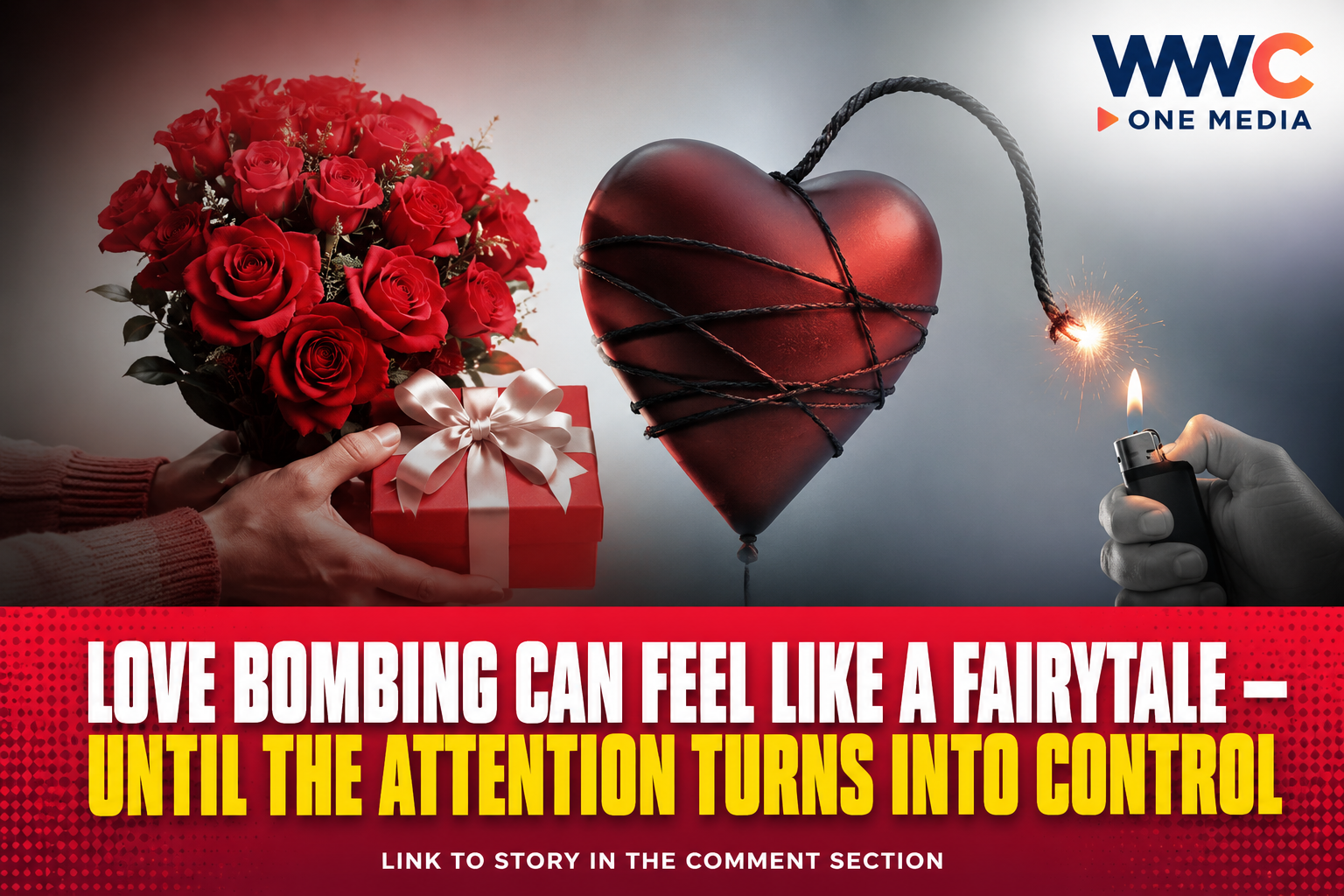
At first, it can feel like the relationship you have always dreamed of.
The messages never stop. Your new partner tells you that you are their soulmate, showers you with compliments, sends unexpected gifts and talks about a future together almost immediately.
It can be exciting. It can feel flattering. And sometimes, it can be completely genuine.
But relationship experts warn that when overwhelming affection comes with pressure, rapidly escalating commitment or attempts to control your time and relationships, the romance can take a troubling turn.
This behavior is commonly known as love bombing.
CNA Lifestyle has examined how intense affection can sometimes become part of an unhealthy relationship dynamic, and guidance from organizations including the National Domestic Violence Hotline and Cleveland Clinic highlights why the behavior deserves closer attention.
What exactly is love bombing?
Love bombing generally refers to an intense and excessive display of affection, attention, compliments, gifts or promises, often occurring very early in a relationship.
The National Domestic Violence Hotline describes behaviors such as overwhelming someone with compliments and gifts, particularly when those gestures later become tools of manipulation.
Cleveland Clinic similarly identifies excessive flattery, constant communication, unwanted or extravagant gifts and unusually early conversations about a shared future as common characteristics.
The important distinction is context.
Being affectionate, enthusiastic or generous does not automatically mean someone is love bombing. People have different communication styles and can genuinely fall for each other quickly.
The warning signs become more significant when affection is accompanied by an expectation that the other person must reciprocate, surrender boundaries or become increasingly dependent.
When “You’re my soulmate” becomes a warning sign
One of the earliest signs can be the speed at which the relationship develops.
A person you have only recently met may quickly describe you as their soulmate, talk about marriage or a lifelong future, or push for exclusivity before you have had enough time to know each other.
Cleveland Clinic notes that rushing major relationship milestones can create an artificial sense of intimacy before trust has naturally developed.
The Hotline also lists premature soulmate or “other half” language and intense declarations of love very early in a relationship as possible warning signs when they make the recipient uncomfortable.
That does not mean saying “I love you” early is inherently abusive.
The bigger question is: What happens when you ask the person to slow down?
The real test may be what happens after you say “no”
This is where genuine affection and potentially manipulative behavior can begin to look very different.
A healthy partner may be disappointed when you decline something, but they should still be capable of respecting your decision.
Someone engaging in controlling behavior may instead become angry, guilt-trip you, pressure you or repeatedly cross the boundary you have established.
Cleveland Clinic recommends paying attention to how a partner responds when you communicate discomfort or establish boundaries. A willingness to listen and adjust is very different from repeatedly ignoring those limits.
The Hotline likewise identifies controlling behavior, isolation from friends and family, manipulation and attempts to dictate another person's choices as warning signs of emotional abuse.
The gifts aren't necessarily the problem
Flowers, presents and romantic surprises are not automatically red flags.
The concern arises when gifts become excessive, unwanted or tied to an expectation that you owe the giver something in return.
For example, affection can become unhealthy when a partner later uses expensive gifts or grand gestures as ammunition:
“You should do this for me after everything I've done for you.”
That shift — from giving freely to creating an obligation — can transform a romantic gesture into a tool of control.
Cleveland Clinic specifically warns that extravagant gifts can be used to create a sense of indebtedness and dependency.
When constant attention becomes surveillance
Another warning sign can be the gradual transformation of affection into demands for access.
At first, constant texting may seem sweet.
Then the questions begin:
Where are you?
Who are you with?
Why didn't you reply?
When are you coming home?
Why are you spending time with them instead of me?
The Hotline identifies excessive jealousy, monitoring, attempts to control someone's activities and efforts to isolate them from friends or family as potential indicators of emotional abuse.
Cleveland Clinic also notes that constant communication can become problematic when it develops into demands for immediate responses or questions designed to control a partner's whereabouts and activities.
The affection can change once control is established
One of the most confusing aspects of unhealthy relationships is that the person who becomes controlling may not have behaved that way at the beginning.
The early relationship may have felt extraordinary.
Then the attention becomes conditional.
Affection may disappear when you disagree. Compliments can turn into criticism. Jealousy can replace reassurance. Apologies and extravagant gestures may appear after conflicts, only for the same pattern to return.
Cleveland Clinic describes a cycle in which tension can build, abuse or harmful behavior occurs, and a subsequent period of apologies or apparent reconciliation can make everything seem normal again.
The Hotline similarly warns that abusive relationships can include periods in which the abusive partner apologizes, promises to change or behaves affectionately, making it harder for the other person to recognize the broader pattern.
That is why experts emphasize looking at patterns rather than isolated romantic gestures.
Love bombing is not a diagnosis
Another important distinction often lost on social media is the relationship between love bombing and narcissism.
Love bombing is frequently discussed alongside narcissistic personality disorder, but intense affection by itself does not establish that someone has narcissistic personality disorder or any other mental-health condition.
Cleveland Clinic notes that love bombing can be associated with different underlying factors and that anyone can potentially display the behavior.
A more useful question is therefore not:
“Is my partner a narcissist?”
Instead, ask:
“Do I feel free to say no, maintain my friendships, make my own decisions and have boundaries without being punished for it?”
That question gets closer to the behavior that actually matters.
The difference between intense love and manipulation
A healthy relationship can be passionate without becoming controlling.
There is room for affection, frequent communication, gifts and excitement when both people remain comfortable with the pace and respect each other's independence.
The warning signs appear when intensity starts replacing autonomy.
Look more closely if a partner:
- Pushes for commitment unusually quickly.
- Makes extreme declarations of love before you know each other well.
- Gives excessive or unwanted gifts.
- Expects constant access to your time.
- Becomes jealous when you spend time with friends or family.
- Pressures you after you say no.
- Ignores or repeatedly crosses your boundaries.
- Makes you feel guilty for having an independent life.
- Uses affection, gifts or apologies to manipulate your decisions.
- Attempts to isolate you from people who support you.
These behaviors can overlap with broader patterns of emotional abuse and coercive control.
The simplest test: slow the relationship down
If something feels too intense, slowing down can reveal a great deal.
You do not need to accuse someone of manipulation. You can simply establish a boundary.
Say you need more time.
Say you want to see your friends.
Say you are not ready for a particular commitment.
Say you don't want an expensive gift.
Then pay attention to the response.
Someone who respects you may listen, discuss the issue and adjust.
Someone focused on control may react with anger, guilt, pressure, threats or repeated attempts to override your decision.
That response can tell you more than the grand romantic gestures that came before it.
If the relationship already feels unsafe
Love bombing does not necessarily mean a relationship will become physically abusive. But when intense affection is combined with intimidation, isolation, threats, financial control, sexual pressure or physical violence, the situation should be taken seriously.
The Hotline emphasizes that relationship abuse can involve emotional, physical, sexual, financial and other forms of control, and that abusive behavior often centers on gaining or maintaining power over a partner.
For people in Singapore who are experiencing or witnessing domestic violence, the Ministry of Social and Family Development lists the National Anti-Violence and Sexual Harassment Helpline (NAVH) as a source of assistance.
The bottom line is simple:
Love should make you feel valued — not indebted.
Romance can be intense. New relationships can move quickly. Grand gestures can be sincere.
But when affection becomes a way to control who you see, what you do, how quickly you commit or whether you are allowed to say no, the issue is no longer simply how much someone loves you.
It is about whether they respect your freedom.
And sometimes, the moment you finally set a boundary is the moment the real relationship reveals itself.