
Man Accidentally Sends S$6,650 to Ex-Wife — Court Orders Her to Pay More Than S$7,000 in Costs

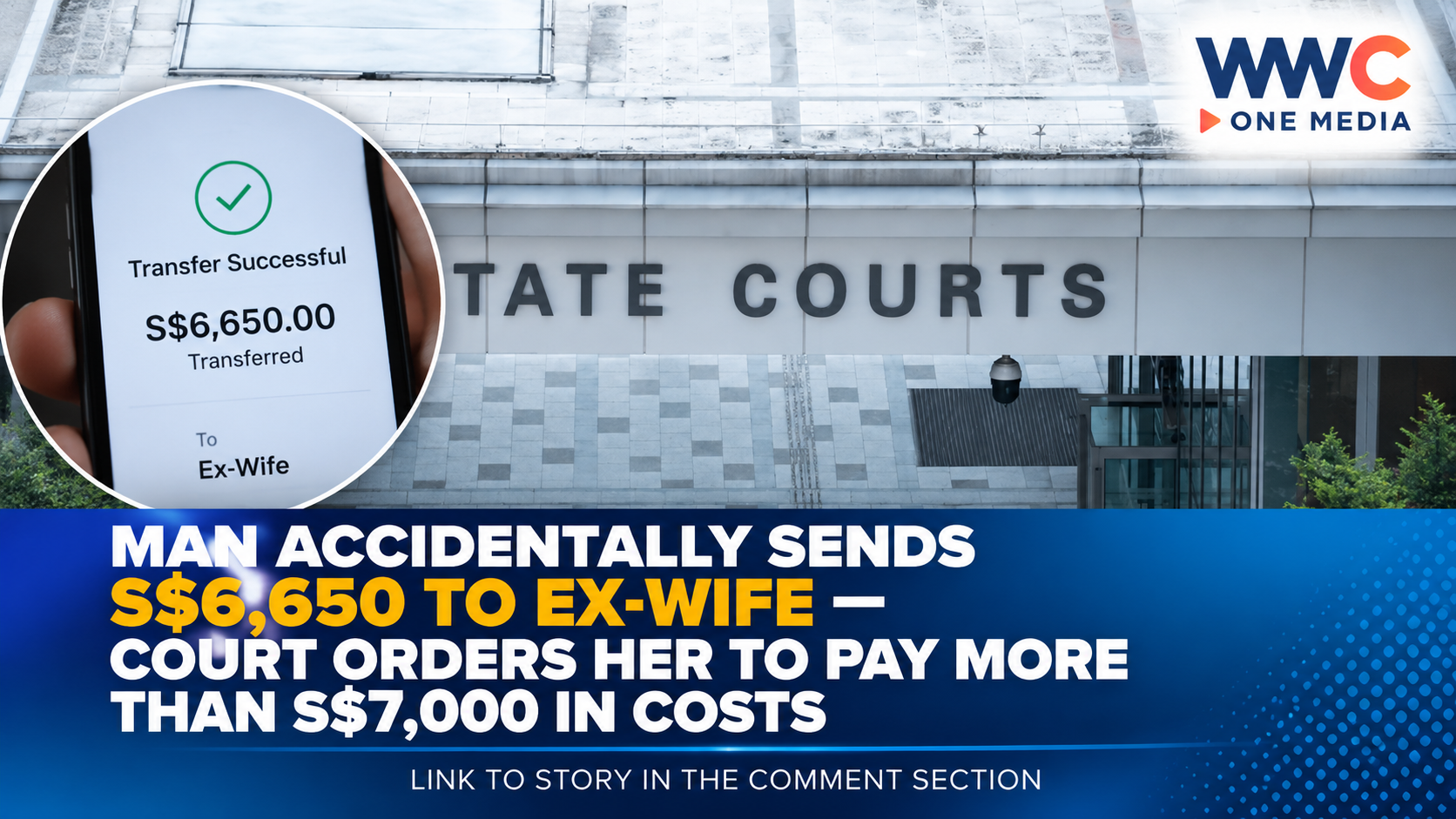
SINGAPORE — A simple banking mistake involving S$6,650 turned into a six-month legal dispute after a Singapore man accidentally transferred the money to his former wife instead of the fintech platform Wise.
The ex-wife has now been ordered to pay S$7,085 in legal costs after the court found that her conduct in handling the mistaken transfer was “highly unreasonable” and unnecessarily prolonged the dispute.
Money sent to ex-wife by mistake
The man, identified as James Jonathan, had saved his former wife Adel Ng in his phone contacts as “Wife”. When he intended to transfer S$6,650 to Wise on Dec. 7, 2025, he mistakenly sent the money to Ng instead.
The former couple had divorced in 2021 but remained in contact over matters including access to their child.
Jonathan subsequently sent Ng at least 10 emails between Dec. 7 and Dec. 15, asking her to return the money.
She did not respond.
Only after Jonathan's lawyers sent a letter of demand on Dec. 17 did Ng respond through her own lawyers.
Ex-wife questioned the transfer
Rather than immediately returning the money, Ng said she was concerned that she could be the target of a scam.
She requested extensive information, including Jonathan's identity number, an identity document, the source of the money, an explanation for the mistaken transfer and why the money needed to be returned urgently.
She also asked Jonathan to indemnify her against potential liabilities and expenses connected with returning the funds.
On Dec. 26, Ng deposited the entire S$6,650 with the Singapore Police Force, saying she wanted to return the money under the protection of a police report and avoid becoming involved with potentially suspicious funds.
Court rejects scam explanation
Jonathan sued on Dec. 30 to recover the money.
In her defence, Ng described herself as a passive recipient of funds from an unknown and unverifiable source and said she believed there was a possibility the messages were part of a scam.
But Deputy Registrar Mark Lim was not persuaded.
The court noted that the former couple had previously communicated through the same email addresses and that Ng could have contacted Jonathan directly to verify the transfer.
The judge also found that her requests for information appeared excessive and did not amount to a genuine attempt to establish Jonathan's identity.
Ng made the police report and deposited the money the following day, without giving Jonathan a reasonable opportunity to respond to her requests.
Legal battle continued for months
The dispute did not end after the money was placed with the police.
In May 2026, Ng applied to have Jonathan's claim struck out. The court described the application as “ill-conceived and without merit”, finding that she had not identified a proper basis for doing so.
She also made serious allegations against Jonathan and his lawyers, including claims concerning alleged breaches of court directions and professional undertakings.
The allegations led to an in-person hearing, where the court found them to be without merit. Ng later apologised “unreservedly” to the court and Jonathan's lawyer over one of the allegations.
S$6,650 eventually returned
The former couple eventually agreed to settle the underlying dispute in June 2026, leaving the court to determine the issue of legal costs.
The police subsequently confirmed that the S$6,650 was returned to Jonathan on June 26.
But the court found that the dispute could have been resolved much earlier if Ng had acted reasonably after receiving the money by mistake.
Costs exceed the money that started the dispute
In his judgment released on Sept. 7, Deputy Registrar Lim said Ng's conduct before and after the lawsuit had caused the proceedings to begin and unnecessarily prolonged them.
The court ordered her to pay S$6,500 in legal costs plus GST, bringing the total to S$7,085.
That amount was ultimately more than the original S$6,650 mistakenly transferred to her.
The judgment serves as a warning that parties who behave unreasonably during legal disputes can face significant financial consequences, even when the underlying amount in question is relatively modest.
What began as a simple banking error ended with a legal bill larger than the money itself — a costly reminder that refusing to resolve a straightforward mistake can make the dispute far more expensive than the original problem.
WWC ONE MEDIA J.M.D