PH Social Media Ban for Kids Is Getting Closer — But the Rules Could Be Much Stricter Than Expected

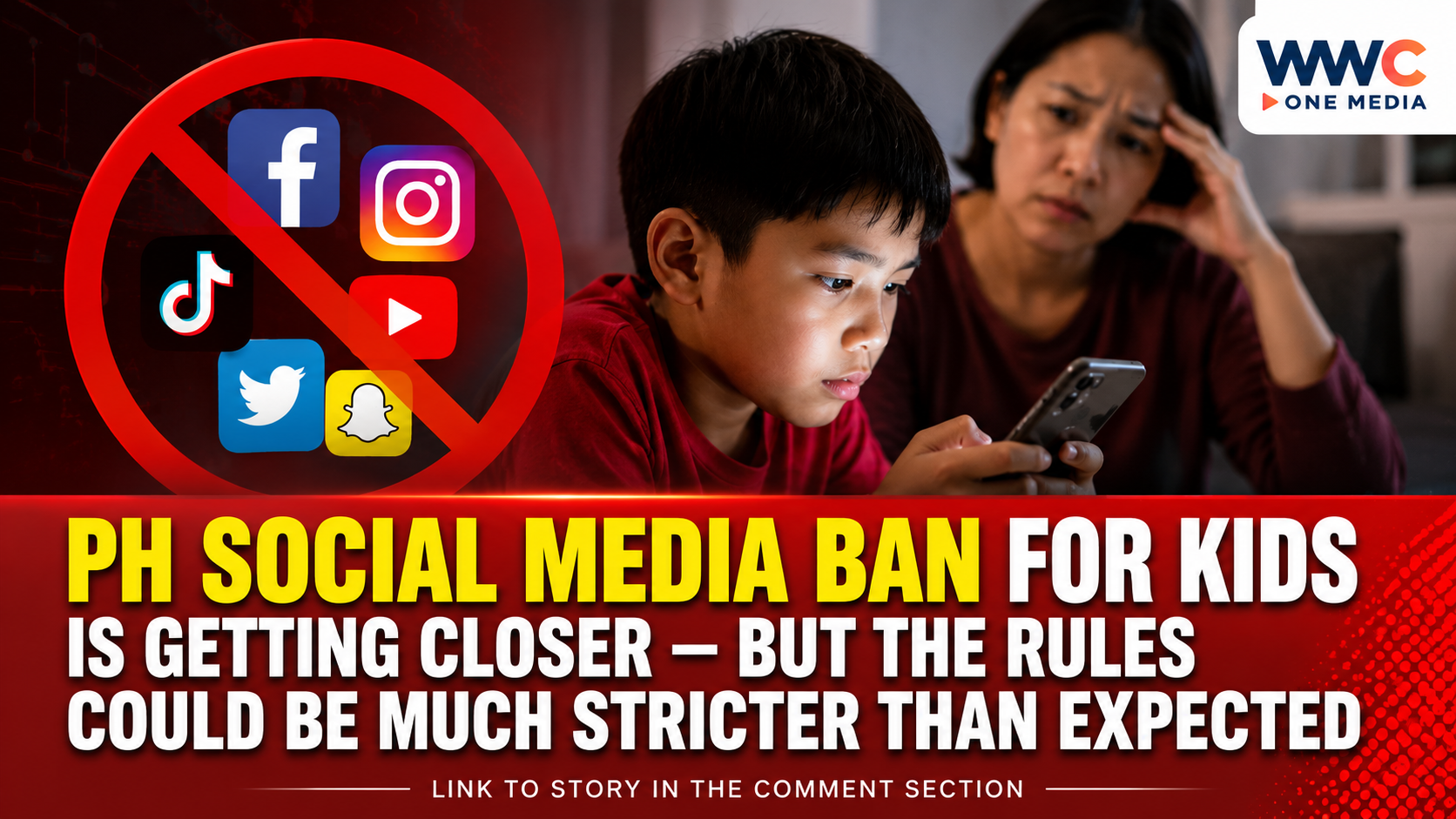
MANILA, Philippines — A sweeping new push to restrict children's access to social media and online gaming is gaining momentum in Congress, with lawmakers considering a total ban for children aged 13 and below and tighter regulation for teenagers aged 14 to 17.
The proposal comes amid renewed national concern over children's exposure to harmful online content following a deadly school shooting in Zamboanga City, where authorities said the student involved had livestreamed the attack.
But despite the growing political momentum, no nationwide social-media ban has been enacted in the Philippines. The measures being discussed remain proposals that still have to go through the legislative process.
What the proposed Philippine rules could mean
Pasig Rep. Roman Romulo, chair of the House Committee on Basic Education and Culture, said lawmakers are working on a framework that would completely prohibit children 13 and below from accessing social media and online gaming platforms.
Teenagers 14 to 17, meanwhile, would not necessarily face a complete ban. Instead, their use could be subject to restrictions on certain features considered potentially harmful to minors.
Romulo also said platforms serving Filipino users could be required to establish a Philippine presence, allowing local authorities to exercise jurisdiction over companies operating in the country. Platforms without the required presence could potentially face blocking by the Department of Information and Communications Technology (DICT), under the proposed framework.
The House is also considering the creation of a classification board for online gaming platforms to monitor games accessible to young users.
Romulo said congressional hearings on the matter are expected to continue, with the House Committee on Welfare of Children targeting the completion of its hearings by the second week of September.
The House already has a separate proposal
The latest discussion builds on an earlier House measure, House Bill No. 9965, or the Children's Social Media Safety Act, introduced by Speaker Faustino “Bojie” Dy III and House Majority Leader Ferdinand Alexander “Sandro” Marcos.
That proposal would impose an absolute prohibition on social-media use by children below 13.
For children aged 13 to below 17, access would be permitted only with verifiable parental or guardian consent and active, continuous supervision. Platforms would also have to periodically verify a user's age and parental consent.
The bill would require platforms to provide parents with tools to supervise accounts, manage privacy settings, establish screen-time limits and withdraw consent.
It also proposes stronger default privacy settings for child users, restrictions on geolocation sharing and financial transactions, and safeguards involving children's sensitive and biometric information.
Platforms that violate their obligations could face fines ranging from millions of pesos to as much as P50 million, with repeated and serious violations potentially leading to restrictions on their operation in the Philippines, subject to due process.
Senate proposal goes even further
The House proposal is not the only measure on the table.
Senate President Sherwin Gatchalian has filed Senate Bill No. 2066, or the Social Media Safety for Children Act, which seeks to prohibit children under 16 from registering, accessing or maintaining social-media accounts.
The bill is currently pending in committee, meaning it has not become law.
Gatchalian's proposal would require platforms to implement age and identity verification, regularly identify and deactivate accounts belonging to underage users, prevent children from bypassing restrictions through duplicate or reactivated accounts, and provide parental-control and content-filtering tools.
It would also direct platforms to reduce design features that may encourage excessive use, including autoplay, addictive notifications and algorithmic recommendations for age-restricted users.
The proposed enforcement framework would give DICT a major role in monitoring compliance, investigating violations and issuing disabling orders. In certain circumstances, the National Telecommunications Commission could be asked to direct internet service providers to block domains, URLs or IP addresses.
Why the debate intensified after the Zamboanga shooting
The latest push has emerged against the backdrop of a tragic school shooting at Ateneo de Zamboanga University.
Reuters reported that the Grade 8 student identified as the shooter livestreamed the attack using a body-worn camera before taking his own life. The incident killed two students, including the shooter, and injured two others.
The incident intensified debate over the role of social media, online content and firearm access in preventing violence involving young people.
Gatchalian has argued that the rapid spread of livestream footage and graphic images is one reason lawmakers should strengthen restrictions on minors' access to social platforms.
At the same time, Education Secretary Sonny Angara stressed that preventing school violence requires more than physical security measures. He pointed to the importance of stronger relationships among schools, families and communities and better identification of warning signs among students.
That distinction is important: the government has not established that social media alone caused the Zamboanga attack. Authorities are still investigating the circumstances and possible motives surrounding the incident.
The Philippines is following a growing global trend
The Philippine debate is also unfolding as governments around the world consider tougher age restrictions for social-media platforms.
Australia became the first country to enforce a nationwide minimum age of 16 for covered social-media services in December 2025.
France has also approved legislation prohibiting children below 15 from opening social-media accounts beginning September 2026, while other countries are considering similar measures.
Indonesia has likewise moved toward restricting social-media access for children under 16.
These international developments are strengthening calls from Philippine lawmakers for the country to establish its own age-verification and child-safety framework.
But one major question remains: Can a ban actually work?
The biggest challenge may not be passing an age restriction — but enforcing it in a digital environment where children can create accounts, use different devices and potentially circumvent age checks.
Gatchalian's Senate proposal attempts to address that problem by requiring platforms to conduct age and identity verification, audit accounts, prevent duplicate accounts and establish mechanisms for reporting underage users.
The House proposal similarly seeks repeated age verification and measures preventing children from creating replacement accounts after prohibited accounts are disabled.
Another issue is privacy. Any age-verification system would involve the handling of potentially sensitive personal information, which is why the proposals emphasize compliance with the Data Privacy Act of 2012.
What happens next?
For now, Filipino parents should not interpret the proposals as an immediate nationwide shutdown of children's social-media accounts.
Instead, Congress is considering multiple competing approaches:
- A House framework proposing a total ban for children 13 and below.
- Stricter, supervised access for teenagers 14 to 17 under the emerging House proposal.
- A separate House bill requiring parental consent for minors aged 13 to below 17.
- A Senate proposal seeking to prohibit social-media use by everyone under 16.
- Stronger age-verification requirements for platforms.
- Greater parental controls and restrictions on potentially harmful features.
- Possible penalties and platform-blocking mechanisms for serious violations.
The Senate has indicated that legislation on minors' social-media use could receive priority when Congress resumes, while House committees continue deliberations on their own proposals.
The question now is no longer simply whether Filipino children should have limits online — but how far those limits should go, who should enforce them, and whether the government can protect minors without creating new privacy and enforcement problems.
For millions of Filipino families, the next congressional hearings could determine just how much of their children's digital lives may soon be placed behind an age barrier.