
Philippines Warns China Could Exploit Cuts to US-South Korea Military Exercises

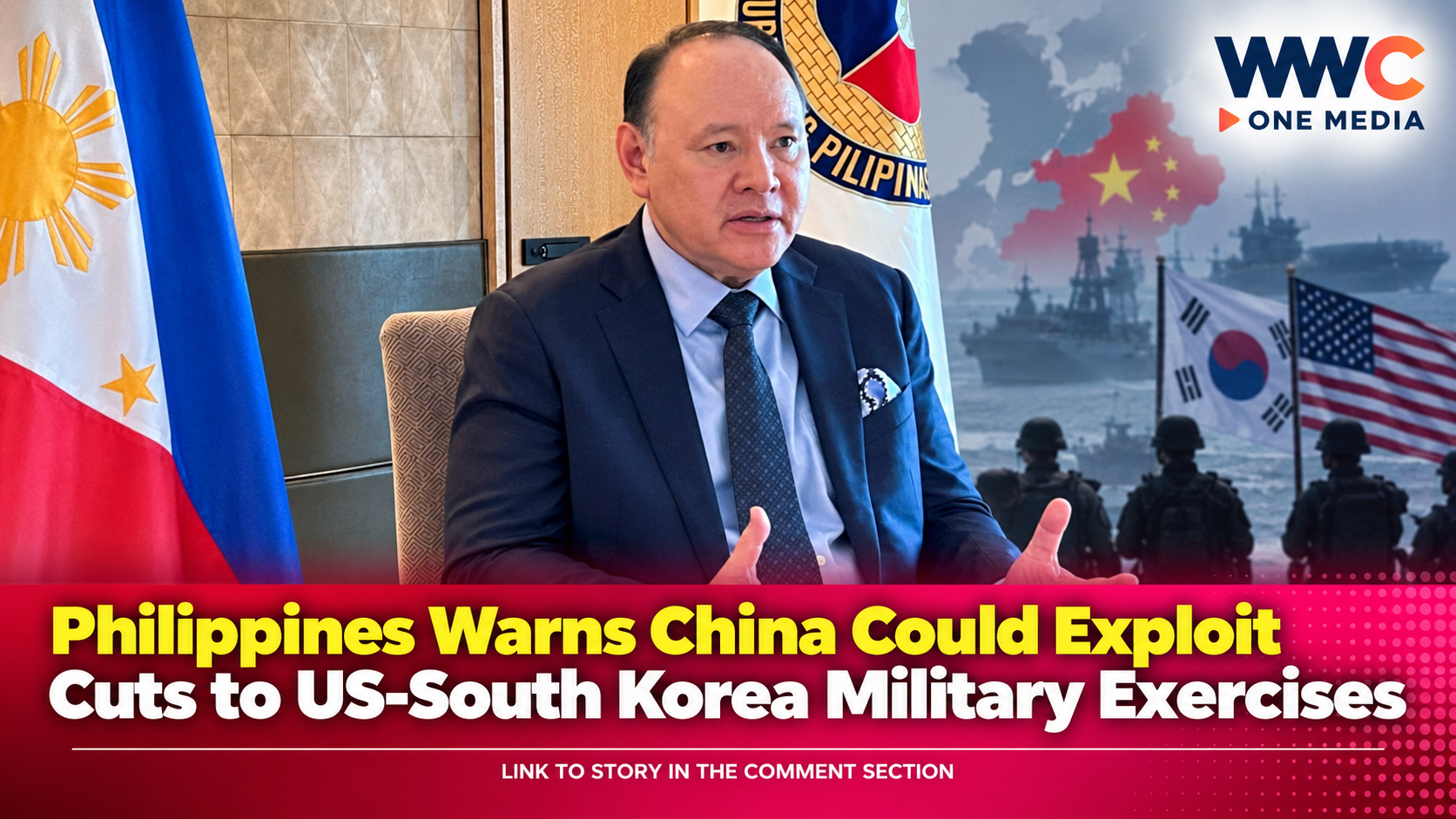
SEOUL, SOUTH KOREA — Philippine Defense Secretary Gilberto Teodoro has warned that China could see recent reductions in US-South Korean military exercises as an opportunity to reassert its influence across the Indo-Pacific, raising fresh concerns about the region's already fragile security balance.
Speaking at the Seoul Defense Dialogue, Teodoro said any perceived gap in the region's security posture could potentially be exploited by Beijing.
His warning comes as tensions continue to simmer in the South China Sea, where the Philippines and China have repeatedly clashed over disputed waters and maritime activities.
But Teodoro stressed that the Philippines has received firm assurances from Washington that US commitments to Manila remain unchanged.
'China is very quick to exploit gaps'
Teodoro warned that China could interpret changes to US-South Korean military activities as a strategic opportunity.
The Philippine defense chief said Beijing could attempt to expand its influence if it sees weaknesses or gaps emerging in regional security arrangements.
His remarks underline growing concern among US allies and partners over how changes in American military posture could affect the wider Indo-Pacific.
However, Teodoro said there had been no reduction in US-Philippines military cooperation.
Washington, he said, had provided Manila with what he described as definite assurances that its commitments under the Mutual Defense Treaty remain intact.
That treaty requires the Philippines and the United States to support each other in certain circumstances if either country comes under an armed attack in the Pacific region.
The reassurance is particularly significant as Manila faces continuing pressure from Beijing in the South China Sea.
Philippines-US military ties continue to deepen
While Teodoro expressed concern over developments involving US-South Korean exercises, he made clear that the situation between Manila and Washington remains different.
Under President Ferdinand Marcos Jr., the Philippines has significantly strengthened military cooperation with the United States.
Joint military activities have increased, while the two allies have expanded cooperation in areas including maritime security, territorial defense and military interoperability.
The Philippines has also broadened its defense partnerships with other countries, including Canada, New Zealand, France and Britain.
This growing network of partnerships reflects increasing concern across the Indo-Pacific over China's expanding military capabilities and assertive actions in disputed waters.
South China Sea tensions remain a major concern
The warning from Teodoro comes against the backdrop of continuing confrontations between Philippine and Chinese vessels in the South China Sea.
Manila has accused Beijing of increasingly aggressive actions in waters within the Philippines' exclusive economic zone.
China, meanwhile, continues to assert its own extensive claims over large parts of the South China Sea.
The dispute has become one of the biggest flashpoints in the wider strategic rivalry between the United States and China.
Military cooperation between Manila and Washington has surged under Marcos, including a growing number of joint maritime activities and large-scale military exercises.
The Philippines and the United States have conducted repeated joint operations near disputed areas, including the Scarborough Shoal, where both Manila and Beijing maintain competing claims.
Teodoro also warns about China's influence operations
Teodoro's concerns were not limited to military power.
The Philippine defense chief also accused China of increasingly using influence operations alongside traditional military and security pressure.
He argued that countries facing external interference need stronger safeguards against espionage and foreign influence.
The Philippines has been increasingly vocal about what officials describe as attempts by foreign actors to influence domestic institutions and public opinion.
Teodoro has repeatedly pushed for stronger measures to protect Philippine national security as geopolitical competition intensifies across the region.
Manila remains cautious on joint oil exploration with China
Teodoro also expressed scepticism about the prospects for joint oil and gas exploration with China in disputed parts of the South China Sea.
The Philippines has long sought ways to develop energy resources in the region, but sovereignty disputes have repeatedly complicated potential agreements.
For Manila, the issue is especially sensitive because parts of the South China Sea contain potentially valuable oil and natural gas reserves.
Any joint development arrangement would need to address the Philippines' constitutional and sovereignty concerns.
Teodoro's remarks suggest that political and security tensions continue to make meaningful cooperation with Beijing difficult.
Philippines continues military modernisation
The Philippines is also accelerating efforts to modernise its armed forces as concerns over regional security grow.
South Korea has become an important defense partner for Manila, supplying military equipment and supporting the Philippines' modernization programme.
The country is continuing to review major defense acquisitions, including plans involving submarines.
However, Teodoro said the Philippines has yet to finalise a submarine acquisition programme, with authorities still reviewing requirements, infrastructure and other long-term considerations.
The modernisation push reflects a broader shift in Philippine defense policy toward strengthening territorial and maritime defense capabilities.
Why Teodoro's warning matters
Teodoro's comments highlight a growing concern among countries in the Indo-Pacific:
Could any reduction in US military activity create an opportunity for China to expand its influence?
For the Philippines, the answer could have direct consequences.
Manila is located at the centre of some of Asia's most important strategic waterways and remains locked in a maritime dispute with China.
The Philippines also sits along the wider strategic geography connecting the South China Sea, Taiwan and the western Pacific.
Any major shift in the regional balance of military power could therefore have consequences far beyond the Korean Peninsula.
China, the US and the battle for influence
The Indo-Pacific has become the centre of an increasingly intense strategic competition between Washington and Beijing.
China has expanded its military capabilities and presence across the region, while the United States has strengthened partnerships with allies and regional partners.
For countries such as the Philippines, South Korea and Japan, the challenge is not simply about choosing between two superpowers.
It is about maintaining national sovereignty, protecting territorial interests and preventing regional tensions from escalating into open conflict.
Teodoro's warning suggests Manila believes that maintaining strong security partnerships remains essential.
At the same time, his comments make clear that the Philippines is watching closely for any signs that changes elsewhere in the region could alter China's calculations.
What happens next?
For now, the Philippines says US commitments under the Mutual Defense Treaty remain unchanged.
Military cooperation between Manila and Washington also continues to grow.
But Teodoro's warning serves as a reminder that developments involving US forces in one part of Asia are being closely watched across the entire Indo-Pacific.
As tensions continue in the South China Sea and uncertainty surrounds the future regional security environment, Manila appears determined to strengthen both its military capabilities and its international partnerships.
The message from the Philippine defense chief was clear:
Any perceived security gap could quickly become an opportunity for a competing power to move in.
WWC ONE MEDIA J.M.D