
Putin’s Shadow Grows in Europe as Germany’s Far Right Scores Historic Election Victory — What Comes Next?

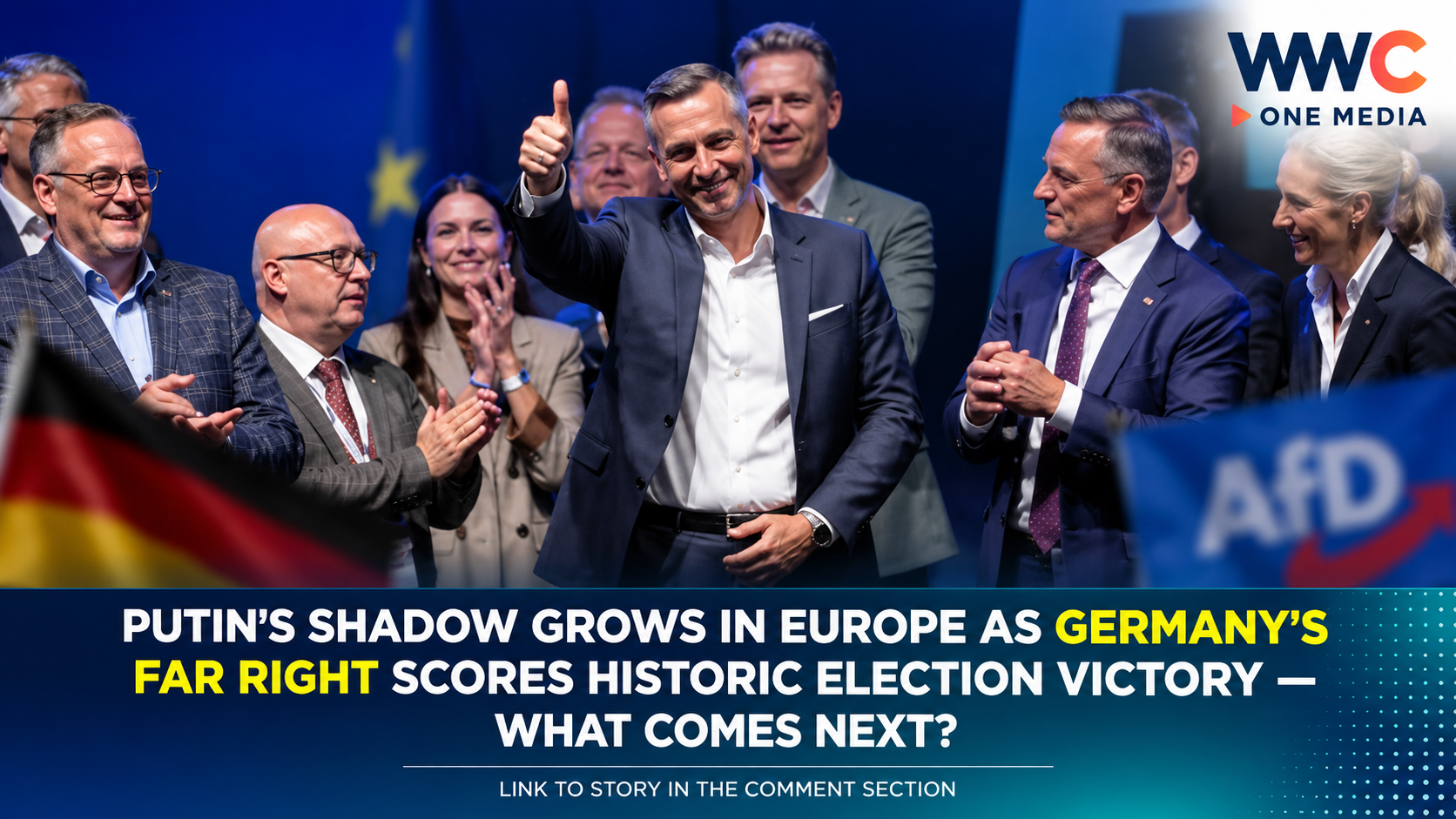
Germany’s political landscape has shifted sharply after the far-right Alternative for Germany (AfD) secured a historic victory in the eastern state of Saxony-Anhalt, raising fresh concerns over the future of Berlin’s support for Ukraine and Europe’s increasingly divided approach toward Russia.
The AfD won nearly 44% of the vote in Sunday’s state election, its strongest performance in the state and a result that put the party within striking distance of forming Germany’s first far-right state government in the postwar era. The party won 39 of the 83 seats in the state legislature, leaving it just short of an outright majority.
The result has sent shockwaves through Chancellor Friedrich Merz’s governing camp. Merz has ruled out cooperation with the AfD but acknowledged that the result had shaken his political camp “to its very foundations,” underscoring the scale of the setback for Germany’s mainstream parties.
Why Putin is part of the story
The AfD’s rise carries significance far beyond German domestic politics because of its markedly different position on Russia and the war in Ukraine.
The party has repeatedly called for an end to German military support for Ukraine, advocated restoring closer economic ties with Moscow and criticized sanctions against Russia. Its platform also calls for maintaining stronger economic and cultural relations with Russia.
That position has put the AfD at odds with Merz’s government, which has maintained Germany’s strong support for Ukraine and adopted a much harder stance toward Moscow.
The Japan Times and Bloomberg have highlighted the potential implications of the AfD’s success for Vladimir Putin, particularly as Russia continues its war against Ukraine and European governments debate how long and how strongly they should continue supporting Kyiv.
The concern is not simply that the AfD won a regional election. Its growing electoral strength could eventually give a Russia-friendly political force greater influence over Germany’s foreign-policy debate—the largest economy and one of the most important political powers in Europe.
A breakthrough—but not yet full control
Despite the historic result, the AfD cannot govern Saxony-Anhalt alone.
With 39 seats, the party needs additional support to reach a governing majority. Reuters reported that the AfD is seeking support from conservative lawmakers, while the small populist-left BSW party has indicated that it could potentially cooperate with the AfD.
Germany’s mainstream parties have traditionally maintained a political “firewall” against cooperation with the AfD. Merz has reaffirmed that position, meaning the party’s path into government remains uncertain despite its electoral breakthrough.
That makes the coming negotiations particularly important.
If the AfD manages to secure governing power in Saxony-Anhalt, it would represent a major symbolic breakthrough for Germany’s far right and could intensify pressure on mainstream parties ahead of future elections.
Why voters are turning away from Berlin
The AfD’s success cannot be explained solely by Russia.
Reuters reporting from Saxony-Anhalt found that voters are also motivated by dissatisfaction with established political parties, economic concerns, immigration, regional inequality and frustration with Berlin’s handling of local problems.
The state, part of the former East Germany, has also retained a distinct historical relationship with Russia. Decades of Soviet presence left some residents with a different perception of Moscow than that found in many parts of western Germany.
For some voters, the issue is less about supporting Putin and more about opposition to confrontation with Russia, particularly amid memories of the economic relationship Germany once had with Moscow.
That sentiment has become politically valuable for the AfD.
The wider European warning sign
Germany’s far-right surge is also part of a broader European political trend.
Far-right and nationalist movements have been gaining influence in several major European countries, although their positions on Russia, Ukraine and the European Union vary considerably.
Bloomberg noted that political figures associated with nationalist movements in France and Italy have also advocated approaches toward Ukraine that are more skeptical of open-ended Western support, although they do not necessarily share the AfD’s exact position on Russia.
That creates a potentially complicated challenge for European governments.
If nationalist parties continue gaining electoral ground, maintaining a unified European position toward Russia could become increasingly difficult.
Merz faces a bigger political test
For Merz, the Saxony-Anhalt result is more than a regional embarrassment.
His government is already under pressure over Germany’s economic performance, unpopular reforms and voter dissatisfaction. The AfD’s breakthrough gives opposition forces additional momentum and raises questions about whether mainstream parties can regain voters who have moved toward the political extremes.
Merz has nevertheless insisted that Germany will continue pursuing its economic reforms and maintaining its position on Russia and Ukraine.
The political challenge is whether that strategy can reverse the AfD’s momentum before other elections provide the far-right party with additional opportunities.
What happens next could matter far beyond Germany
The AfD has not yet taken control of Saxony-Anhalt, and the election does not mean Germany is abandoning its support for Ukraine.
But the result has changed the political calculation.
For the first time in the postwar era, a far-right party is close to potentially governing a German state. Its strong electoral performance also gives the AfD greater leverage in the national political conversation—and its Russia policy ensures that the consequences extend beyond Germany's borders.
The question now is whether Saxony-Anhalt was an isolated protest vote or the beginning of a much larger political realignment.
If the AfD continues to expand its influence, Europe may soon face a difficult question: Can the continent maintain a united front against Putin while some of its most powerful political movements increasingly challenge the policies that have kept that front together?
WWC ONE MEDIA M.J.E