
Sara Duterte impeachment trial pauses for 2 days as 1,800 financial records undergo marking

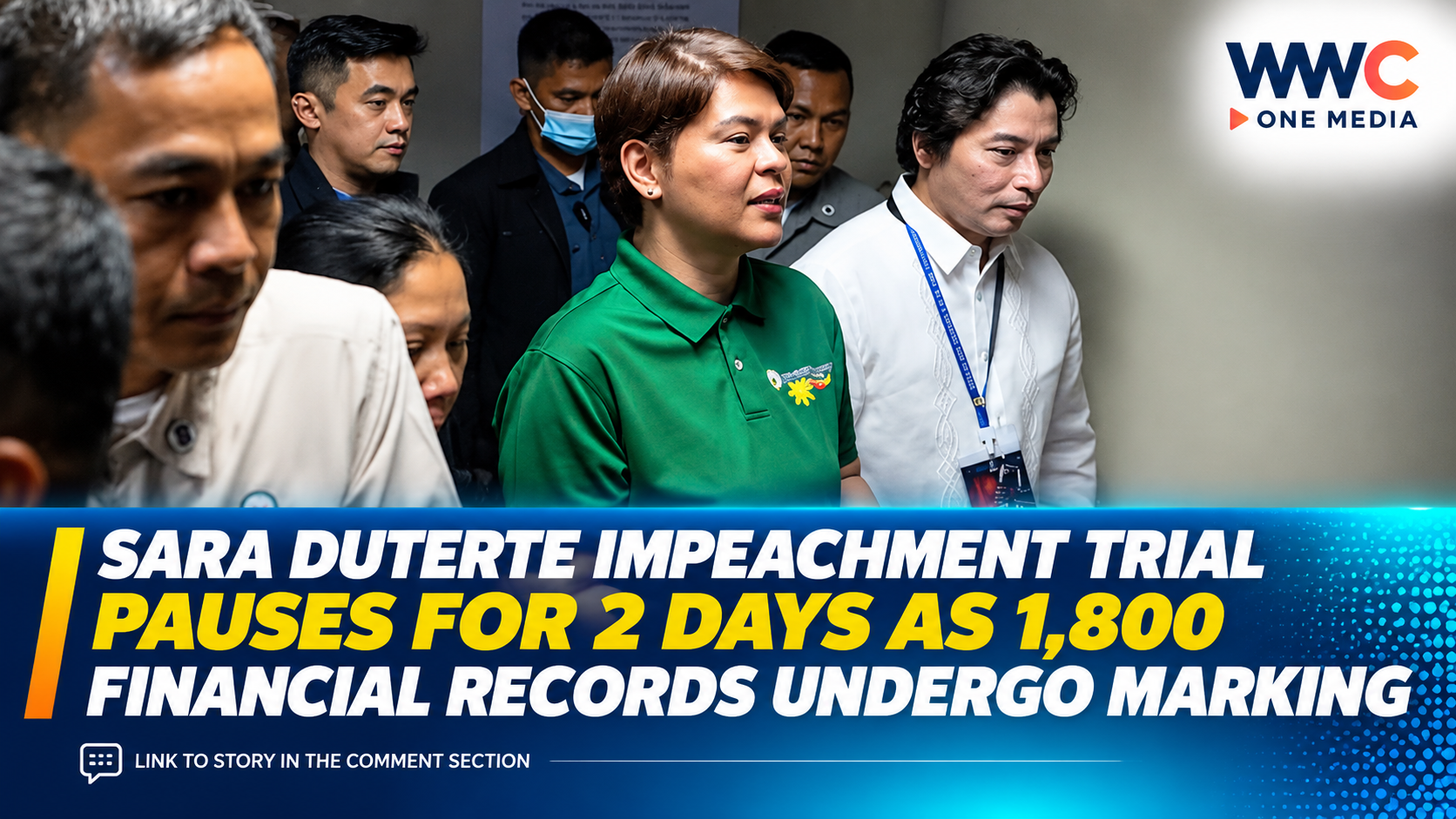
MANILA, Philippines — The Senate impeachment court has temporarily paused the trial of Vice President Sara Duterte for two days to give prosecutors and the defense time to organize and formally mark around 1,800 financial documents recently submitted in connection with the case.
The short break is procedural rather than a termination or indefinite suspension of the impeachment trial. The documents are expected to become part of the evidentiary record as the Senate continues examining allegations involving Duterte's finances and alleged unexplained wealth.
The development puts financial records at the center of the next phase of the high-profile impeachment proceedings, potentially giving both sides a much more detailed paper trail to examine.
Why the trial is pausing
According to the Philippine News Agency, the Senate impeachment court suspended hearings for two days to allow both the prosecution and defense to sort and mark the financial records.
Document marking is a necessary step in an impeachment proceeding because evidence must be properly identified and entered into the record before it can be formally presented and evaluated by the senator-judges.
The volume of records illustrates why the financial portion of the trial is expected to be complex.
Earlier in the proceedings, the impeachment court authorized subpoenas covering Duterte's bank, tax and Anti-Money Laundering Council (AMLC) records, despite objections from her defense team.
Financial records could become crucial evidence
The financial documents are particularly significant because one of the impeachment articles accuses Duterte of having unexplained wealth disproportionate to her lawful income, as well as alleged failures involving her Statements of Assets, Liabilities and Net Worth (SALNs) and business interests.
The prosecution has sought access to financial information involving Duterte and her husband as it attempts to establish its allegations through documentary evidence rather than testimony alone.
The Senate court's July decision to allow subpoenas for certain financial records was therefore an important turning point in the trial.
The defense has opposed the release and use of some of the records, arguing against the prosecution's requests and raising legal and procedural concerns.
The money trail takes center stage
The latest development follows weeks of testimony and documentary evidence concerning the alleged use of confidential funds by the Office of the Vice President and the Department of Education during Duterte's tenure.
The prosecution has alleged irregularities in the handling and liquidation of confidential funds, while Duterte's camp has disputed the accusations and challenged the prosecution's evidence.
The impeachment proceedings have also featured testimony from Commission on Audit officials concerning documentation and liquidation requirements for confidential funds. GMA News reported that COA witnesses previously testified about alleged deficiencies involving hundreds of millions of pesos in confidential-fund transactions.
VERA Files' review of the trial likewise noted that the proceedings have increasingly focused on the documentary trail surrounding confidential funds and questions about whether expenditures were properly supported and accounted for.
Thousands of documents have already been processed
The massive volume of evidence is not new to the Duterte impeachment case.
During the pretrial phase in June, the Senate clerk of court said the prosecution and defense had roughly 8,000 exhibits relating to the first impeachment article concerning alleged misuse of confidential funds.
About 1,300 exhibits had already been processed during one day of the pretrial marking process at that time.
The scale of the documentary evidence has repeatedly affected the timetable of the proceedings.
Earlier reports also showed that the two sides sometimes differed over how individual documents should be marked, with separate marking procedures adding to the workload.
Sara Duterte's defense continues to challenge the allegations
Duterte has denied wrongdoing and her legal team has consistently challenged the prosecution's accusations.
The defense has questioned the admissibility, relevance and handling of various pieces of evidence throughout the trial, including documents and testimony related to the confidential funds.
The defense has also raised objections to portions of the prosecution's financial-record requests, particularly as the Senate court considers documents involving Duterte and her husband.
The prosecution, meanwhile, argues that access to the records is necessary to establish the allegations contained in the impeachment articles.
Trial resumes after the document review
Once the two-day marking period is completed, the Senate impeachment court is expected to resume hearings and continue with the presentation and examination of evidence.
The financial records could become among the most closely watched evidence in the trial because they potentially allow senator-judges to compare Duterte's declared assets and lawful income against information obtained from banks, tax authorities and financial-intelligence records.
That does not mean the records automatically prove the allegations.
The Senate impeachment court must still determine what evidence is admissible, how reliable it is, what it establishes and whether the prosecution has met the constitutional requirements for conviction.
A critical moment in the impeachment case
The pause may last only two days, but the documents being processed could have consequences far beyond the temporary break.
The impeachment trial has already moved through allegations involving threats, confidential funds and alleged irregularities in government spending. The financial records now place Duterte's wealth and financial transactions under an even sharper spotlight.
With approximately 1,800 records awaiting formal marking, the next stage of the trial could turn heavily on what those documents show—and, just as importantly, how the defense explains them.
For now, the Senate has pressed pause.
But when the hearings resume, the financial paper trail could become one of the most consequential chapters of Sara Duterte's impeachment trial.