
Screen Time and PM2.5 Put More Eyes at Risk as Bumrungrad Launches Specialised Dry Eye Clinic

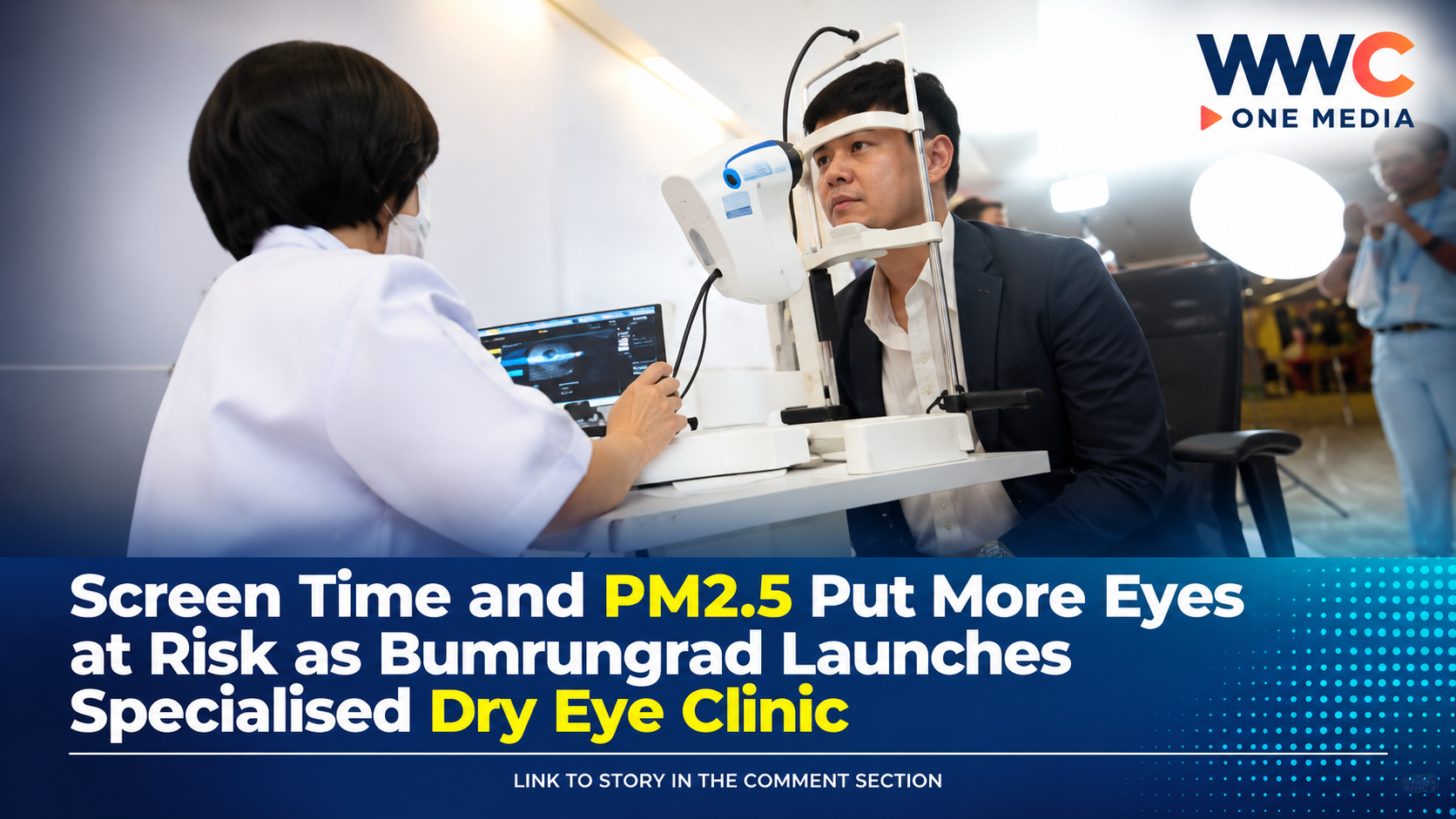
BANGKOK — Staring at screens for hours, breathing polluted air and spending more of life in air-conditioned environments may be putting millions of people at greater risk of dry eye disease — prompting Bumrungrad International Hospital to launch a specialised clinic dedicated to diagnosing and treating the increasingly common condition.
Dry, burning and irritated eyes are often dismissed as a minor annoyance.
But doctors warn that dry eye disease can become a persistent problem that affects daily life, work, screen use and overall visual comfort.
The growing concern comes as people spend more time looking at computers, smartphones and other digital devices.
According to recent reporting, dry eye disease affects an estimated 34.6% of people globally, or roughly one in three, with prevalence estimates cited as reaching 52.4% in Southeast Asia. However, doctors and researchers caution that prevalence can vary significantly depending on how dry eye disease is defined and diagnosed.
Bumrungrad launches specialised Dry Eye Clinic
Bumrungrad Dry Eye Clinic has been launched under the hospital's Eye Centre to provide more specialised assessment and personalised treatment for dry eye disease.
The clinic focuses on identifying the underlying cause of a patient's symptoms rather than relying on a one-size-fits-all approach.
That matters because dry eye is not simply caused by a lack of tears.
According to the hospital, the condition can involve abnormalities in different components of the tear film and problems affecting the meibomian glands, which help produce the oily layer that slows tear evaporation.
The clinic uses the IDRA dry eye analyser to assess the tear film and meibomian glands and help doctors determine the most appropriate treatment strategy.
The hidden danger of staring at screens
For many people, the biggest risk may already be sitting on their desk.
Doctors have warned that prolonged screen use can change the way people blink.
Recent reporting from Bumrungrad cited specialists who said continuous screen use can reduce blinking frequency by 50% to 60% and may also lead to incomplete blinking.
That can prevent the eye's protective tear film from spreading properly and allow tears to evaporate more quickly.
Think about a typical day:
Checking your phone in the morning.
Working on a computer for hours.
Scrolling through social media.
Watching videos at night.
For millions of people, that means their eyes may be spending most of the day focused on a screen.
And the blinking that normally helps protect the surface of the eye may be reduced.
It's not just an older person's problem
One of the biggest misconceptions about dry eye disease is that it only affects older people.
Doctors say that is no longer the case.
Dry eye can affect people of different ages, especially those exposed to prolonged screen use and other environmental triggers.
Symptoms can include:
- Burning
- Eye irritation
- Grittiness or a feeling that something is in the eye
- Blurred vision
- Eye fatigue
- Light sensitivity
- Discomfort when wearing contact lenses
- Symptoms that repeatedly return despite using artificial tears
The hospital advises that persistent or disruptive symptoms should be medically evaluated.
PM2.5 pollution adds another concern
Thailand's air pollution problem may also be part of the wider dry-eye challenge.
The Bangkok Post reported that PM2.5 pollution is among the factors contributing to rising concern over dry eye disease.
Fine particulate pollution can irritate the eyes and may worsen discomfort in people already experiencing eye-surface problems.
For Bangkok residents, the combination can be especially challenging:
Screens indoors.
Air conditioning.
Traffic pollution outside.
Long working hours.
Less time away from digital devices.
Together, these factors can create an environment that places greater strain on the eyes.
Why artificial tears may not solve every problem
Many people experiencing dry eyes simply buy eye drops.
That may provide temporary relief.
But doctors say persistent dry eye disease can have different underlying causes.
Some people may have problems involving:
- Tear production
- Excessive tear evaporation
- Meibomian gland dysfunction
- Tear-film instability
- Eye-surface inflammation
- Environmental exposure
- Other medical or eye-related factors
That is why specialists increasingly emphasise identifying the cause before deciding on treatment.
Bumrungrad's clinic describes this approach as Precision Diagnosis followed by more targeted treatment planning.
Thailand has been dealing with dry eye for years
Dry eye disease is not a new problem in Thailand.
Research involving adults in Bangkok previously found that 34% reported significant dry-eye symptoms in the studied population, while researchers noted that measured prevalence can differ depending on whether symptoms, clinical tests or both are used.
More recent research involving Thai patients has also continued to investigate dry eye disease and its effects on quality of life.
Thai ophthalmology specialists have described dry eye disease as a common condition and an important public-health concern, while noting the importance of combining symptom assessment, medical history and clinical examination when evaluating patients.
Advanced technology enters the fight against dry eyes
The new clinic is also highlighting technology-based assessment and treatment.
According to recent reporting, the centre is using:
IDRA technology
This helps doctors analyse aspects of the tear film and evaluate the meibomian glands.
Light-Based Therapy
The treatment approach is designed to target specific underlying causes depending on the patient's condition.
The key idea is simple:
Different patients may need different treatments.
Someone whose symptoms are linked mainly to tear evaporation may require a different approach from someone with another underlying problem.
That is why a more detailed diagnosis can matter.
Dry eye can affect more than your comfort
Dry eye disease may sound like a minor inconvenience.
But persistent symptoms can affect everyday life.
For office workers, it can make staring at a computer uncomfortable.
For students, it can affect long periods of reading.
For drivers, fluctuating or blurred vision can become frustrating.
For contact lens users, discomfort may limit how long lenses can be worn.
And for people already dealing with eye problems, persistent symptoms may require closer medical assessment.
The bigger problem is that some people simply get used to the discomfort.
They may assume:
"My eyes are just tired."
"I just need more sleep."
"I'll use some eye drops."
But when symptoms repeatedly return or begin interfering with daily activities, doctors say an eye examination can help determine the cause.
How can you reduce screen-related eye strain?
While not every case of dry eye can be prevented, reducing unnecessary eye strain may help.
Simple habits include:
Take regular breaks
Avoid staring at a screen continuously for hours without looking away.
Remember to blink
People often blink less when concentrating on screens.
Adjust your environment
Very dry or heavily air-conditioned environments can increase eye discomfort.
Limit unnecessary exposure to irritants
Pollution, smoke and other environmental irritants may worsen symptoms.
Get persistent symptoms checked
Recurring discomfort, blurred vision or irritation should not simply be ignored.
The right treatment depends on the underlying cause, which is why persistent symptoms should be assessed by a qualified eye-care professional.
The digital lifestyle problem nobody is talking about enough
The launch of the specialised clinic reflects a bigger change in modern life.
People are spending more time connected than ever before.
Work happens on screens.
Entertainment happens on screens.
Shopping happens on screens.
Communication happens on screens.
And increasingly, so does education.
The result?
Our eyes are working harder — for longer.
Dry eye disease may not generate the same headlines as heart disease or cancer.
But for millions of people, the symptoms are real and can affect quality of life every day.
A growing business — and health — opportunity
The launch also highlights a broader trend in Thailand's private healthcare sector.
As lifestyles change, hospitals are developing more specialised services for conditions linked to modern living.
The goal is no longer simply to treat serious diseases after they develop.
Healthcare providers are increasingly focusing on:
- Early detection
- Personalised diagnosis
- Preventive care
- Technology-based assessment
- Targeted treatment
For eye health, dry eye disease is becoming an increasingly important part of that conversation.
The bottom line
Your burning, tired or blurry eyes may be more than just a sign that you stayed up too late.
With prolonged screen use becoming part of everyday life and environmental pressures such as PM2.5 continuing to affect urban populations, dry eye disease is receiving greater attention from doctors and healthcare providers.
Bumrungrad's new specialised clinic reflects that growing demand for more detailed diagnosis and personalised treatment.
The message from eye specialists is increasingly clear:
Don't ignore persistent eye discomfort.
Don't assume every case can be solved with over-the-counter drops.
And don't forget to blink.
Because in the digital age, your smartphone may not be the only thing working overtime.
Your eyes are too.
WWC ONE MEDIA J.M.D