
Shein Is Going Public With a $27 Billion Valuation — But Its Biggest Problem Isn’t the Stock Market

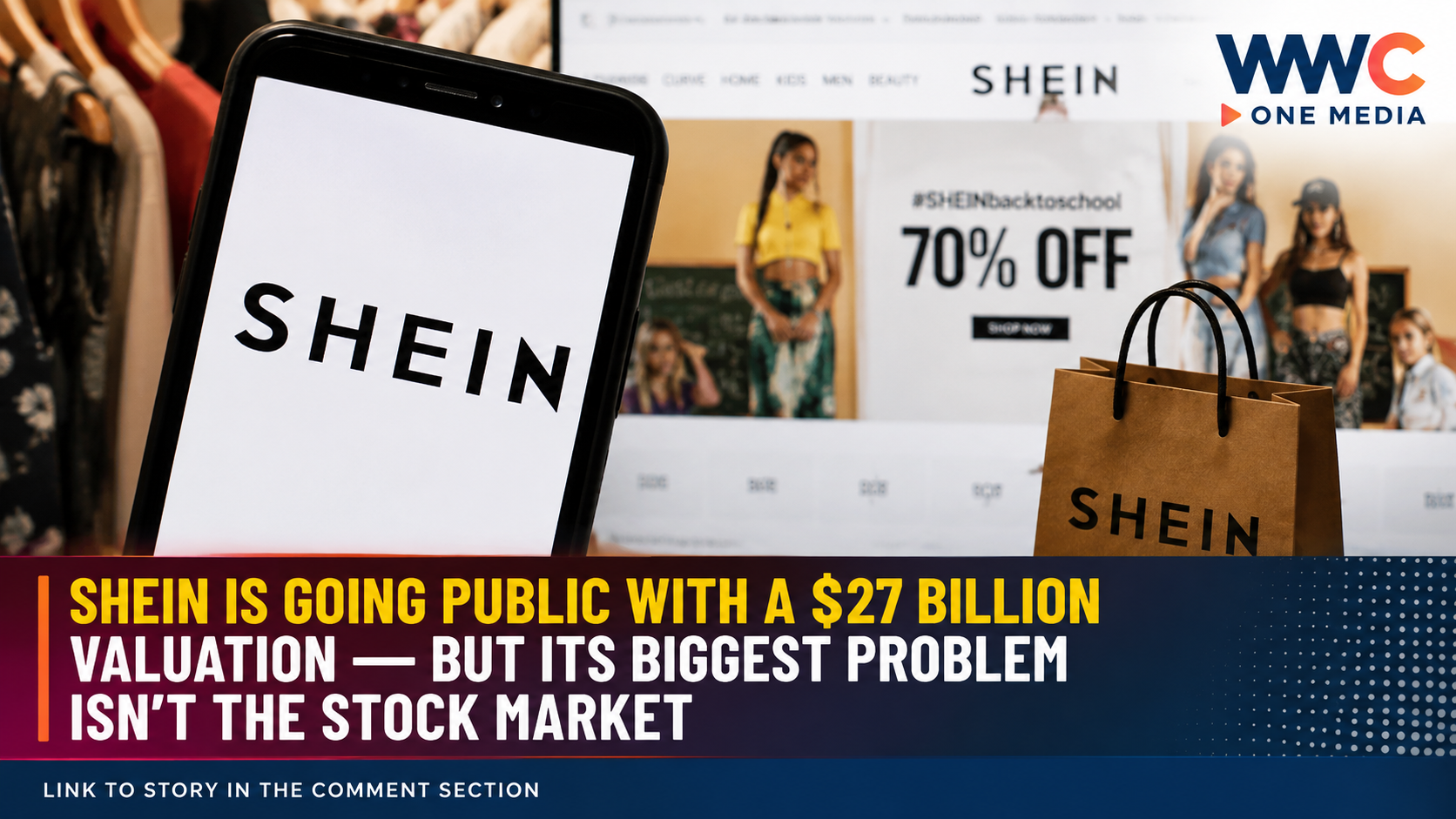
Shein is finally heading to the public markets — but its long-awaited Hong Kong IPO may not be enough to silence the questions that have followed the fast-fashion giant for years.
The Singapore-headquartered, China-founded online fashion retailer is preparing to list in Hong Kong on September 1, 2026, at a valuation of about $27 billion, dramatically below the nearly $100 billion valuation associated with the company at its private-market peak in 2022. Shein plans to offer 280 million shares at between HK$47.60 and HK$49.50, potentially raising about $1.77 billion.
But while the IPO could mark a major milestone for Shein, investors are being asked to look beyond the headline valuation.
The company continues to face scrutiny over environmental impact, labour standards, supply-chain transparency, corporate governance and regulatory compliance — issues that could influence how public-market investors value the business after its debut.
Shein’s IPO Has Come a Long Way
Shein's journey to the stock market has been anything but straightforward.
The company previously explored listings in the United States and the United Kingdom before shifting its focus to Hong Kong. Regulatory scrutiny, geopolitical tensions and concerns surrounding its supply chain complicated those earlier plans.
The Hong Kong IPO now arrives under very different financial conditions.
Shein reported $41.8 billion in revenue in 2025, up 8% year over year, but net income fell 39% to about $2.06 billion. In the first quarter of 2026, the company reported a $99 million loss, although Reuters noted that part of that quarterly result reflected a $328 million fair-value charge linked to an accounting change.
That slowdown has contributed to a sharp reassessment of Shein's valuation.
Reuters reported that the company had previously been seeking a much higher valuation, with investor expectations later falling toward the $30 billion-$40 billion range before the latest IPO terms put the valuation at roughly $27 billion.
Sustainability Remains the Bigger Question
Shein has made efforts to strengthen its environmental, social and governance, or ESG, credentials.
The company established an external ESG advisory board in 2024 and expanded its sustainability reporting substantially. Its 2025 sustainability report also said that 53% of suppliers received the highest audit grades, compared with 47% in 2024.
Shein also says it is taking steps to reduce its environmental footprint.
According to the company's own sustainability disclosures, 85.1% of electricity purchased for its globally managed operations in 2025 came from renewable sources. It also reported increased use of recycled polyester and recycled plastic packaging.
But those initiatives have not eliminated the fundamental sustainability debate surrounding the company's business model.
Shein's filing says its platform carries more than 2 million apparel styles and adds roughly 4,700 new styles every day. Critics argue that such enormous product volumes, extremely low prices and rapid product cycles can encourage frequent purchasing and contribute to the wider environmental problems associated with ultra-fast fashion.
The Carbon Footprint Problem
One of the biggest challenges for Shein is emissions.
Reuters reported that Shein's greenhouse-gas emissions in 2025 were roughly twice those reported by Inditex, the parent company of Zara, despite Shein reporting $41.8 billion in annual sales compared with Inditex's €39.9 billion.
Shein disputes the idea that its model simply creates unnecessary inventory. The company says its approach allows it to test products in small quantities and increase production according to demand, helping limit unsold stock.
The debate, however, goes beyond unsold clothing.
The central issue for sustainability-focused investors is whether a business built around extremely high volumes, short product cycles and low prices can achieve meaningful long-term emissions reductions while continuing to grow at scale.
That question is unlikely to disappear simply because Shein becomes a publicly traded company.
Regulators Are Still Watching
The company's regulatory challenges also extend beyond environmental claims.
The European Commission opened formal proceedings against Shein in February 2026 under the Digital Services Act. The investigation covers issues including potentially addictive design features, transparency surrounding recommender systems and measures intended to prevent the sale of illegal products on the platform. The Commission stressed that opening the proceedings does not prejudge the outcome.
Separately, European consumer authorities have been investigating Shein over practices including alleged fake discounts, pressure-selling techniques, misleading information about consumer rights and potentially misleading sustainability claims. That coordinated consumer-protection action remains ongoing.
Italy's competition authority also fined Shein's European website operator €1 million in 2025 over what it considered misleading or vague environmental claims. Shein said it cooperated with the investigation and had taken steps to improve its environmental communications.
These cases do not automatically determine Shein's future as a public company. But they demonstrate why investors are likely to scrutinize the retailer's compliance systems and governance alongside its sales and profits.
Corporate Governance Raises Another Red Flag
Shein's proposed ownership structure is another issue investors may watch closely.
According to the company's IPO filing, its four co-founders are expected to own 59.6% of the shares while controlling 90% of the voting rights after the listing because of the company's dual-class share structure.
The company will also combine the roles of chairman and chief executive, while three of its seven directors are independent, according to the Reuters report.
For minority shareholders, that concentration of voting power can limit their ability to influence major corporate decisions.
That makes governance an important part of the IPO story — particularly as Shein moves from private-company scrutiny to the much more visible world of public markets.
What Investors Are Really Buying
Shein's IPO presents a complicated proposition.
On one side is a global fashion platform with enormous reach, billions of dollars in annual revenue and a highly flexible supply chain that helped transform the fast-fashion industry.
On the other is a company facing slower growth, weaker profitability, regulatory scrutiny and difficult questions about whether its ultra-fast-fashion model can become substantially more sustainable.
The IPO may therefore become more than a test of investor appetite for Shein stock.
It could become a test of whether public markets believe rapid, low-cost fashion growth and long-term sustainability can realistically coexist.
And that is the question that will remain long after the opening bell in Hong Kong.
For Shein, going public may finally end the IPO journey. But it could mark the beginning of a much tougher test: proving that its business model can withstand the scrutiny of public investors, regulators and a growing sustainability-conscious consumer base.