
Taiwan Introduces Enhanced Flu Vaccines for Elderly People as Influenza Threat Rises

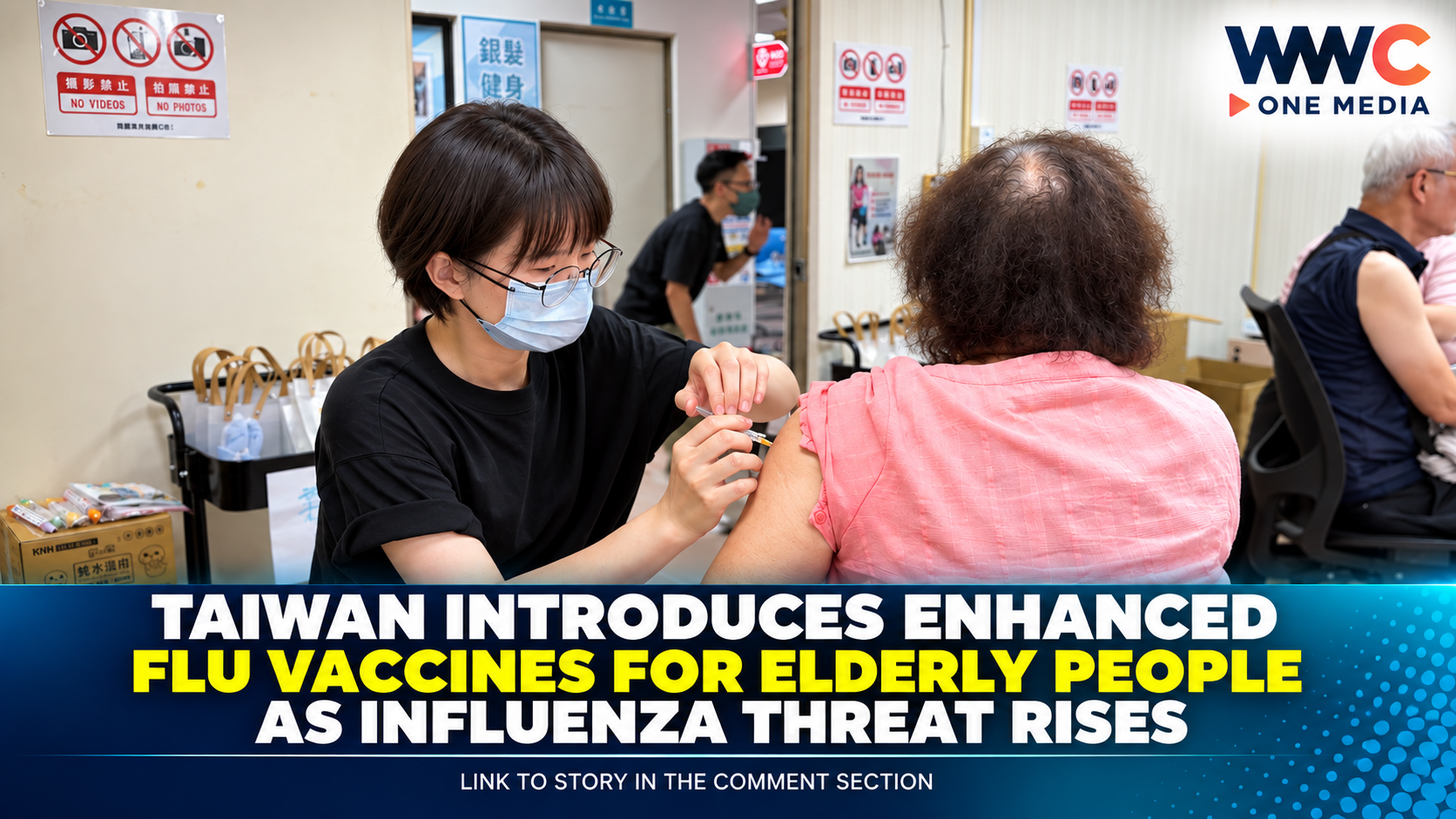
TAIPEI — Taiwan is stepping up protection against seasonal influenza for older adults, introducing enhanced flu vaccines for the first time as the country prepares for another potentially serious flu season.
The move is significant because Taiwan has entered a rapidly aging phase while health authorities are also warning of an earlier-than-usual influenza wave.
For the 2026–2027 flu season, Taiwan has purchased about 7.05 million publicly funded influenza vaccine doses, including roughly 200,000 enhanced vaccines specifically intended to provide stronger immune protection for older adults.
But there is an important distinction: the enhanced vaccines are not currently available to every senior in Taiwan. The initial supply will be prioritized for people aged 65 and above in long-term-care and residential welfare institutions, according to Taiwan's Centers for Disease Control (CDC).
Taiwan becomes first in Asia to introduce enhanced flu vaccines
Taiwan's CDC says the country is taking an Asia-first approach by introducing enhanced influenza vaccines into its publicly funded vaccination program.
The approximately 200,000 doses include two types of enhanced vaccines: adjuvanted vaccines, which use an immune-stimulating substance to strengthen the body's response, and high-dose vaccines, which contain a higher amount of influenza antigen.
The CDC says international evidence indicates that these vaccines can provide stronger protection for adults aged 65 and older than standard-dose influenza vaccines.
Taiwan News reported that the enhanced-vaccine rollout is part of a broader expansion of the government's publicly funded flu vaccination program, which now exceeds 7 million doses.
Why older adults are getting special protection
Aging can weaken the immune system's response to vaccination, leaving older adults more vulnerable to complications from influenza.
Taiwan's CDC says enhanced vaccines are designed to stimulate a stronger immune response in seniors. High-dose vaccines contain approximately four times the antigen amount of standard-dose vaccines, while adjuvanted vaccines contain an ingredient intended to boost the body's immune response.
According to the CDC, evidence used in its policy evaluation suggests enhanced vaccines can provide approximately 24% greater protection against severe disease compared with standard-dose vaccines among older adults.
The agency's broader guidance says influenza vaccination remains one of the most effective ways to reduce the risk of influenza infection and serious complications, although protection varies by age, circulating virus and other factors.
The first 200,000 doses will not cover everyone
The limited initial supply is one of the biggest issues surrounding Taiwan's new policy.
The government originally secured about 200,000 enhanced doses, while officials estimate that approximately 170,000 elderly residents live in institutional settings covered by the priority program. The remaining supply provides some flexibility for differences in the estimated population and changes in institutional arrangements.
Taiwan's Ministry of Health and Welfare said it hopes to expand procurement substantially next year.
Health officials now aim to increase the supply to around 600,000 enhanced doses in 2027, provided funding is available. That would represent roughly three times this year's planned supply.
The planned expansion could eventually give more high-risk seniors access to the enhanced vaccines rather than limiting them primarily to institutional settings.
October 1 marks the start of Taiwan's flu vaccination campaign
Taiwan's publicly funded flu vaccination campaign begins in stages.
For the first phase, starting October 1, 2026, the eligible groups include people aged 65 and older, medical and public-health personnel, residents and staff of long-term-care institutions, young children, pregnant women, people with certain high-risk medical conditions and several other groups.
Adults aged 50 to 64 without high-risk chronic conditions are scheduled to enter the program during the second phase beginning November 2.
The standard publicly funded vaccine program uses trivalent inactivated influenza vaccines, covering two influenza A strains—H1N1 and H3N2—and one influenza B/Victoria strain.
The CDC says the strains for this season have been updated according to World Health Organization recommendations.
Taiwan is entering the flu season with a warning sign
The timing of the enhanced-vaccine rollout is particularly important.
Taiwan's flu surveillance has already shown signs of an early seasonal increase. Central News Agency reported that flu-related outpatient and emergency visits had surpassed 100,000 in a week, the highest level for the same period in roughly a decade, with authorities expecting Taiwan to enter the seasonal influenza epidemic period soon.
Health officials have also warned that A(H1N1) is expected to be a major circulating strain this season and may be associated with a higher risk of severe disease.
That combination—an aging population and an approaching flu wave—is putting additional pressure on Taiwan to improve protection among vulnerable groups.
Seniors are not the only concern
While the enhanced vaccine initiative focuses attention on older adults, Taiwan's vaccination campaign covers a much broader population.
Children, pregnant women, healthcare workers and people with chronic illnesses remain among the groups prioritized for publicly funded vaccination.
The CDC is also encouraging eligible people to receive their seasonal influenza and updated COVID-19 vaccines during the same vaccination campaign.
Taiwan has separately upgraded its publicly funded pneumococcal vaccination program for older adults, introducing newer PCV20 and PCV21 vaccines as options for eligible groups.
Together, the measures show a broader shift toward strengthening protection against respiratory infections among Taiwan's aging population.
Research supports the push for stronger senior vaccines
The policy is also consistent with a growing body of research into enhanced influenza vaccines.
A 2026 cost-effectiveness study examining Taiwan and South Korea found that an MF59-adjuvanted influenza vaccine could prevent additional influenza infections, hospitalizations and deaths among adults aged 65 and older compared with standard-dose vaccination under the study's modeling assumptions.
International research has likewise found benefits from higher-dose influenza vaccination among older adults, although vaccine effectiveness varies by season and population.
The important point is that “enhanced” does not mean the vaccine completely prevents influenza. Rather, the goal is to produce a stronger immune response and reduce the risk of serious outcomes in a population that is more vulnerable to complications.
What this means for Taiwan's elderly population
For now, the policy represents a targeted first step, rather than a universal switch to enhanced flu vaccines for all seniors.
People aged 65 and above remain eligible for publicly funded influenza vaccination beginning October 1, but whether an individual receives an enhanced or standard vaccine depends on the program's distribution and eligibility arrangements. Taiwan's CDC says government-purchased vaccine brands are distributed according to supply and are not generally selected by individuals.
The bigger question is what happens next.
If Taiwan can secure funding for its proposed 600,000 enhanced doses in 2027, the country could significantly broaden access to stronger influenza protection for older adults.
For a rapidly aging Taiwan—and a health system already preparing for another flu wave—the experiment beginning this October could become a major test of how far enhanced vaccination can reduce the burden of influenza among the country's most vulnerable citizens.