
Thailand’s New M6 Motorway Just Drew 15,500 Vehicles in One Day—And the Traffic Surge May Be Only the Beginning

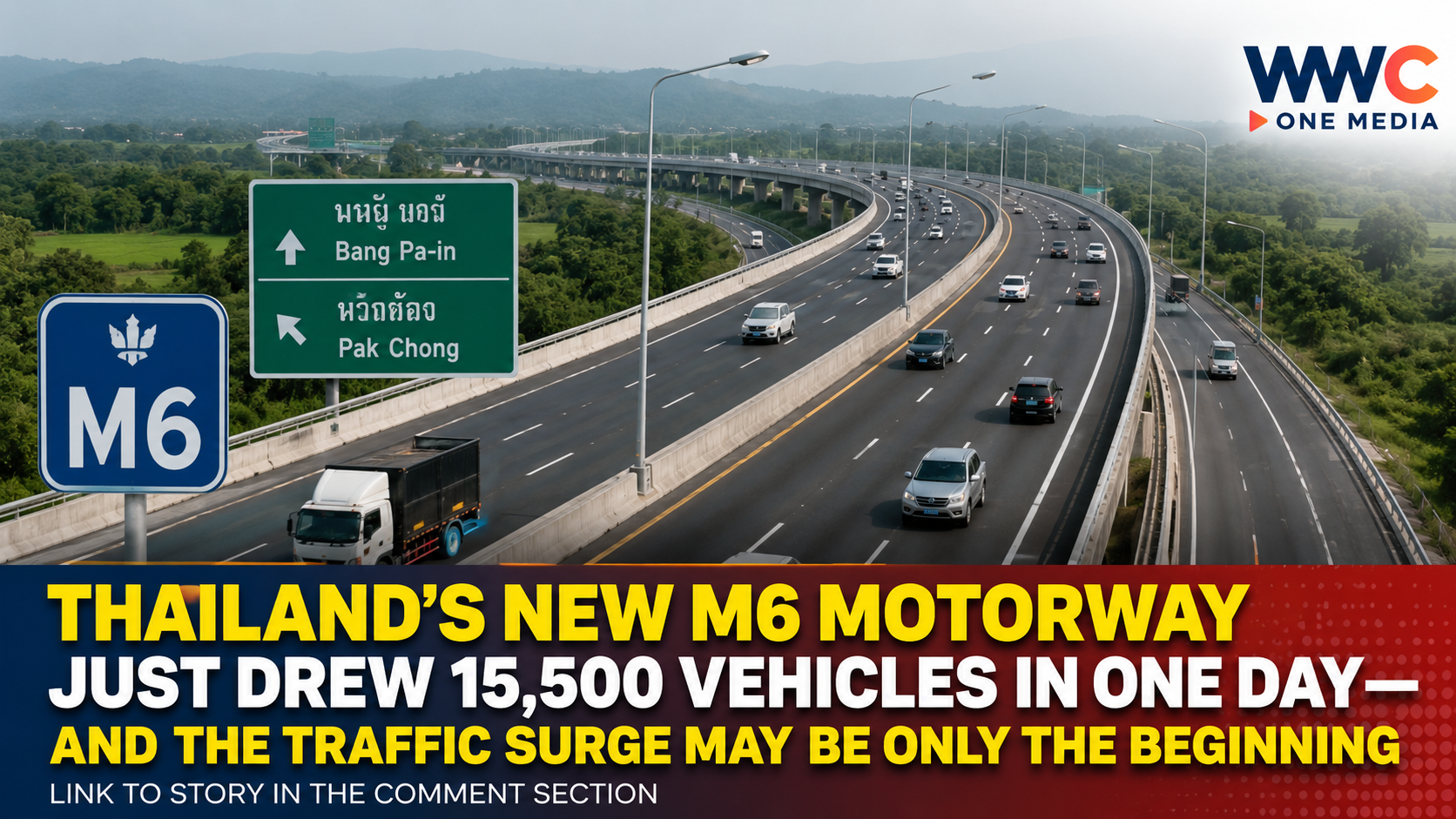
Thailand’s newly expanded M6 motorway is already proving its value to motorists, with more than 15,500 vehicles using the route on the second day of its free trial operation. The unexpectedly strong turnout is putting the spotlight on one of the country’s most anticipated transport projects—and what could come next for Bangkok–Nakhon Ratchasima travel.
Thailand’s new Motorway 6 (M6) is quickly becoming a major alternative for motorists heading between Bangkok and the Northeast.
More than 15,500 vehicles travelled on the newly opened section on the second day of its trial operation, according to a report by the Bangkok Post. The sharp rise in traffic highlights the immediate demand for a faster alternative to the heavily used Mittraphap Road corridor.
The trial involves the 110-kilometre Bang Pa-in–Pak Chong section of M6, which officially opened for free weekend travel from noon on Friday, August 21. The trial runs from Friday afternoon through midnight Sunday and is scheduled to continue through the New Year 2027 period.
A major new route between Bangkok and the Northeast
The M6 is part of Thailand’s wider effort to improve road connections between Bangkok and the northeastern provinces.
The complete Bang Pa-in–Nakhon Ratchasima motorway is approximately 196 kilometres long. The newly opened Bang Pa-in–Pak Chong section extends the motorway closer to Bangkok, while the Pak Chong–Nakhon Ratchasima portion remains available free of charge around the clock.
The Department of Highways says the weekend trial is designed to provide motorists with another route and help reduce pressure on existing roads, particularly Mittraphap Road, one of the main routes connecting Bangkok with the Northeast.
Five interchanges are currently open
Motorists using the trial section can enter or exit at five locations:
- Bang Pa-in
- Hin Kong
- Kaeng Khoi
- Muak Lek
- Pak Chong
The Wang Noi and Saraburi interchanges remain closed while preparations continue. Drivers have been urged to follow signs and directions from highway officials when approaching the motorway.
For motorists travelling onward to Nakhon Ratchasima, the Pak Chong connection provides access to the existing M6 section toward the Korat area.
But there is an important catch for drivers
Despite the excitement surrounding the new motorway, the M6 remains under trial operation.
For the current trial period, only four-wheeled vehicles are permitted, and the speed limit is set at 80 kilometres per hour. Motorists are also required to follow temporary signs and instructions from officials because construction and system-related work is still continuing in parts of the route.
Drivers should also plan ahead because the motorway does not yet operate like a fully developed toll road with complete roadside services.
Khaosod English reported that there are no fuel stations or EV charging facilities along the route, although rest facilities at Thap Kwang provide toilets and drinks.
That means motorists should fuel up and charge their vehicles before entering the motorway, particularly when making a longer trip toward Nakhon Ratchasima.
The strong turnout could be a major test
The arrival of more than 15,500 vehicles on the second trial day is significant because it demonstrates how quickly motorists are willing to shift to the new route.
The M6 has been promoted as a way to provide a more direct, controlled-access alternative for Bangkok–Northeast travel. The heavy early usage could also give authorities valuable information about traffic patterns, interchange demand and operational challenges before the motorway moves toward broader service.
The Department of Highways has previously described the M6 as a major infrastructure project intended to improve connectivity between Bangkok and Nakhon Ratchasima. The route forms part of Thailand’s broader intercity motorway network.
What happens next?
For now, the biggest question is whether the strong demand will continue as more motorists become familiar with the new route.
The current weekend trial is scheduled to operate from noon Friday until midnight Sunday, while the Pak Chong–Nakhon Ratchasima section continues to operate 24 hours a day.
If the M6 continues attracting tens of thousands of vehicles during subsequent trial periods, it could become an increasingly important alternative to conventional highways between Bangkok and Thailand’s Northeast.
And that is where the real test begins.
The first weekend has shown that motorists want the M6. The next question is whether Thailand’s newest motorway can handle the demand once the novelty wears off—and traffic volumes climb even higher.