
Thailand’s “Rent an Uncle” Trend Is Taking Off — But What’s Really Driving People to Hire Older Companions?

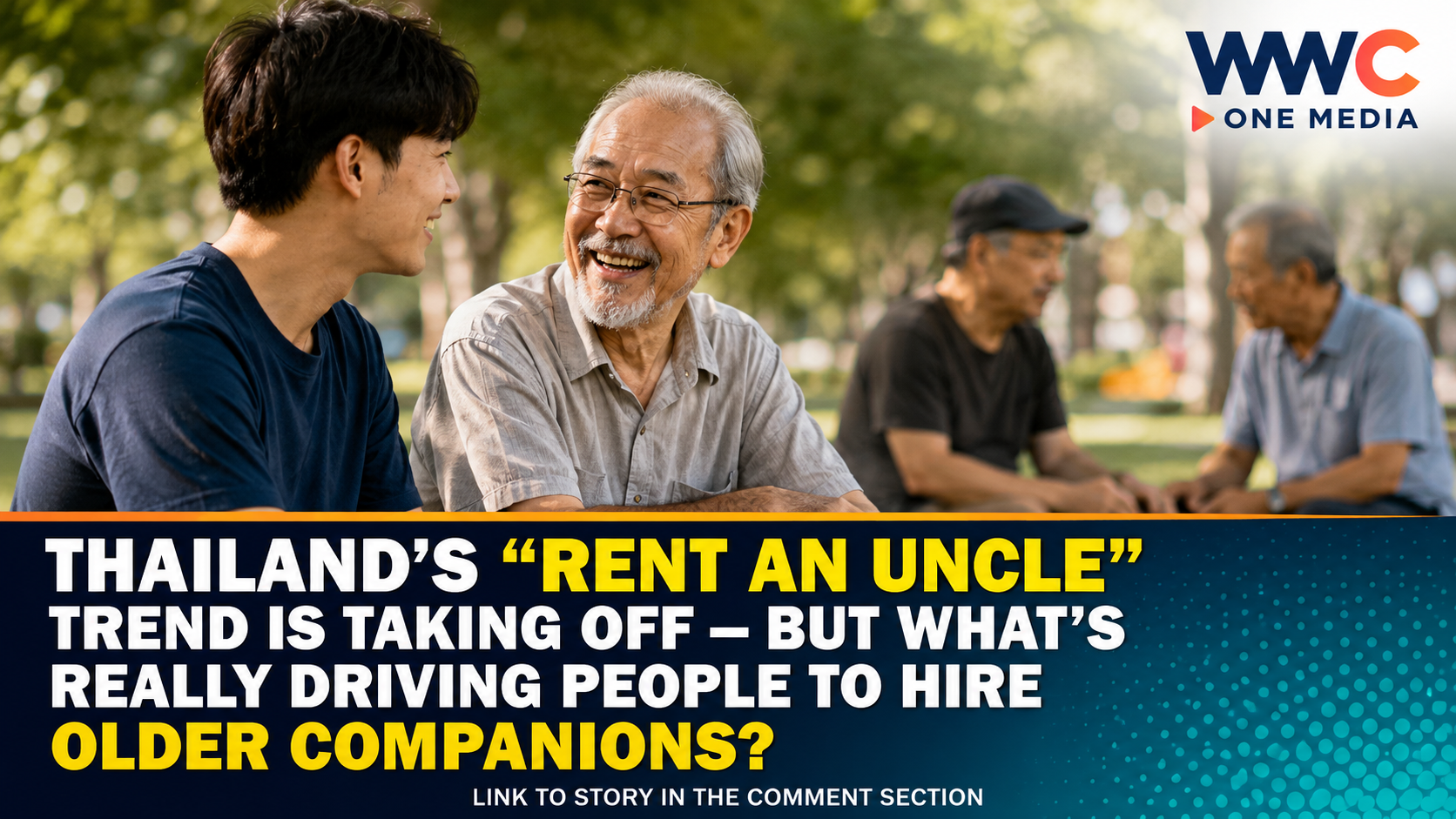
BANGKOK — A surprising new trend in Thailand is putting older adults in the spotlight: people are increasingly paying for the company, conversation and experience of older men through so-called “rent an uncle” services.
The phenomenon, highlighted by the Bangkok Post on Aug. 23, 2026, reflects a broader change in how companionship, ageing and social connection are being viewed in Thailand. The concept is not simply about hiring someone to perform a task. For some participants, it offers something much harder to put a price on — human connection and a sense of purpose.
From retirement to a new kind of work
Thailand is experiencing a profound demographic shift. UNFPA Thailand says that more than 20% of the country's population was aged 60 or older in 2025, placing Thailand in the category of a complete aged society. The organisation also warns that the country's ageing population will continue to reshape its economy, healthcare system, labour market and social-support structures.
The country's ageing challenge is also reflected in the availability of senior-care facilities. Thailand's National Economic and Social Development Council reported that 2025 data from the Real Estate Information Center identified 96 retirement homes accommodating nearly 16,000 people, while more than 6,000 seniors were on waiting lists.
Against that backdrop, the “rent an uncle” concept offers a very different model of ageing — one built around social participation rather than institutional care.
Instead of disappearing from public life after retirement, older men can use their accumulated knowledge, life experience and interpersonal skills as a service that others are willing to pay for.
Why would anyone rent an older companion?
The idea may initially sound unusual, but the underlying demand is familiar.
People may want someone to talk to, accompany them somewhere, provide advice, share an activity or simply offer company without the expectations attached to a traditional family relationship.
Similar paid-companionship concepts have appeared in other parts of Asia. Japan, for example, has become known for “ossan rental,” in which customers can hire middle-aged men for companionship and other everyday activities.
Thailand's emerging version comes at a time when demographic and social changes are creating new questions about loneliness, family structures and how older people can remain economically and socially active.
The trend therefore raises a bigger question: What if retirement does not have to mean stepping away from society?
Thailand’s ageing population is changing the conversation
Thailand's demographic transition is happening alongside falling birth rates and longer life expectancy. UNFPA's regional research says Asia-Pacific is ageing rapidly, with one in four people in the region projected to be aged 60 or older by 2050.
UNFPA Thailand projects that Thailand could reach 28% of its population aged 60 and above within roughly a decade, underscoring the speed at which demand for age-friendly housing, healthcare, social services and meaningful employment could grow.
That means the “rent an uncle” phenomenon may be more than an internet curiosity.
It could be an early example of a much larger shift: turning later life into a stage of continued participation, income and social connection.
But companionship is not the same as elderly care
It is important not to confuse companionship services with professional senior care.
A paid companion is not automatically a healthcare worker, caregiver or medical professional. Older people who require assistance with medication, mobility, personal care or medical needs may require appropriately trained and regulated professionals.
That distinction becomes increasingly important as Thailand's ageing population grows and the market for senior-related services expands.
A glimpse of what ageing could look like
Thailand's “rent an uncle” trend ultimately tells a story that goes beyond an unusual business idea.
It highlights a generation of older adults who may still have skills, energy, stories and experience to share — and a younger population that may be increasingly willing to pay for time, attention and companionship.
Thailand's ageing challenge is real, but the emerging response is not necessarily about treating older people as a burden.
It may instead be about finding new ways for them to remain visible, useful, connected and valued.
And that could be the most important part of the trend that people are only beginning to notice.