
Thailand’s Sex-Work Debate Explodes as Pattaya Faces Global Spotlight

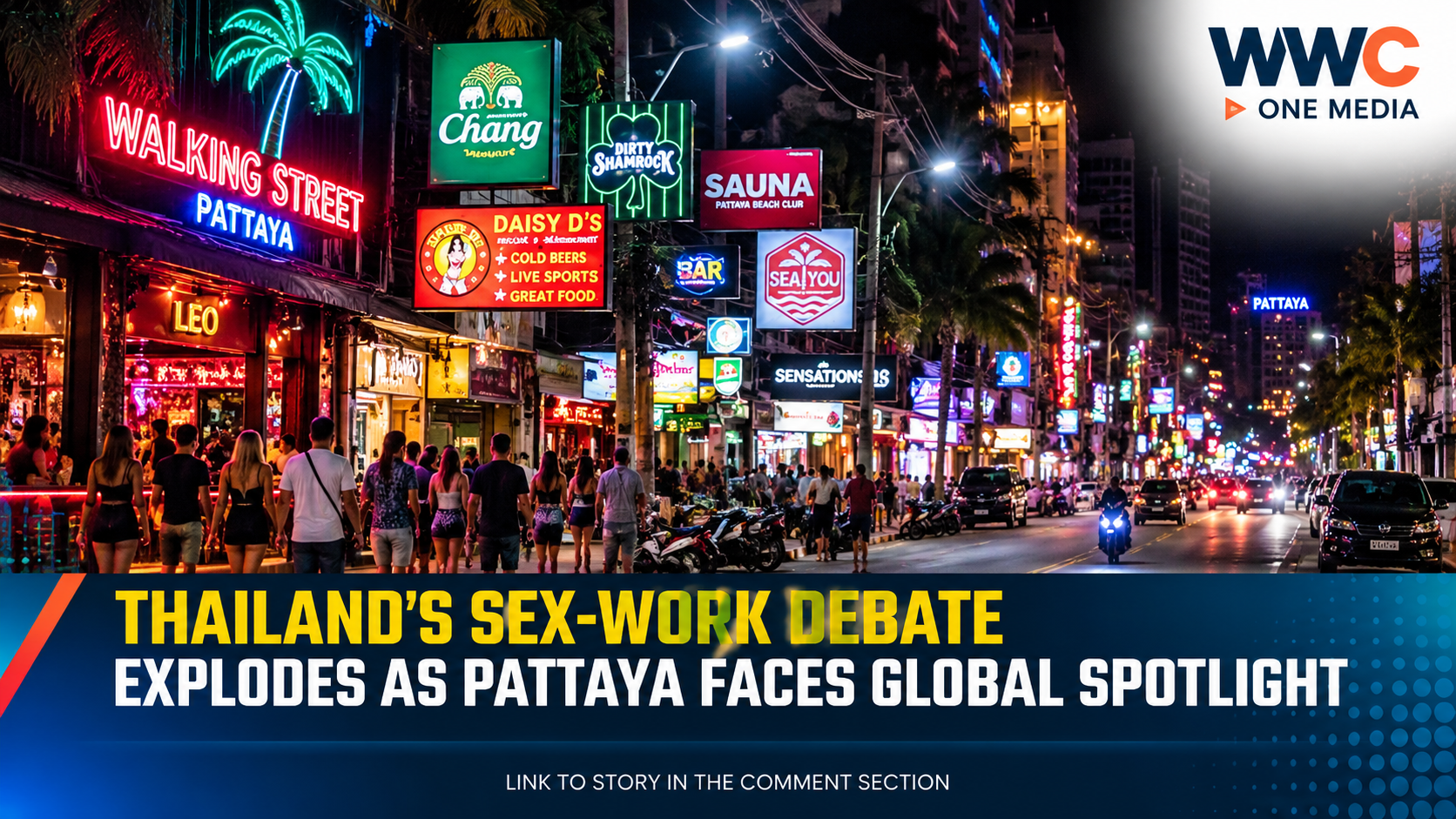
Thailand’s long-running debate over sex-work decriminalisation has returned to the national spotlight, with Pattaya once again at the centre of attention as thousands of U.S. military personnel visit the area.
The issue is bigger than Pattaya’s nightlife. At its core is a question that Thailand has struggled with for decades: should consensual sex work between adults remain a criminal-law issue, or should the country move toward a system focused on labour rights, safety and regulation?
Recent developments suggest the debate is becoming harder for authorities to ignore.
Pattaya’s spotlight puts an old contradiction on display
The arrival of the USS Abraham Lincoln and roughly 5,000 U.S. sailors and Marines in the Pattaya area has generated renewed attention around the city's nightlife economy. Reuters reported that Pattaya authorities increased patrols and enforcement against suspected prostitution ahead of the visit, while local businesses hoped the influx of personnel would provide an economic boost.
Pattaya has long been internationally associated with nightlife and sex tourism, yet prostitution remains illegal under Thai law.
That contradiction has become increasingly visible.
On Aug. 29, Thai authorities conducted a crackdown in public areas including Pattaya Beach and Second Road. The Nation reported that 25 people—18 Thai nationals and seven foreign nationals—were cited in connection with prostitution-related offences. Authorities said enforcement would continue, particularly in areas frequented by tourists and during periods of increased foreign visitation.
Thai Rath separately reported the operation ahead of the U.S. Navy visit and said authorities were targeting suspected solicitation and related conduct in public areas.
So while Pattaya's sex industry is highly visible, the legal framework surrounding it remains restrictive.
The bigger issue: what happens to sex workers?
The latest debate is not simply about whether Thailand should "legalise prostitution."
Advocates are pushing a more specific concept: decriminalisation combined with labour and safety protections.
The distinction matters.
Decriminalisation would generally mean removing criminal penalties for consensual sex work between adults, while other conduct—such as trafficking, exploitation of children and coercion—would remain subject to criminal law.
In May, the EMPOWER Foundation and civil-society groups submitted a proposed Sex Service Provider Protection Act to Parliament, backed by 11,765 signatures, according to Khaosod English and Thai PBS's The Active.
The proposed legislation seeks to repeal the 1996 Prevention and Suppression of Prostitution Act and move toward recognising sex work as labour deserving basic protections.
Supporters say that could include protections involving working conditions, compensation, safety, welfare and access to justice.
Their argument is straightforward: if the industry exists regardless of its legal status, criminalising workers does not necessarily eliminate the industry—it can instead push parts of it further underground.
But the proposed law has hit a major political obstacle
The proposed reform has not simply moved smoothly through Parliament.
On July 10, a joint meeting involving the House Speaker and committee chairpersons voted 17-6, with two abstentions, to classify the proposed Sex Service Provider Protection Bill as a bill concerning finance. Thai PBS reported that this means the bill requires the Prime Minister's endorsement before it can proceed to parliamentary consideration.
That has raised concerns among advocates that the proposal could be delayed or potentially fail to advance if the required endorsement is not granted.
Legal-rights organisation iLaw likewise reported that the financial-bill classification could create a significant procedural hurdle for the citizen-sponsored legislation.
That means the question isn't simply whether Thailand wants to reform its sex-work laws. The immediate question is whether the proposed reform can even make it through the legislative door.
Thailand is already facing international pressure on the issue
The debate also comes as Thailand responds to recommendations under the UN Convention on the Elimination of All Forms of Discrimination Against Women (CEDAW).
In August, the Thai government said it had acknowledged UN recommendations that included accelerating the removal of criminal penalties affecting women engaged in prostitution, alongside measures to protect them from stigma and support those who want to leave the industry.
That does not mean Thailand has agreed to decriminalise sex work.
But it adds another layer to an increasingly prominent domestic debate.
Why Pattaya matters
Pattaya has become a symbol of Thailand's complicated relationship with sex work.
The city has a huge tourism and nightlife economy, while authorities simultaneously enforce laws against prostitution and conduct periodic crackdowns.
Reuters reported that local businesses are hoping the U.S. military visit will inject money into the city's struggling tourism sector, with Pattaya's mayor estimating potential spending of around 1,000–3,000 baht per service member per day, depending on how long visitors remain ashore.
But the same influx has raised concerns about sexual exploitation, public safety and health risks.
That is why advocates argue the discussion should move beyond whether Pattaya is a "sex-tourism destination" and toward whether the people working within that economy have meaningful legal protection.
Legalisation vs. decriminalisation: don't confuse the two
This is one of the most important points for readers.
Decriminalisation is not the same thing as creating an unrestricted sex industry.
Under the proposals being discussed, consensual adult sex work could be removed from criminal penalties, while laws against child sexual exploitation, trafficking, coercion and abuse would remain.
Advocates also argue that workers should not be forced into a system that exposes their identities or creates new forms of discrimination.
The proposed framework therefore represents a major shift in philosophy: from primarily punishment and suppression toward rights, safety and regulation.
Critics, meanwhile, have raised concerns about whether changing the legal framework could create new challenges involving exploitation, trafficking, public order and enforcement.
Those questions would ultimately need to be addressed by lawmakers if reform reaches the legislative stage.
The debate is now much bigger than Pattaya
Thailand's sex-work debate has been around for decades, but the latest developments have brought several issues together at once:
- Pattaya's international reputation as a nightlife destination
- the arrival of thousands of foreign military personnel
- renewed police enforcement
- concerns over exploitation and worker safety
- a citizen-backed sex-worker protection bill
- a parliamentary procedural hurdle
- and renewed international recommendations concerning the treatment of women in prostitution.
Thai PBS's reporting has highlighted an especially important dimension: sex workers can face difficulties accessing labour protections, safety mechanisms and justice when their occupation remains outside the formal legal framework.
That leaves Thailand facing an uncomfortable contradiction.
The country can continue enforcing a system that officially rejects an industry that remains highly visible—or Parliament can decide whether a different legal framework would better protect adults who voluntarily work in it while strengthening the fight against exploitation and trafficking.
For now, nothing has been decriminalised. The existing legal framework remains in force, and the proposed legislation still faces a significant procedural hurdle.
But with Pattaya once again under the international spotlight, Thailand's long-running question about sex work is no longer easy to keep out of the national conversation.
WWC ONE MEDIA M.J.E