
Bangkok Street Food After 9pm: 7 Stalls Tourists Hit and 7 Locals Walk To
Bangkok street food after 9pm: 7 stalls tourists hit and 7 locals walk to — Yaowarat vs a side soi, same hunger, different queue.

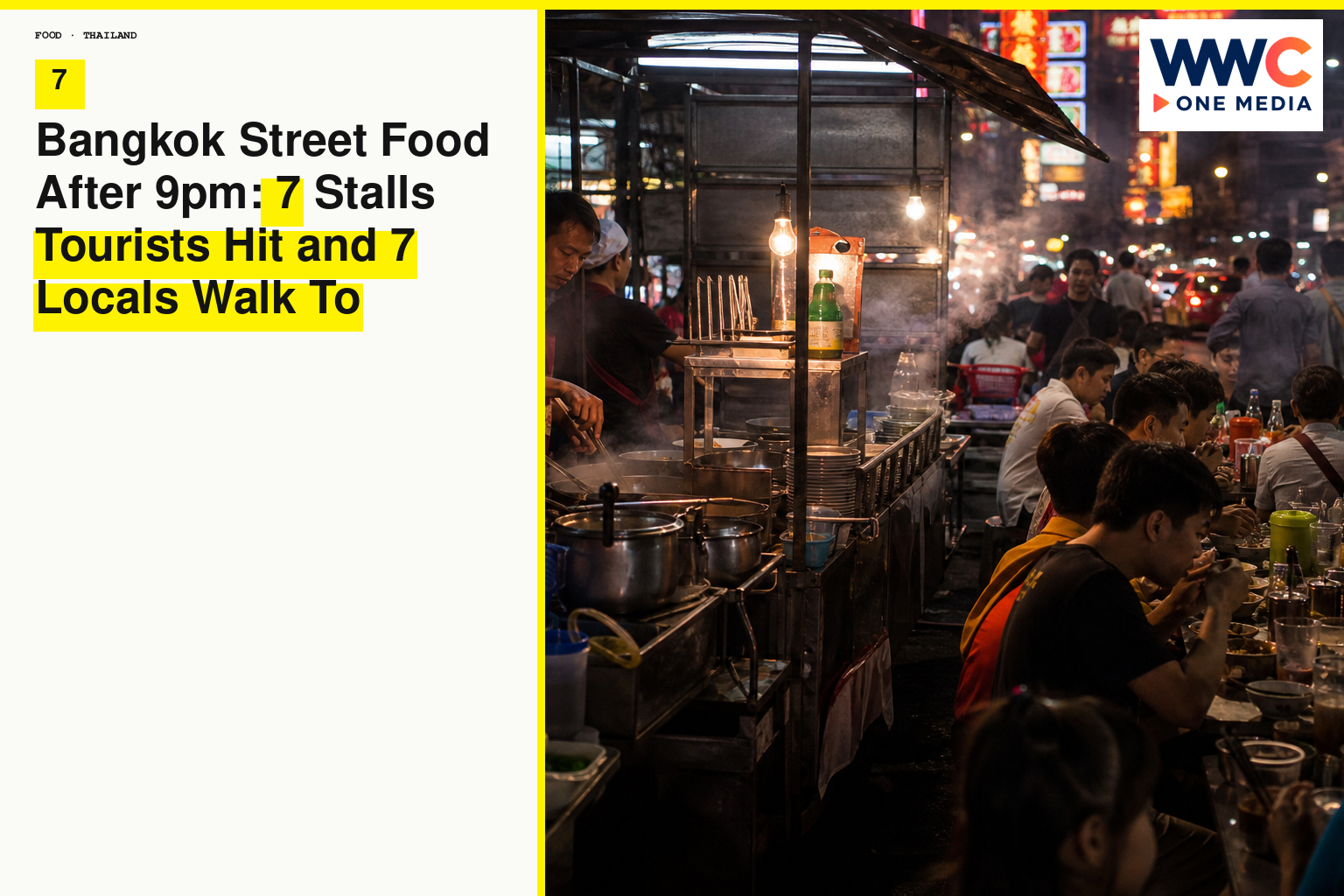
BANGKOK, Thailand — Bangkok street food after 9pm splits into two walks. One walk is the tourist hit: Yaowarat lit like a film, Charoen Krung spilling, Khao San still performing dinner for people who flew in, a pad thai wok facing the phones, mango sticky rice plated as a sunset that already happened. The other walk is the one locals still make when they are actually hungry — a side soi off the main drag, a shophouse that did not wait for a camera, Victory Monument’s later bowls, a charcoal grill on a soi in Ari or a plastic stool down from Wang Lang’s logic, even if Wang Lang’s day crowd has thinned. Seven stalls tourists hit and seven locals walk to is not fourteen famous names. It is seven pairs: the same hunger, two rooms. After 9pm the city is still eating. It is just not always eating on the road you were sent to.
This is not a Michelin list. We will not hang a star on a cart to make a paragraph. Bangkok has official guides and unofficial ones and a thousand reels that treat a queue as a medal. A queue after 9pm on Yaowarat can mean the food is moving. It can also mean the street is the attraction and the wok is a prop. Locals are not a mystical filter. Office workers, taxi drivers, students off the BTS, people who live in a walk-up behind a temple — they walk toward heat, turnover, a price they already know, and a stool that is not a photoshoot. You can walk with them without pretending you are not a visitor. The move is the soi, the clock, and the pair.
Take the MRT to Wat Mangkon or Hua Lamphong if Chinatown is the night. Take the BTS if you are coming from Siam and you will still have to walk. After 9pm Grab is a habit; traffic is still traffic. Wear shoes you can stand in. Bring cash and a working PromptPay brain because carts vary. Then pick a pair. Do not collect all seven in one night. That is how Bangkok street food after 9pm becomes a stomachache and a story you will tell as if it were expertise.
1. Pad thai on Yaowarat vs the wok on a side soi that is not facing the phones
Tourist hit: the pad thai cart on the Yaowarat pavement where the wok is a stage. The noodles are a performance you can smell from the tram tracks of your imagination — there is no tram, there is a crowd. Tamarind, egg, tofu or shrimp, bean sprouts, the lime you will be handed if the cart still does that. It can be fine. It can be sweet in a way that photographs well. After 9pm this cart is a river. You wait because the street told you this is the dish.
Local walk: the same dish logic on a side soi off Charoen Krung or a small soi behind the gold-shop glare, a wok that is feeding people who sat down without lifting a phone first. The noodles may be darker, less glossy, more fish sauce, less show. There may not be a sign in English that fills the frame. There may be a shophouse table instead of a stall. Pad thai is not sacred. It is a plate. After 9pm the local walk is toward the wok that is still scraping for regulars, not toward the wok that is angled at the walking tour.
How to choose: watch whether plates leave. If the tourist hit is moving plates, you will eat. If it is moving phones, you will wait. The soi wok after 9pm often looks quieter and is not quieter in the only way that matters — the cook is repeating a motion. Order without a speech. Shrimp if they have shrimp that looks like shrimp. Tofu if you do not want to wait for a defrost that is not happening. Eat standing or on a stool. Yaowarat will still be there when you walk back with something already in you. That is the pair: hit the famous pavement if you want the night as a postcard; walk the soi if you want pad thai as dinner.
2. Mango sticky rice under lights vs a dessert cart that still sells to people leaving work late
Tourist hit: mango sticky rice as a display — yellow mango fanned, coconut cream, a stall on Yaowarat or a walking-street corner that knows the dish is a caption. After 9pm the mango may still be good. It may also be a mango that has been fanned too long. Sticky rice is a craft when it is made as a craft. It is a prop when the plate exists to be held next to a neon sign.
Local walk: the dessert stall or shophouse sweet that is still portioning for people who actually wanted something cold and coconut after rice, not before a photograph. It might be mango sticky rice. It might be tub tim krob, a coconut ice, a banana in coconut milk, a shop on a soi toward Talat Noi that does not care that your map pin says Chinatown. After 9pm locals still eat sweet. They do not always eat the fanned plate.
Season is the tell. If mango is not behaving, do not force the tourist plate. Eat the other sweet. Bangkok is a dessert city that does not need a single viral plate to prove it. If the tourist stall’s mango is firm and fragrant, buy it. The pair is not “never the famous stall.” The pair is “do not assume the famous stall is the only mango left after 9pm.” Walk one soi off and see what is being scooped for plastic bags, not for a drone.
Sit if you can. Sticky rice on a moving crowd’s shoulder is how you wear dinner. Locals bag it and walk. You can too. The hotel fridge will not improve it; eat it.
3. Boat noodles as a tourist queue vs a bowl in a shophouse that did not wait for you
Tourist hit: boat noodles sold as an experience — tiny bowls, dark broth, the story about boats, a line that forms because someone said this is the line. After 9pm some of those shops are still honest and busy. Some are a memory of a lunch crowd stretched into neon. A small bowl is a format, not a scam by default. It is a scam of your time if you queue for a story when you wanted dinner.
Local walk: a noodle shop on a soi, a later bowl near Victory Monument, a place off the main Yaowarat stream where the broth is still being tasted by the person who made it and the tables are office bags and helmets. Boat noodle logic — rich, dark, you order more than one bowl if you are hungry — still works without a boat. After 9pm the local walk is to the shop that is plating without a host speech.
If you want the tiny bowls, order enough that it is food. If you want one large bowl, walk to the shop that sells that. Do not mix the two into a complaint that Bangkok cheated you. You chose a format. The tourist hit sells the format. The local walk sells the bowl. Both can be closed after 9pm; have a backup soi. Chinatown after 9 is dense. Victory Monument after 9 is a different density: transit hunger, less gold, more fluorescent. Either is Bangkok street food after 9pm. Only one is the postcard.
Pork, beef, the herb plate, chilli — say it simply. Do not redesign the broth. The cook has a broth. You have a mouth.
4. Grilled seafood on the main drag vs charcoal on a later soi
Tourist hit: seafood on ice facing Yaowarat or a strip that knows visitors will point at a prawn. After 9pm ice under lights looks cinematic. Cinematic is not a freshness certificate. You can still eat well if the grill is busy and the fish still looks like fish. You can also pay main-drag energy for a prawn that has been on the ice as a display animal. Point, ask the price of the piece you pointed at, and decide. If every piece is a conversation that never lands on a number, you are the product.
Local walk: a grilled chicken, pork skewer, or fish stall on a soi that is feeding people who did not come for a lobster photograph. Gai yang, moo ping, a mackerel, som tam next to it if the som tam stall is still pounding. After 9pm this is dinner for a lot of Bangkok. It is not less than seafood. It is a different protein and a different street rent. Walk toward the charcoal you can smell, not the ice you can film.
Yaowarat seafood can be a joy when you pick a fish, watch it hit the grill, and eat it with seafood sauce and rice. Do that if the stall is cooking, not only displaying. The local walk is what you do when the display is the whole business. Side soi charcoal after 9pm is also what you do when you already had noodles and you want something on a stick before the BTS dies on you — though BTS hours are a clock you should have checked before the second beer.
Rice as a side is not optional if the grill is the meal. Tourists skip rice and then hunt dessert. Locals often already have rice in the bag. Be a person with rice.
5. Coconut ice cream tourist cart vs the late sweet that is not a costume
Tourist hit: coconut ice cream in the fruit, sticky rice optional, toppings like a parade, a cart on the walking street that exists in every map article. After 9pm it still tastes like coconut if the ice cream is ice cream. It also tastes like a line. Children like it. Adults like it. It is not a failure. It is a stall tourists hit because it photographs as Thailand in a bowl.
Local walk: a Thai dessert shop, a nam kang sai stall, a shophouse sweet, an iced drink that is not a costume — oliang, a soy, a coconut that is just coconut without a show. After 9pm people still want cold. They do not always want to hold a young coconut as a prop on Yaowarat while a tour group takes the pavement. Walk into a soi. Sit. The air is still hot. The tourist cart will still be there if you want it on the way back.
If the tourist cart is fast, buy it. The pair is about the default, not a ban. Defaulting every night of a trip to the same cart is how Bangkok street food after 9pm becomes one flavour. Locals walk to whatever is actually open near where they already are: a soi off Silom, a cart near a hospital night shift, a dessert table in a neighbourhood you did not file under “Chinatown.” You are allowed to copy that logic even if your hotel is in a tourist postcode.
Watch hygiene like an adult, not like a panic. Busy ice, clean scoop, a stall that is not standing in its own melt. That is enough. We will not invent a health ranking.
6. Fried insects as a photo stall vs actual late protein: chicken, pork, a rice plate
Tourist hit: the insect stall. Lights, varieties, a scorpion on a stick, a dare. After 9pm on Khao San and on stretches of the tourist night this stall is a landmark. Some people like the taste. Many people like the story. If you want the story, buy a small bag, eat it, stop making it the whole of Bangkok. The stall is not a secret. It is a billboard.
Local walk: protein that is dinner. Grilled chicken, pork with sticky rice, a rice plate from a late raan khao, boat noodles, a som tam that is still pounding, a porridge shop if the night has gone long. After 9pm Bangkok is full of people eating chicken. They are not missing the insect stall. They already know where it is. They walked past it toward food that fills.
You can do both. The pair is the order. Do not make the dare your dinner and then hunt pad thai as a rescue when you are already tired. Eat the local walk first. Hit the insect stall after if you still care. Khao San after 9pm is a nightlife product. Yaowarat after 9pm is a food-and-gold product. A soi in Ari after 9pm is a neighbourhood. Pick the product you meant to buy.
If you do not eat street meat, the local walk is a vegetarian shop that is still open, a rice-and-veg plate, a tofu stall that is not a tourist tofu. They exist. They are not always on the main drag. Walk.
7. Bangkok street food after 9pm: the walking-street cluster vs the side soi that was never on the map pin
Tourist hit: the cluster. Yaowarat as a whole, or a walking street that concentrates carts so a visitor can graze without choosing a neighbourhood. After 9pm this is efficient and loud. You will eat. You will also walk at the speed of a tour. The cluster is designed to be hit. That is not an insult. It is urban design plus rent plus neon.
Local walk: one soi off. Talat Noi when it still has a table. A street behind the main gold shops. A later market logic toward the river that is not the river cruise. Or leave Chinatown: a soi off Thonglor that still has a cart, a stool in Aree, a late plate near a condo in Rama 9, a bowl in a shophouse you found because the motorbike taxi already knew. Seven stalls tourists hit and seven locals walk to, in this last pair, is the cluster versus the single street you commit to.
After 9pm the local walk often looks like less. Fewer languages on the sign. More helmets. A TV. Soup. The tourist hit looks like more. More carts, more choice, more chance you will graze into a bad combination of fried, sweet, and fried again. Choose a neighbourhood. Eat two things. Sit. Bangkok street food after 9pm rewards a sit more than a third cart.
Last trains and last boats are clocks. BTS, MRT, the river — check before the second stall, not after the coconut. Grab from Yaowarat late is a queue of Pins. If you can walk to Wat Mangkon and ride, ride. Locals already did the math. Copy the math even if you cannot copy the Thai.
How to move after 9pm without collecting a food coma as a personality
One neighbourhood a night. Chinatown or Silom or Victory Monument or a condo soi — not all of them. Water between stalls. Sit once. Do not drink as if the pavement were a bar and then act surprised that the pad thai is a blur. PromptPay and cash; do not freeze a cart over a card speech.
Toilets are a plan in this city. Malls, a paid toilet, a restaurant you actually patronise. Yaowarat after 9 is not designed around your bladder. Eat like you know that.
Rain: carts tarp, wires hang, floors shine. Slow down. The local walk still exists under a shophouse roof. The tourist hit becomes a crush. Crush is how you lose a wallet and a night.
What we will not do in this piece
We will not name a “best” stall as if the Bangkok Metropolitan Administration had published a league. We will not attach a Michelin sentence to a cart to borrow authority. We will not invent a baht menu as current fact. Prices move. Woks move. The pair is the method: tourist hit versus local walk, seven times, same hunger.
If a stall is famous, it can still be good. Fame is not a poison. It is a crowd. After 9pm you are choosing whether you want the crowd as part of dinner.
If your hotel is in a tourist postcode
You will hit tourist stalls because they are downstairs. That is geography, not failure. Walk ten minutes. Cross one big road if it is safe and the light agrees. A side soi behind a hotel on Surawong or a lane off lower Sukhumvit will often do the local walk without a pilgrimage to a viral pin. If you came to Bangkok to do Yaowarat, do Yaowarat — then peel one soi off for the seventh pair. Bangkok street food after 9pm can be both a postcard and a bowl. It cannot be a postcard if you never sit.
Bottom line
Bangkok street food after 9pm is seven pairs, not a trophy hunt. Tourists hit the Yaowarat pad thai, the fanned mango, the boat-noodle line, the seafood ice, the coconut costume, the insect billboard, the walking-street cluster. Locals walk to a soi wok, a dessert that is still a dessert, a bowl without a host speech, charcoal chicken and rice, a cold sweet without a drone, late protein that fills, and one street they commit to. No fake Michelin, no official stall ranking, no invented baht board. Sit. Eat two things. Check the train. The neon will still be on when you leave.