
Doctor Warns Against Popping Boils at Home After Elderly Woman Develops Severe Infection

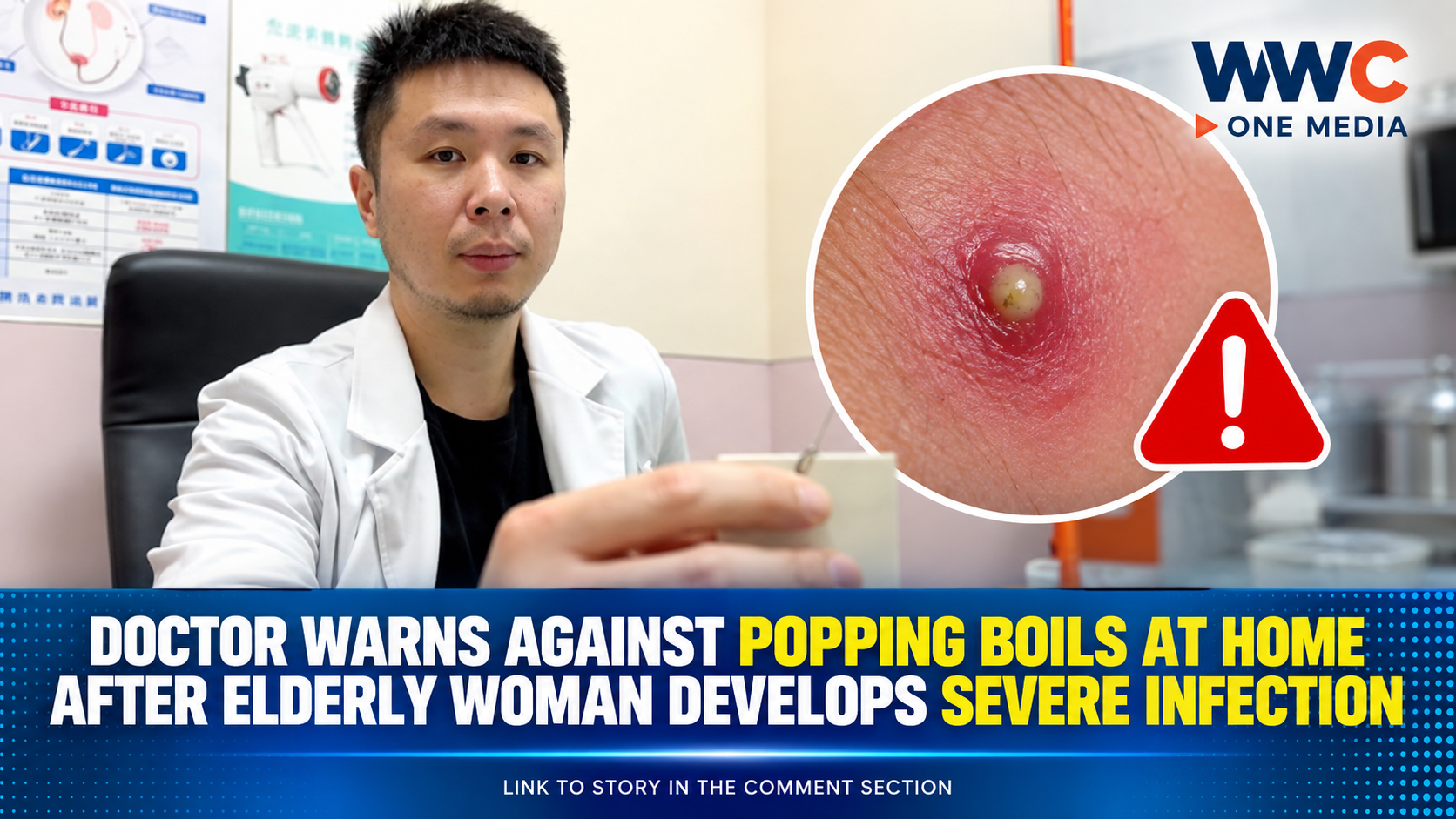
A Taiwanese doctor has issued a stark warning against trying to pop or lance boils at home after an elderly woman used a heated sewing needle to treat a painful lump — only for the infection to worsen dramatically.
The woman, who is in her 80s and lives alone, initially believed the boil on her buttocks was not serious. She attempted to puncture it herself using a sewing needle that she had heated over a flame in an effort to disinfect it.
Instead of improving, the condition rapidly became worse.
By the time she sought medical treatment, the infected area had swollen to the size of a baseball and was filled with pus, according to colorectal surgeon Tseng Yu-kang. It took nearly an hour for medical staff to thoroughly clean the wound.
A Small Boil Turned Into a Serious Infection
Tseng, an attending colorectal surgeon at Taichung Veterans General Hospital who also sees patients at the Dajia Branch of Lee General Hospital, said puncturing the affected area likely pushed bacteria and infected material deeper into the tissue.
What may initially have been inflammation around a hair follicle developed into a much more serious infection after the woman attempted to treat it herself.
Tseng warned that the deeper layers of tissue beneath the skin can allow bacteria to spread rapidly through the body.
“If bacteria spread through loose tissue beneath the skin, the consequences can become severe,” he warned, noting that serious infections can damage tissue, block small blood vessels and, without prompt treatment, potentially lead to life-threatening sepsis.
Why Popping a Boil Can Make It Worse
Doctors say squeezing, puncturing or cutting into a boil without proper medical care can force bacteria deeper into surrounding tissue.
That can increase the risk of a more serious infection, including cellulitis — a potentially dangerous bacterial infection involving deeper layers of skin and tissue.
Tseng strongly urged people not to attempt to treat boils themselves using needles or other tools.
A boil may appear to be a simple skin problem, but the underlying cause is not always obvious.
Infections near the anus can also originate from infected glands inside the body rather than from a visible skin problem, Tseng said. He estimated that about 90 percent of infections around the anal area originate from infected glands, while others can begin in the skin.
Sweat, Pressure and Poor Ventilation Can Create the Right Conditions
Tseng said prolonged pressure on the buttocks, combined with dampness from sweat and poorly ventilated clothing, can create conditions that allow bacteria to thrive.
Bacteria can enter through hair follicles or tiny breaks in the skin and potentially trigger deeper infections.
Attempting to squeeze or puncture a boil before it has properly developed can spread the infection rather than remove it.
That is why doctors warn against using household tools — including needles, blades or other sharp objects — to try to drain boils at home.
When to Seek Medical Attention
A painful lump, swelling, redness or pus may require medical evaluation, particularly if symptoms are getting worse.
Warning signs that should not be ignored include:
- Rapidly increasing swelling or pain
- Spreading redness
- Fever or feeling unwell
- Large amounts of pus or drainage
- A boil that continues to grow
- Symptoms involving sensitive areas of the body
People with worsening symptoms should seek professional medical care rather than attempting to puncture or drain the affected area themselves.
Doctor's Message: Don't Take Matters Into Your Own Hands
The case serves as a powerful reminder that what appears to be a minor skin problem can become far more serious when treated improperly.
The elderly woman's attempt to disinfect a sewing needle before using it may have seemed like a practical solution, but it did not prevent a severe infection.
For Tseng, the message is simple:
Don't try to pop, cut or lance a boil yourself.
A few minutes of home treatment can potentially turn a manageable infection into a serious medical emergency.
When in doubt, let a medical professional examine it — because sometimes the safest way to deal with a boil is not to touch it at all.
WWC ONE MEDIA J.M.D