
Manny Pacquiao Takes Oath as Anti-Poverty Chief—Now Comes the Bigger Test

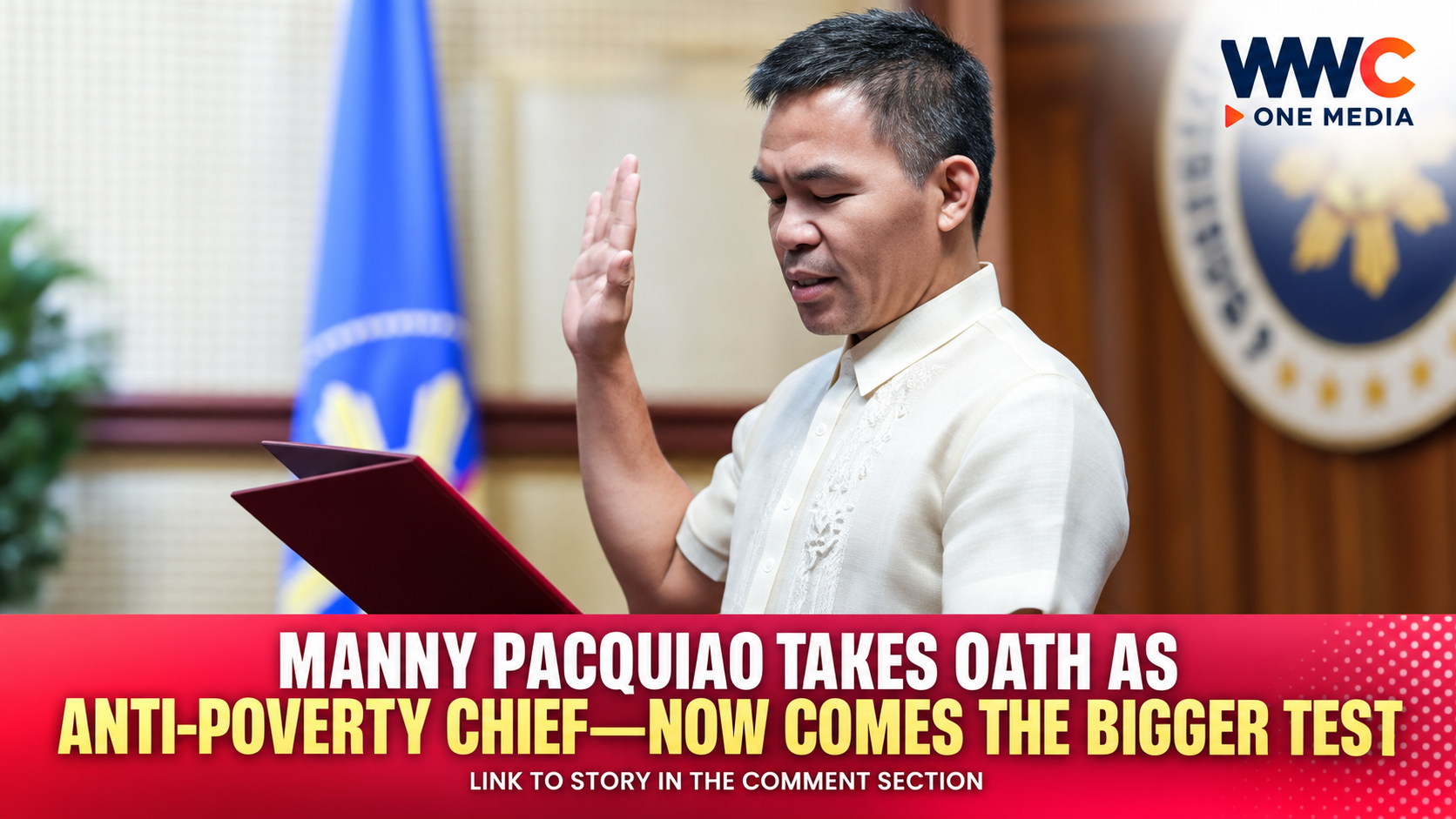
MANILA, Philippines — Former senator and boxing legend Emmanuel “Manny” Pacquiao has officially returned to government service, taking his oath as secretary and lead convenor of the National Anti-Poverty Commission (NAPC) before President Ferdinand “Bongbong” Marcos Jr. at Malacañang on Tuesday, September 8.
The appointment puts Pacquiao back at the center of national government after four years away from an official government post—and gives him a Cabinet-level role focused on one of the country's most persistent challenges: poverty reduction.
From the Senate to the anti-poverty fight
President Marcos personally administered Pacquiao's oath, according to the Palace and reports from GMA News and the Philippine News Agency.
Pacquiao replaces Lope Santos III as NAPC lead convenor. Under Republic Act No. 8425, or the Social Reform and Poverty Alleviation Act, the NAPC lead convenor heads the commission's secretariat and carries the rank of Cabinet secretary.
The NAPC serves as the government's coordinating and advisory body for the implementation of the Social Reform Agenda, bringing together national government agencies, local governments, the private sector and basic sectors in efforts aimed at reducing poverty.
That means Pacquiao's new job extends far beyond a ceremonial government position.
The commission is tasked with coordinating and monitoring poverty-alleviation programs, recommending policy measures and ensuring that marginalized and basic sectors have a voice in the formulation and implementation of social reforms.
A major political comeback
Pacquiao's appointment also marks a significant return to public service.
His six-year Senate term ended in June 2022. Instead of seeking another Senate term, he ran for president that same year and finished third behind Marcos and then-Vice President Leni Robredo, according to PNA's account of his political career.
He later attempted another political comeback during the 2025 midterm elections, running for the Senate as part of the administration-backed Alyansa para sa Bagong Pilipinas slate. He did not secure one of the 12 available Senate seats.
His appointment to the NAPC therefore represents his first government position since leaving the Senate in 2022.
Why Pacquiao's new post matters
The timing of Pacquiao's appointment gives the move added political significance.
As NAPC chief, he will be dealing directly with programs and policies intended to reach some of the country's poorest and most vulnerable communities.
Malacañang said Marcos expressed confidence in Pacquiao's leadership as the administration works to intensify efforts to address poverty, advance social reforms and bring government programs and services closer to communities nationwide.
For Pacquiao, the assignment is a very different kind of fight from the boxing ring or the Senate floor.
His challenge will be translating the government's anti-poverty agenda into programs that actually reach communities—and coordinating agencies and sectors whose work often overlaps.
What comes next for Pacquiao?
Pacquiao now faces the task of leading the NAPC Secretariat and helping coordinate the government's broader social-reform and poverty-alleviation efforts.
His appointment gives him Cabinet rank and a national policy platform, but it also places him under renewed public scrutiny after his unsuccessful 2025 Senate bid.
For a former eight-division world boxing champion who built his political career around public service, his newest assignment presents another high-profile test.
This time, however, the fight is not inside a boxing ring.
It is against poverty—and the results of that fight will ultimately be measured not by a championship belt, but by whether government assistance and social programs make a meaningful difference in the lives of Filipinos.
WWC ONE MEDIA M.J.E