
Meeting the Family in Chiang Mai: 6 Wai and Gift Checks You Should Never Skip
Meeting the family in Chiang Mai: six wai and gift checks on shoes, seating, language, and the briefing in the songthaew.

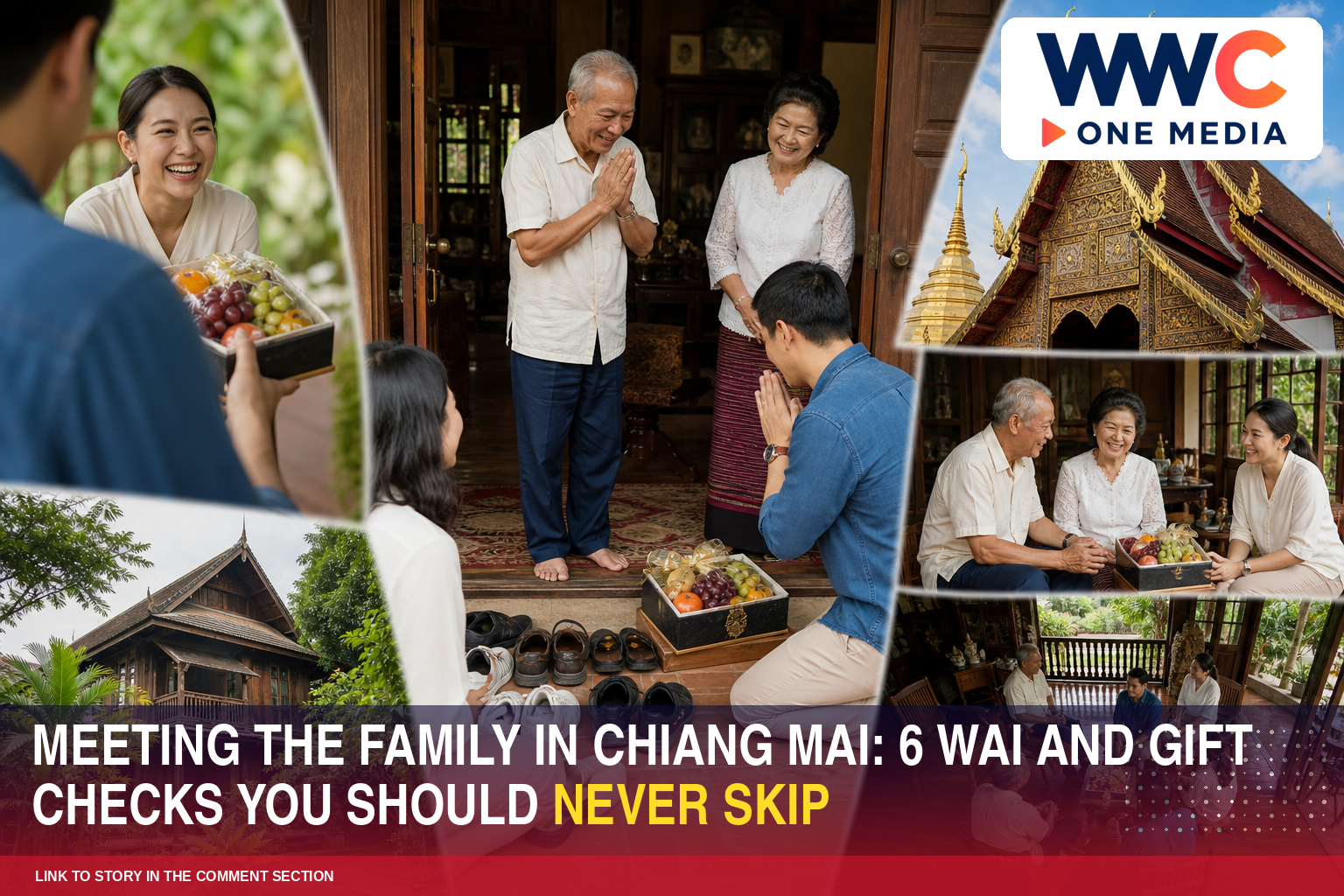
CHIANG MAI, Thailand — Meeting the family in Chiang Mai is not a Bangkok dinner with extra mountains. It is a house with a rhythm, a spirit shelf you should not treat as furniture, and a set of eyes that have been waiting longer than your relationship. The wai and the gift are the first sentences you say without opening your mouth.
These six checks are not about being fake. They are about not stepping on the furniture you cannot see yet. Do them in the songthaew or the Grab, not at the gate.
1. Meeting the family in Chiang Mai starts with the wai, not at the gate
Younger initiates. Hands together, a slight bow, eyes that are respectful without turning the moment into theatre. The height of the wai tracks the person: higher for a grandparent or a monk if the house has one visiting, lower for a peer, not a performance for the helper who is trying to take your bag. Copy your partner in the first minute if you are unsure. They know this room.
Do not skip the grandmother because you got shy. Do not wai the television. If someone is carrying a dish, do not force a full stop in a doorway; a small acknowledgement and a proper greeting once hands are free will land better than a blocked kitchen. You will not get a grade. You will get a temperature. The temperature is the whole first visit.
2. Shoes off, and the rest of the body follows
Shoes at the door. This is not a maybe. Wear socks you can be seen in. If the household is more Chinese-Thai and keeps a stricter indoor rule, follow the stricter rule. If they say keep them on, they will say it. Do not argue a hygiene TED talk on the threshold.
Feet are low in this culture. Do not point them at an elder, a Buddha image, or the spirit shelf. Do not rest a sole on the family coffee table while you tell a story. Do not touch anyone’s head, including a child whose hair looks like a joke you would make in your own house. Head is high. Doorstep is low. You can be warm without being sprawling.
3. Gifts that are not flashy liquor in the wrong house
Bring something. Fruit arranged like you meant it, sweets from a shop that is not trying too hard, tea, a dessert the partner’s mother actually likes. Ask in the car. A mid-range gift beats a flex that makes the table comment.
Liquor is the trap. In some Chiang Mai houses a good bottle is a normal uncle language. In others it is wrong: a household that does not drink, a relative in recovery, a conservative Buddhist table, a Muslim branch of the family, a mother who will read an imported label as showing off. Do not guess. “Does your house drink, and who should I hand this to” is a better question than a last-minute 7-Eleven whisky. Never hand a gift with a little speech about how much it cost. Hand it with both hands, to the elder the partner names, and then let the house put it away.
4. Seating is a map. Do not sit on the head of it
Elders sit first. The “best” sofa seat is probably not yours. Wait to be pointed. If you are offered a place, take it without a five-minute humility contest that forces them to ask three times. Then stay there. Hovering behind the kitchen door is not respect. It is a traffic problem.
At the table, serve elders in the direction your partner shows you. Do not start eating like you are at a food court on Nimman. Do not take the last piece unless it is pushed at you twice. If you cannot eat pork, spice, or a particular dish, decline one thing with thanks and keep a full plate otherwise. A diet lecture is a review. A quiet pass is a guest.
5. Language: learn the names, do not mock the rest
Northern Thai — kam mueang — is not broken Central Thai. If it is flying and you have none, you still need please, thank you, hello, and the mother’s name pronounced correctly. Khun, and the kinship words your partner uses: mae, por, paa, lung, naa. Use what you were briefed to use. Do not upgrade yourself to nicknames on visit one.
If your Thai is clumsy, clumsy and trying beats fluent and funny at someone else’s accent. Do not make the province joke. Do not correct an elder’s English. Do not assume the young cousin wants to be your interpreter for a political take. You can be funny later, when you have credit. Credit is not issued at the door.
6. The couple briefing is the check you skip at your peril
Ask the questions in the car, not at the gate. Who is actually in the house. What they already think you are — a Bangkok person, a foreigner, a colleague, a “serious” one. Religion. Whether there is an altar, a monk visit, a prayer. Money sensitivities. The joke that will not land. The relative who will ask about marriage before the water lands on the table.
If your partner refuses to brief you, that is also data. The person who wants the visit owns the briefing. A partner who walks you in blind is asking you to sit an exam they set. You can still be gracious. You should also notice. After you leave, debrief kindly: what worked, what they need to explain next time. Do not text a group chat a live review from the bathroom. The family is not content.
The table, the serving, and the compliment that is not a TED talk
You will be fed. Compliment the food specifically — this gaeng, this nam prik — not “Thai food is amazing” as if the house were a restaurant. Offer to help after the first twenty minutes, not during them, unless invited. Clearing a plate is often welcome. Rearranging the kitchen is not. If there is sticky rice, follow the hands around you. If there is a spoon-and-fork setting, use it. Copy, then relax.
If the house is Chinese-Thai, Christian, or Muslim
Chiang Mai is not one script. A Chinese-Thai table may care more about the fruit, the seating, and a red tone at the right season. A Christian household may say grace; you sit still, you do not perform a comparative religion talk. A Muslim relative at the table changes the pork question and the liquor question completely. Your partner should have told you. If they did not, ask before you buy the gift, not after you have already wrapped a ham.
The exit belongs to the couple
Have a real end time — a hotel, a last songthaew, a flight the next morning — that is not “when it gets awkward.” Thank the person who cooked, not only the person who paid. Wai on the way out the way you came in. In the car, the debrief is for the two of you. If something landed badly, repair between you first. Then, if needed, a short message from the partner to their parent, not a paragraph from you in a language you do not live in.
Bottom line
Meeting the family in Chiang Mai goes better with six wai and gift checks: a greeting that matches the room, shoes and a body that remembers the house is not a hostel, a gift that is not flashy liquor in the wrong kitchen, seating that waits to be offered, language that learns names instead of jokes, and a briefing you do before the gate. The checks are for the two of you. If they cannot do them with you, the visit is not the real problem.