
Nepal Families Hold Symbolic Funerals as Flood Disaster Leaves Thousands Missing — Some Tourists Finally Make Contact

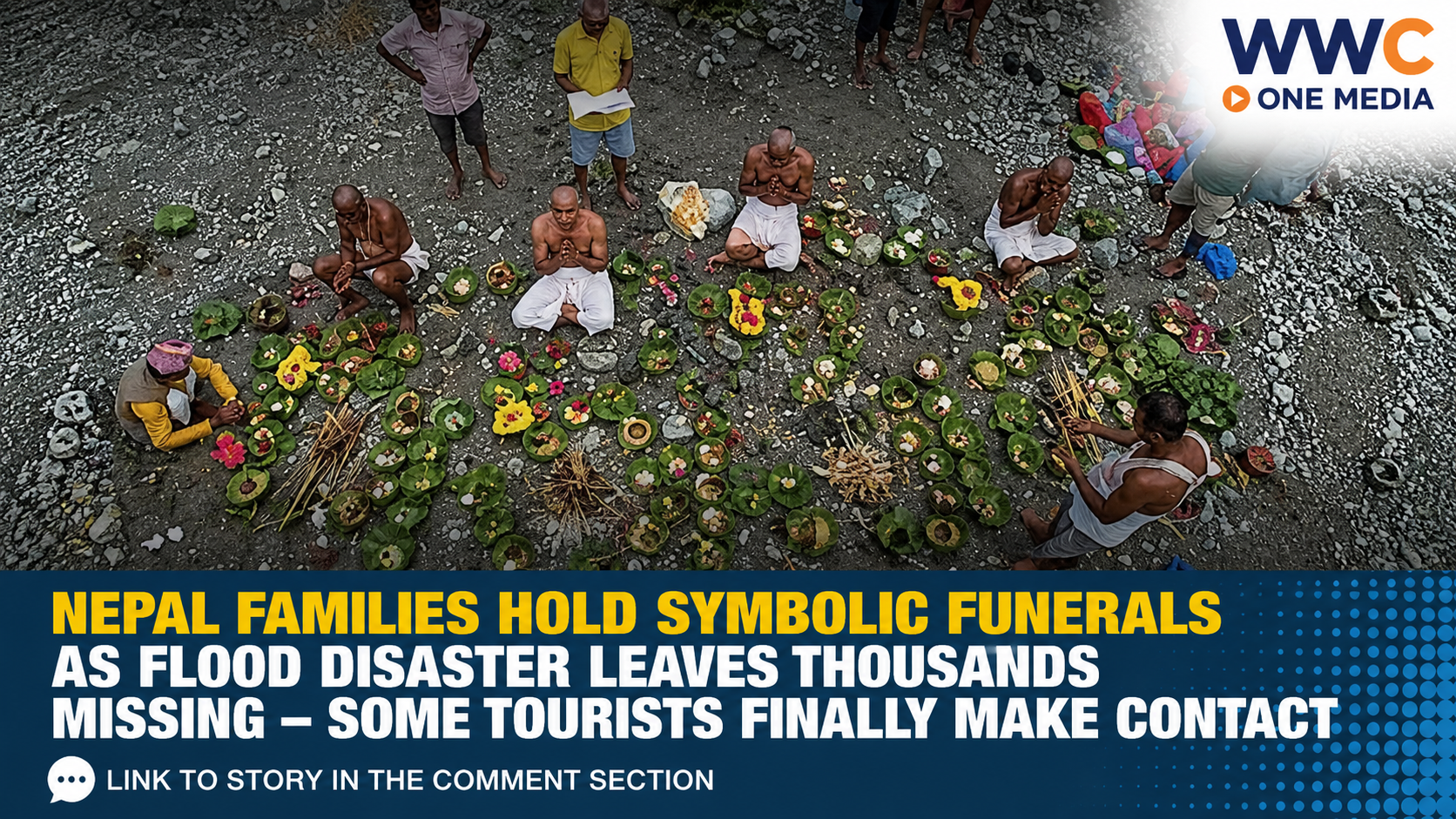
A week after a catastrophic flash flood tore through communities along the Nepal-Tibet border, families are performing final rites without bodies while authorities continue searching for thousands of missing people, including hundreds of foreign nationals.
KATHMANDU, Nepal — Hope and grief are colliding across Nepal as families of people still missing after last week’s catastrophic floods begin holding symbolic funerals, even as rescuers continue searching for survivors and several previously missing foreign tourists have managed to contact authorities.
The devastating flooding struck on Aug. 26, after a high-altitude glacial collapse sent an enormous surge of water, rocks, ice and debris through the Bhotekoshi River system along the Nepal-Tibet border. The disaster destroyed homes, roads, bridges and other infrastructure across multiple districts.
By Thursday, Nepal’s disaster authorities reported 1,204 deaths, 11,993 people rescued and 4,216 people still missing. More than 21,000 security personnel are involved in search and rescue operations.
But amid the enormous search operation, some families have reached a devastating decision: to perform funeral rites for relatives whose bodies have not been found.
Families perform funerals without bodies
In Nuwakot and other severely affected areas, relatives have begun performing Hindu funeral rituals using kusha grass effigies to represent loved ones who remain missing.
For families who have waited more than a week without finding a body or receiving any news, the rituals can provide a form of spiritual closure.
The Kathmandu Post reported that some families have struggled even to find a place to observe the traditional mourning period because the floods destroyed their homes and displaced thousands of people.
At the banks of the swollen Trishuli River, relatives gathered around symbolic funeral pyres as priests conducted traditional rites.
The ceremonies do not necessarily mean authorities have recovered the missing person's remains. They are being performed because families fear their loved ones did not survive.
But then came unexpected messages of hope
Even as some families were preparing for the worst, authorities received encouraging news from some foreign tourists who had previously been listed as missing.
Nepal's Foreign Ministry said 324 foreign nationals had been rescued, while 590 people from 39 countries remained missing following the disaster.
Nepal Tourism Board spokesperson Sunil Sharma said at least five other tourists previously reported missing had contacted authorities by telephone or email in recent days.
Australia also received good news.
Prime Minister Anthony Albanese said the number of Australians listed as missing had fallen from 43 to 38 after five people were confirmed safe.
The Australian government has also announced plans to send a team of drone operators to Nepal to assist search operations.
The developments offer a crucial reminder that being listed as missing does not automatically mean a person has died.
Communications have been severely disrupted, while roads, bridges and settlements have been destroyed, making it difficult for survivors in remote areas to contact relatives or authorities.
Thousands are still unaccounted for
Despite those reunions, the scale of the missing-person crisis remains enormous.
Nepal's latest figures put the number of people still unaccounted for at more than 4,200, although different reports have cited slightly different totals depending on the time of their updates.
The missing include local residents, workers, pilgrims, tourists and foreign nationals.
The disaster also affected communities on the Chinese side of the border. Chinese authorities have reported deaths and hundreds of people missing, while crews have been working to restore access to the devastated Gyirong Port area in Tibet.
Search teams face an enormous challenge
Rescue crews are dealing with thick mud, massive debris fields, destroyed roads and damaged infrastructure.
Some of the most difficult operations are taking place around hydropower facilities and tunnels, where workers may have been trapped when the flood swept through.
The Nepal Army, Nepal Police and Armed Police Force have deployed more than 21,000 personnel for search and rescue operations, while international teams are also assisting with forensic identification and recovery work.
Nepal is also using DNA testing to help identify unidentified remains.
Authorities have asked relatives of missing people to provide DNA samples so forensic teams can compare them with recovered bodies and body parts. Families living overseas can also arrange DNA profiling through authorized laboratories in their countries.
That effort has become increasingly important because many recovered remains are difficult to identify.
Nepal News reported that, at one point, only a small fraction of more than 1,100 recovered bodies had been identified.
What caused the disaster?
The flood is believed to have begun with a glacial collapse in the Himalayas.
Reuters reported that satellite imagery and expert analysis indicated that part of a glacier may have broken away and crashed into the valley below, triggering a massive debris flow.
The initial reports also raised questions about a possible earthquake, but the U.S. Geological Survey later determined that the seismic signal was generated by the collapse itself rather than a conventional earthquake.
The resulting torrent moved rapidly through the river system, carrying rocks, ice and mud downstream and overwhelming communities in its path.
Nepal confronts a disaster far beyond the flood zone
Prime Minister Balendra Shah has linked the catastrophe to the broader climate risks facing the Himalayas.
Scientists have warned that rising temperatures are accelerating glacier changes across the Himalayan region, increasing risks from unstable ice, rock and glacial lakes.
The consequences extend far beyond Nepal. The Himalayan and Hindu Kush ranges provide water resources for hundreds of millions of people in mountain communities and more than a billion people farther downstream.
For Nepal, however, the immediate priority remains painfully simple: find the missing and identify the dead.
Survivors are searching for places to grieve
The human toll is becoming increasingly visible in Kathmandu.
Families have gathered around walls and public spaces covered with photographs and information about missing relatives, hoping that someone will recognize a face or provide a clue.
Meanwhile, displaced survivors have sought refuge in monasteries and other temporary shelters after entire communities were swept away.
The Kathmandu Post reported that some families arriving in Kathmandu were unable to conduct traditional mourning ceremonies because they no longer had homes where those rituals could take place.
For many, the disaster has taken away not only their loved ones but also the physical places where they once lived, worked and mourned.
The bigger picture
Nepal is now facing a race against time.
Rescuers are still searching through tunnels, riverbanks and mountains of debris. Forensic teams are working to identify recovered remains. Families continue to wait for phone calls that could bring either devastating confirmation or an unexpected reunion.
And while some missing tourists have now made contact, thousands of families are still waiting for answers.
For those performing symbolic funerals, the ceremonies are not simply about giving up.
They are an attempt to find peace in the middle of a disaster where, for many families, the hardest part is not knowing whether there is still someone to find.
WWC ONE MEDIA J.M.D