
One Phone Call, B11 Million Gone: How a PhD Medical Student Fell Into a Sophisticated Scam

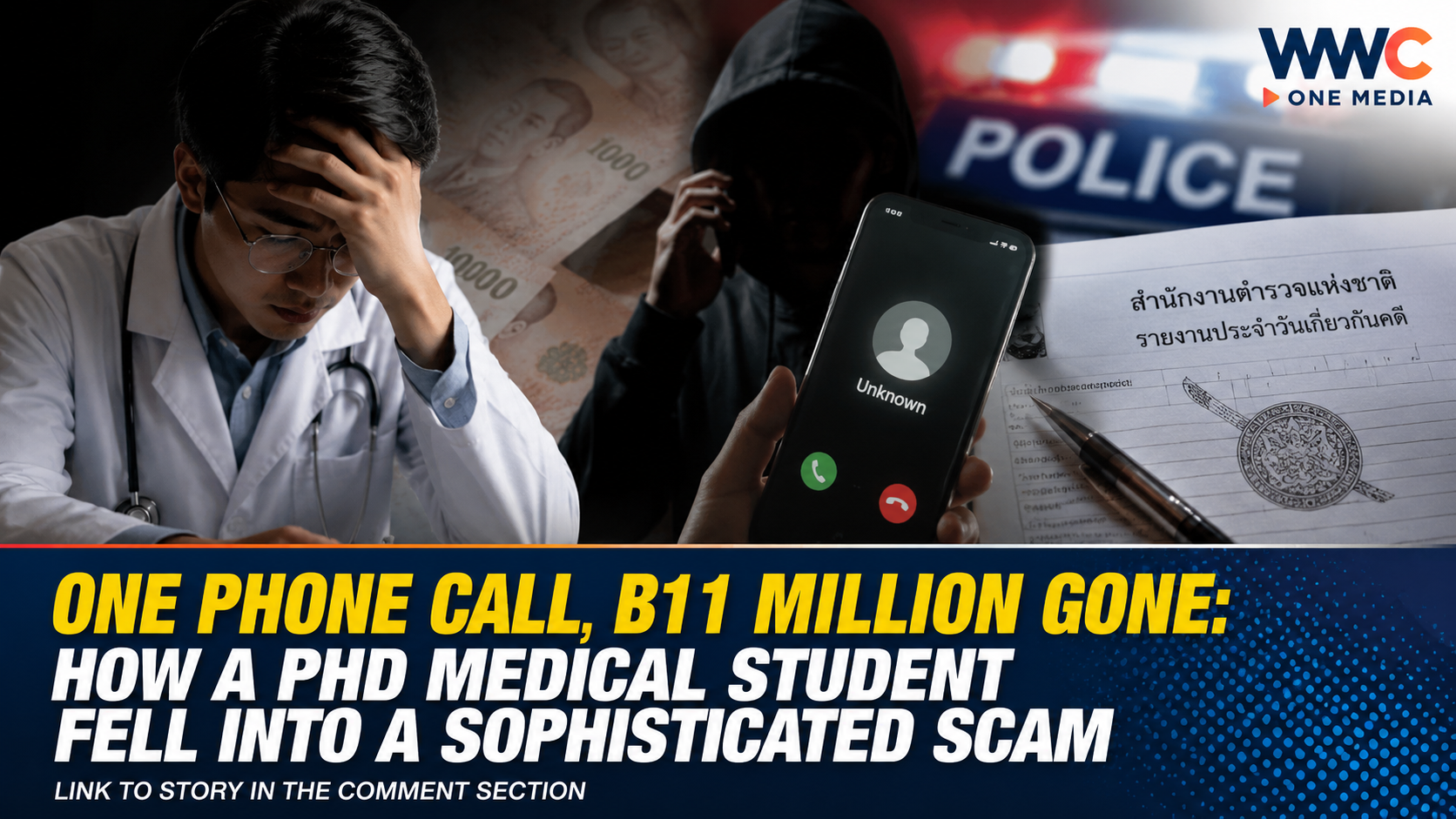
BANGKOK, Thailand — A PhD medical student in Thailand has reportedly lost nearly 11 million baht after falling victim to a sophisticated call-centre scam in which fraudsters allegedly impersonated a mobile phone company employee and a police officer.
The case, reported by the Bangkok Post, highlights how modern scam networks can exploit fear, authority and psychological pressure to convince even highly educated victims to hand over enormous sums of money.
According to reports, the scammers allegedly drew the student into an elaborate deception that escalated from an apparently routine phone call into a major financial loss. Thairath separately reported that the victim was persuaded to transfer money and arrange for cash to be collected from his residence, with total losses approaching 11 million baht.
The Scam That Allegedly Played on Fear and Authority
Call-centre scams frequently rely on impersonation, with criminals posing as representatives of trusted organisations such as telecommunications companies, banks, government agencies or police.
In this case, the alleged use of both a telecom company identity and a supposed police officer gave the fraudsters an appearance of legitimacy while increasing pressure on the victim to comply.
The incident is another reminder that education and professional status do not make someone immune to fraud. Sophisticated scam operations are designed to manipulate emotions and decision-making, often creating urgency and convincing victims that they are facing a serious legal or financial problem.
A Growing Regional Fight Against Scam Networks
The latest case comes as Thailand and neighbouring countries continue to confront the growing threat posed by transnational online fraud networks.
Thailand has been actively targeting scam operations, while authorities have repeatedly warned about criminal networks that use technology, impersonation and complex money-transfer systems to reach victims. In recent years, investigators have uncovered operations with international connections, underlining the cross-border nature of the problem.
The issue has also become a major regional concern. On August 29, Cambodia said it had eradicated large-scale online scam compounds following a sweeping crackdown, although the claim has been met with skepticism by some observers monitoring the industry.
The scale of the wider problem has prompted international cooperation. Thailand previously helped launch the Global Partnership Against Online Scams, an initiative involving international efforts to combat criminal networks that have defrauded victims around the world.
Why These Scams Can Be So Effective
Fraudsters do not always begin by directly asking for money. Many scams are carefully structured to build credibility before escalating demands.
Common warning signs include:
- Unexpected calls claiming your identity, phone number or bank account is connected to a crime
- Callers demanding secrecy or immediate action
- Requests to transfer money for an “investigation” or to “verify” funds
- Someone claiming to be police or a government official who refuses normal verification procedures
- Instructions to send cash, share banking credentials or move money to another account
Legitimate police officers, banks and government agencies generally have established procedures for official communication. Anyone receiving a suspicious call should independently contact the organisation using a verified number rather than relying on contact details provided by the caller.
The Bigger Lesson: Anyone Can Become a Target
The alleged loss of nearly 11 million baht by a PhD medical student serves as a stark warning about the increasingly sophisticated tactics used by scam networks.
These crimes are no longer limited to crude messages or obvious fraud attempts. Modern scammers can impersonate trusted institutions, create convincing stories and apply intense psychological pressure—sometimes keeping victims engaged long enough to overcome their doubts.
For the victim in this case, what reportedly began with a phone call ended in a devastating financial loss. For everyone else, the lesson is simple: when a caller creates fear and demands immediate action, stop, verify and contact the organisation independently.
As authorities across Southeast Asia intensify efforts against scam networks, the latest case is a reminder that the first line of defence may still be the moment a suspicious phone call is answered.