
Sara Duterte Asked to Confirm Bank Accounts—But What Happens If She Denies Them?

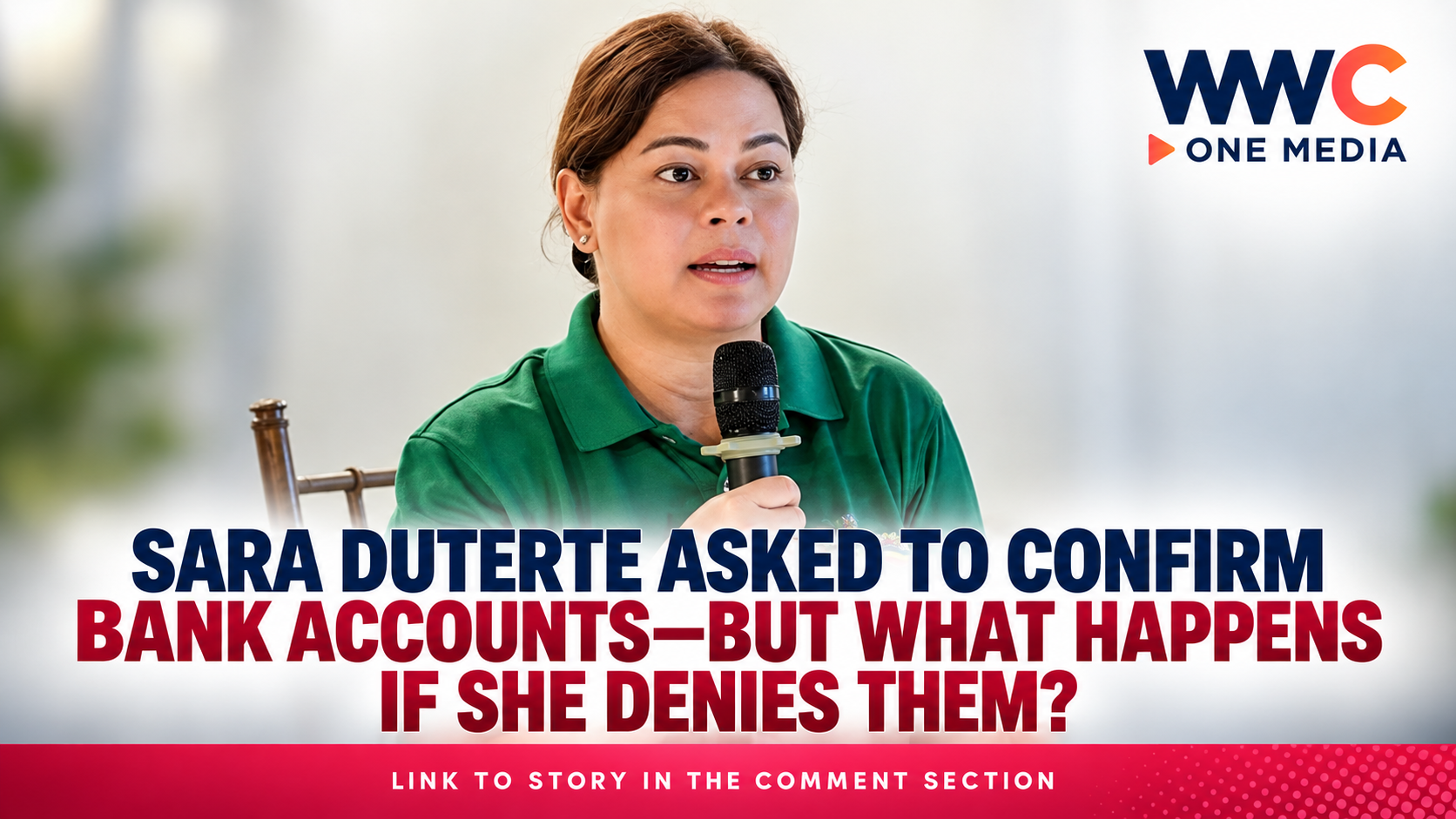
MANILA, Philippines — Vice President Sara Duterte is being asked by prosecutors to confirm whether bank accounts submitted to the Senate impeachment court are actually hers, as the trial moves deeper into allegations of unexplained wealth and undeclared assets.
The prosecution has filed a Request for Admission covering 104 items, asking Duterte to verify the authenticity of bank documents and whether the accounts identified in those records belong to her, either individually or jointly with others.
The request is part of Article II of the Articles of Impeachment, which involves allegations concerning unexplained wealth. Duterte has not been found guilty of these allegations, and the prosecution still has to establish its case before the Senate impeachment court.
What exactly is the prosecution asking Sara Duterte to admit?
Public prosecutor and Akbayan party-list Rep. Chel Diokno told the Senate impeachment court that prosecutors are not asking Duterte to admit allegations that she could not personally verify.
Instead, the prosecution wants her to confirm two basic questions:
- Whether the bank records submitted to the impeachment court are genuine; and
- Whether the bank accounts identified in those records belong to Duterte, either individually or jointly with others.
Diokno argued that Duterte would be in a position to verify the ownership of the accounts and the authenticity of records relating to them.
The prosecution also emphasized that the request does not mean Duterte is being asked to surrender her defense.
Its position, according to Diokno, is essentially: if the information is true, admit it; if it is not, deny it.
Senate gives Duterte's camp 15 days
The prosecution initially sought a shorter period for Duterte's lawyers to respond.
However, Senate impeachment court Presiding Officer and Senator-Judge Francis Escudero ruled that the defense would have 15 days to respond to the 104 requests.
Escudero noted that giving the defense adequate time could allow it to review the documents rather than simply issue blanket denials.
The court's decision could become significant because the prosecution has indicated that it wants to use the bank records as documentary evidence in the unexplained-wealth portion of the impeachment case.
Bank records were already subpoenaed
The latest move comes after the Senate impeachment court previously authorized the release of Duterte's financial records.
In July, the impeachment court granted subpoenas covering bank records, Anti-Money Laundering Council (AMLC) records and relevant tax records involving Duterte and her husband, lawyer Manases Carpio, as well as certain entities linked to them.
The court limited the bank subpoenas to peso-denominated accounts and also imposed limitations on how the tax records could be used.
The ruling was significant because it allowed prosecutors to obtain financial documents they said could help determine whether there was a disparity between Duterte's declared assets and income and the financial transactions reflected in government and banking records.
Six banks submitted records
The financial evidence has since started reaching the impeachment proceedings.
GMA News previously reported that six banks submitted bank records involving Duterte and Carpio to the impeachment court. The banks identified by prosecutors were BDO, BPI, Philippine Savings Bank, Metrobank, LandBank and Security Bank.
The documents were placed under the custody of the impeachment court and subjected to its inventory and security procedures.
That development paved the way for the prosecution's latest request asking Duterte's camp to confirm the authenticity and ownership of the accounts.
Why the bank records matter
The financial documents are central to Article II, which concerns allegations of unexplained wealth.
The prosecution has previously pointed to information from the Anti-Money Laundering Council involving Duterte and Carpio.
During earlier proceedings, AMLC Executive Director Ronel Buenaventura testified about P6.7 billion in covered and suspicious transactions associated with Duterte and her husband. The prosecution has cited these records as part of its effort to examine the financial allegations against the Vice President.
Importantly, however, the existence of covered or suspicious transaction reports does not by itself establish that Duterte committed a crime or that the alleged unexplained wealth has been proven. The significance of the transactions remains a matter for evidence and argument before the impeachment court.
Duterte's wealth has become a major issue in the trial
The prosecution has also raised questions about Duterte's declared wealth and her Statement of Assets, Liabilities and Net Worth (SALN).
During earlier proceedings, prosecutor Terry Ridon alleged that Duterte's net worth increased substantially over the years and questioned whether the growth was consistent with her official income.
Those claims form part of the prosecution's case and remain allegations that Duterte's defense can contest.
The next battle: admit, deny or explain
The latest development places Duterte's legal team in a potentially important position.
Her lawyers now have to respond to the prosecution's 104 requests. The response could determine which portions of the financial documents become easier for prosecutors to establish and which matters remain contested.
The prosecution says it wants to shorten the presentation of evidence by having facts that are not genuinely disputed admitted rather than forcing every document to be separately proven.
The defense, meanwhile, retains the right to challenge the prosecution's evidence and allegations.
The Senate impeachment court will ultimately have to assess the evidence presented by both sides before deciding whether the allegations have been proven to the required standard.
The bigger picture
The financial-records dispute comes as Duterte faces multiple legal and political challenges.
Her impeachment trial is separate from the criminal case arising from alleged grave threats against President Ferdinand Marcos Jr., First Lady Liza Araneta-Marcos, and former House Speaker Martin Romualdez. Duterte has denied the allegations in that case. Recent reports said she posted bail following an arrest warrant issued over those charges.
For the impeachment trial, however, the immediate focus is now firmly on the documents.
The question facing Duterte's camp is no longer simply whether the prosecution has obtained the bank records. The records are already before the impeachment court. The next question is what Duterte's lawyers will say about the 104 items—and whether any of the accounts will be formally acknowledged as hers.
That response could become one of the most closely watched moments in the Senate impeachment proceedings.
WWC ONE MEDIA M.J.E